
Air Purifier Buying Guide: CADR, ACH, and Filter Costs Explained
A practical walkthrough of the numbers that actually matter when buying an air purifier — CADR and ACH for sizing, true HEPA versus marketing terms, real three-year filter costs, realistic noise levels, and when a purifier won't help at all.
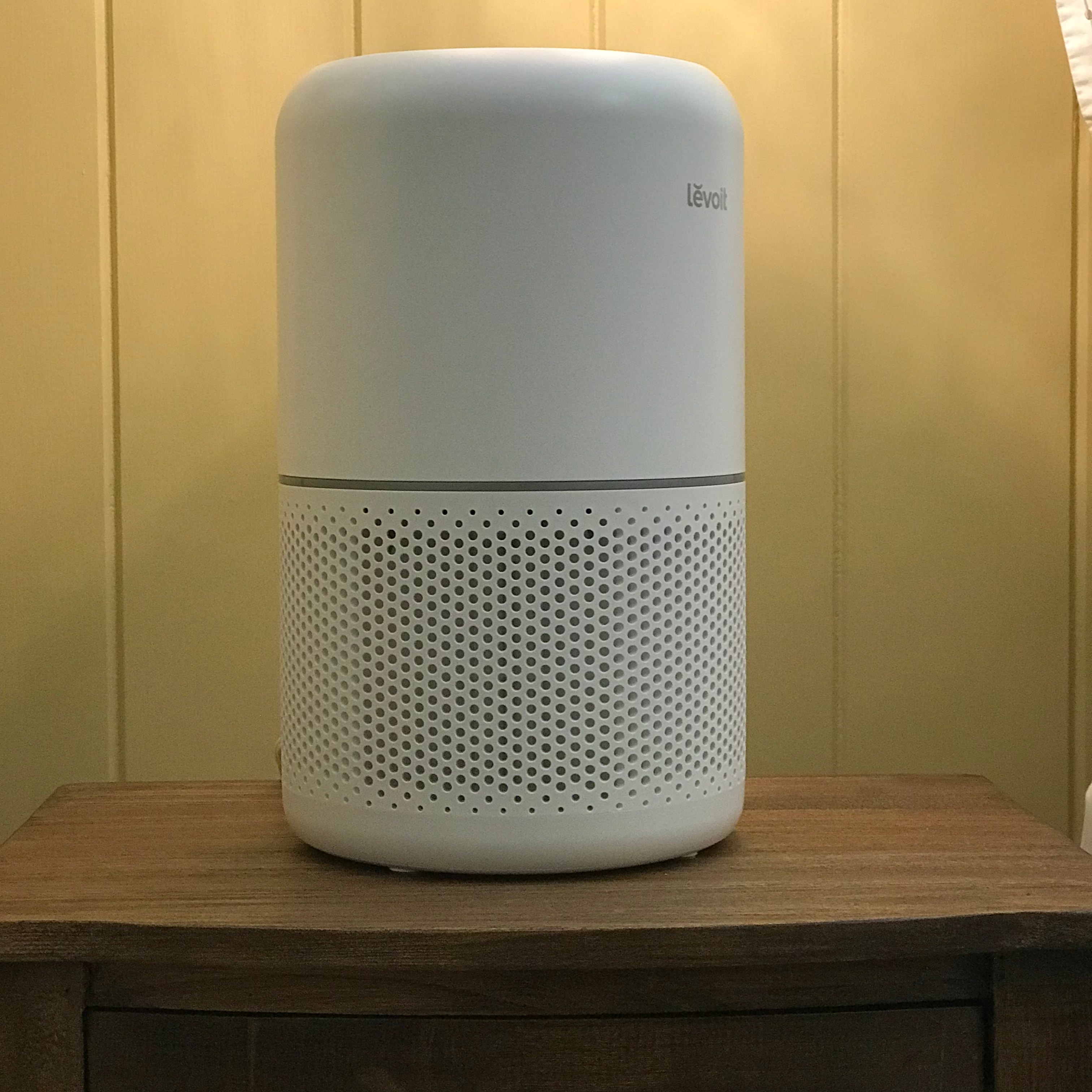
Air purifier marketing leans hard on big numbers and bigger claims — "removes 99.97% of particles," "covers 1,500 sq ft," "medical-grade filtration." Almost none of it tells you what you actually need to know before buying: will this specific unit clean this specific room fast enough to matter, and how much will it cost you every year after the checkout page. This guide skips the brand hype and walks through the four numbers that actually determine whether an air purifier is worth buying — CADR, ACH, filter type, and ongoing filter cost — plus the noise tradeoffs and the situations where a purifier simply won't do anything for you.
This is written for someone standing in front of a wall of similarly-shaped white boxes, all claiming to purify "large rooms," trying to figure out which claims are real and which are marketing filler. If you already own a purifier and are trying to decide whether a HEPA replacement filter subscription is worth it, or whether that "smart" ionizer mode is doing anything, this is for you too.

Quick Answer
- CADR (Clean Air Delivery Rate) tells you how fast a unit actually filters air, in cubic feet per minute — it matters more than the marketed "square footage covered."
- Match CADR to your room using the "2/3 rule": your smoke CADR should be at least two-thirds of your room's square footage for a reasonable 4-5 air changes per hour (ACH).
- True HEPA is a regulated term (99.97% of 0.3-micron particles); "HEPA-type," "HEPA-like," and ionizer/PECO claims are marketing terms with no enforced standard — treat them skeptically.
- The sticker price is often the smaller cost. A cheap unit with pricey, frequently-replaced filters can cost more over three years than a pricier unit with cheap, long-lasting filters.
- Noise at the speed you'll actually run it (not the marketed "sleep mode" dB rating) is what determines whether you keep the unit on overnight.
- Air purifiers filter particulates (dust, pollen, smoke, some allergens). They do very little against gases, most VOCs, and odors from cooking or pets unless the unit has a substantial activated carbon stage — and even then, only partially.
What CADR Actually Measures
CADR, or Clean Air Delivery Rate, is a standardized measurement created by the Association of Home Appliance Manufacturers (AHAM) that tells you the volume of filtered air a purifier delivers per minute, expressed in cubic feet per minute (CFM). Manufacturers that submit to AHAM testing get three separate CADR numbers — one each for smoke, dust, and pollen — because different particle sizes behave differently in airflow. Smoke particles are the smallest and hardest to capture, so the smoke CADR number is usually the lowest of the three and the most conservative one to shop by.
Here's why CADR matters more than the "covers up to 500 sq ft" claim printed on the box: that square-footage number is often calculated assuming a specific ceiling height and a specific number of air changes per hour, and manufacturers are free to pick generous assumptions to make a smaller, cheaper unit look adequate for a bigger space. CADR itself is the underlying, standardized number those room-coverage claims are built from — so when two purifiers both claim "400 sq ft" but one has a smoke CADR of 130 and the other has 220, the second one is doing meaningfully more actual filtering work per minute, regardless of what the box says about square footage.
Matching CADR and ACH to Your Room Size
Air changes per hour (ACH) describes how many times an air purifier can theoretically filter the entire volume of air in a room within one hour. For general allergy and dust control, aim for 4-5 ACH. For pet dander, wildfire smoke season, or a household member with asthma, aim higher — 6-8 ACH, per the more conservative guidance commonly cited by allergist groups.
The math is straightforward. Multiply your room's square footage by your ceiling height to get cubic feet, divide by 60 to get the CFM needed for one air change per hour, then multiply by your target ACH. A 200 sq ft bedroom with an 8-foot ceiling is 1,600 cubic feet; at 4 ACH that's roughly 107 CFM needed, which lines up well with AHAM's own long-standing rule of thumb: your purifier's smoke CADR should be at least two-thirds of the room's square footage (200 x 0.667 ≈ 133 CFM) to hit around 4-5 ACH in a standard 8-foot-ceiling room. If your room has vaulted or unusually tall ceilings, size up — the cubic footage is larger than the floor plan suggests.
Practically, this means buying a purifier rated for a room noticeably larger than the one you'll put it in is usually the better move, not overkill. A unit running below its max fan speed to hit your target ACH is quieter and lasts longer than a smaller unit constantly running flat out to keep up.
True HEPA vs "HEPA-Type" and Ionizer Claims
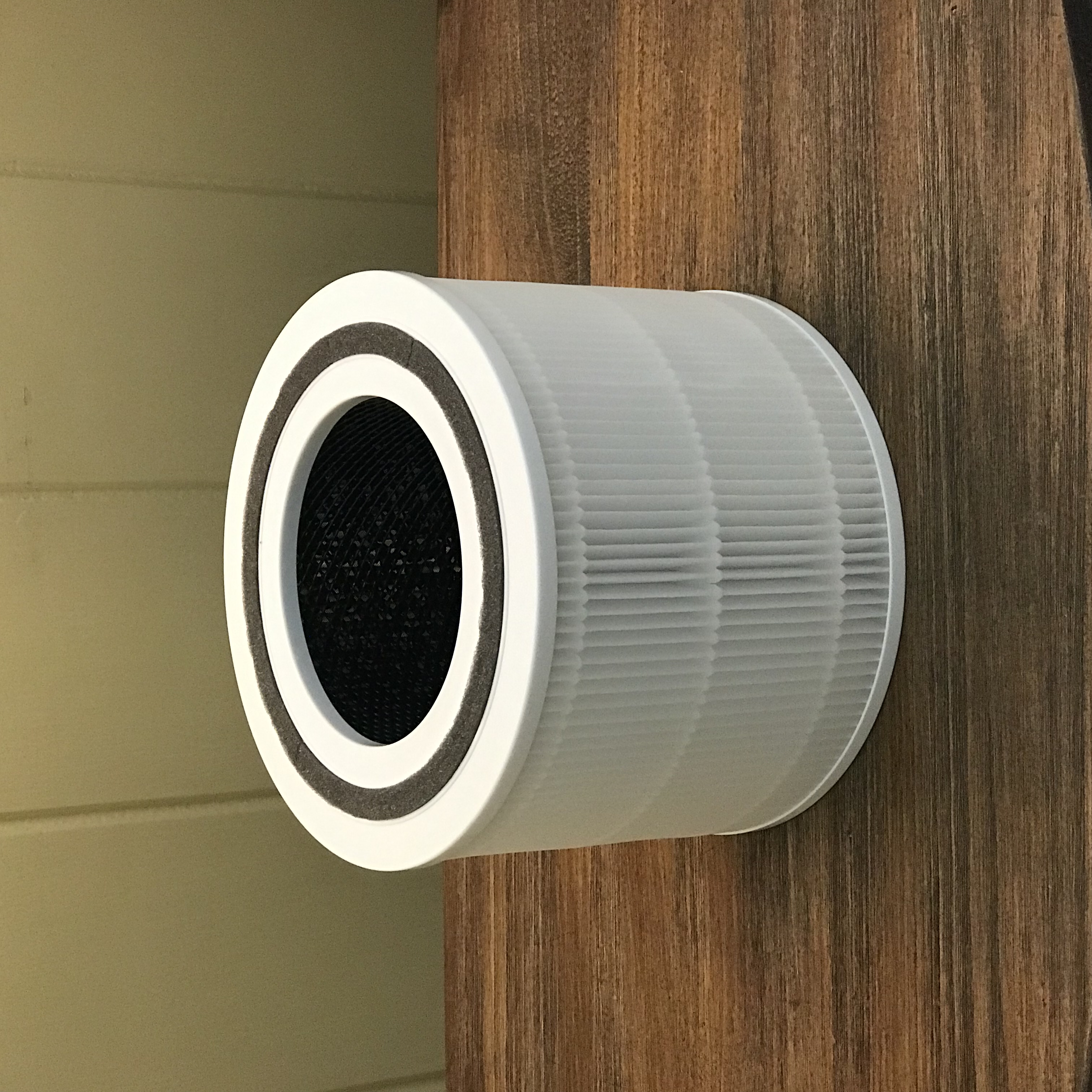
"HEPA" is not a vague marketing adjective — in the US, "True HEPA" or "HEPA" filters are supposed to meet a specific standard: capturing at least 99.97% of particles that are 0.3 microns in diameter, the hardest particle size to trap (smaller and larger particles are actually caught more easily). This standard originated with nuclear and medical filtration and has since become the baseline that legitimate air purifier filters are built and tested against.
Terms like "HEPA-type," "HEPA-like," "99% HEPA," or "HEPA-style" are not regulated and carry no enforced testing requirement. They usually mean a filter that resembles HEPA media in appearance but hasn't been tested to (or doesn't meet) the actual 99.97%/0.3-micron standard — sometimes it's meaningfully worse, sometimes it's close. Since there's no way to verify the claim from the box alone, treat "HEPA-type" as a yellow flag and look for a spec sheet or third-party test data before trusting it.
Ionizers and "PECO" (photo-electrochemical oxidation) technology deserve extra scrutiny. Ionizers work by charging particles so they fall out of the air or stick to surfaces — which can measurably improve air test results while quietly redistributing dust onto your walls and furniture instead of trapping it in a replaceable filter, and some models produce trace ozone as a byproduct, which is itself a lung irritant. PECO is a proprietary technology marketed by one major brand claiming to destroy pollutants rather than trap them; independent, peer-reviewed verification of its real-world performance against plain HEPA is thin. Neither technology is inherently a scam, but neither has the decades of standardized, third-party testing that HEPA does — if a listing leads with "ionic" or "PECO" instead of a CADR number, ask why the CADR number isn't front and center.
The Real Cost of Filter Ownership

The purchase price of an air purifier is frequently the smaller number over its lifetime. Manufacturers make real margin on proprietary replacement filters, and the difference between brands here is large enough to flip which unit is actually cheaper after two or three years of ownership.
Work out the true cost this way: take the replacement filter price, divide by the recommended replacement interval in months, and multiply by 36 to get a rough three-year filter cost. A $90 unit with a $35 filter that needs replacing every 3 months costs roughly $420 in filters over three years — nearly five times the purchase price. A $220 unit with a $45 filter rated for 8 months costs about $202 in filters over the same period — less than half, despite the higher sticker price. Add the purchase price back in and the "expensive" unit ($422 total) comes out only slightly ahead of the "cheap" one ($510 total), and in plenty of real product lineups the pricier unit wins outright.
A few other cost factors worth checking before buying: whether the unit uses a single combined filter (cheaper to stock, but you pay for a fresh carbon layer every time even if only the HEPA layer is spent) or separate replaceable HEPA and carbon/pre-filter stages (more flexible, sometimes cheaper long-term); whether washable pre-filters extend the main filter's life; and whether third-party or off-brand compatible filters are widely available, which can cut replacement costs by half or more on popular models. If you're comparing two purifiers our team has tested side by side, our Coway Airmega AP-1512HH vs. Levoit Core 300S comparison breaks down exactly this kind of filter-cost math for two popular mid-range units.
Noise Levels and Fan Speeds

Marketed noise specs almost always cite the lowest fan speed — typically in the 24-30 dB range, genuinely close to a whisper. That number is close to meaningless if your room actually requires a higher ACH than the lowest speed can deliver. The number that matters is the dB rating at the fan speed you'll need to run continuously to hit your target CADR/ACH for your room size, which is often the medium setting and sometimes closer to high.
Mid-range purifiers commonly run 45-55 dB at medium speed — comparable to a quiet conversation or a running refrigerator — and 55-65 dB at max speed, comparable to a normal conversation or a dishwasher, both loud enough to disrupt sleep or a video call if the unit sits nearby. If you plan to run a purifier overnight in a bedroom, oversize the unit specifically so it can hit your target ACH on a low or medium speed rather than buying the "right-sized" unit and running it on high all night.
When an Air Purifier Won't Help
Air purifiers, including true HEPA units, are built to capture particulates — solid or liquid particles suspended in air: dust, pollen, pet dander, mold spores, and most smoke particulates. They are fundamentally not built to remove gases, and most VOCs (volatile organic compounds) pass straight through a HEPA filter, since VOC molecules are gaseous, not particulate, and are far smaller than even the 0.3-micron particles HEPA is tested against.
This matters for a specific, common set of situations: lingering cooking odors, off-gassing from new furniture or fresh paint, gas stove combustion byproducts, and most chemical or "chemical-smell" complaints are gas-phase problems, not particulate problems. A HEPA purifier running in that room will do essentially nothing for the smell or the underlying gas concentration. The fix that actually helps a real gas/VOC problem is source control (fixing the leak, airing out new furniture, using a range hood vented outside) and ventilation, not filtration.
Activated carbon stages, found in some higher-end purifiers as a secondary layer alongside the HEPA filter, do adsorb some gases and odors — but the effect is partial, degrades quickly as the carbon saturates (often faster than the HEPA layer needs replacing), and is not a substitute for source control or ventilation on anything beyond mild, transient odors. If your primary complaint is smell or a specific chemical/gas exposure rather than visible dust, pollen season, or smoke, a purifier is the wrong primary tool, and money is better spent on source control, ventilation, or in serious cases, professional air quality testing.

Decision Framework: How to Actually Choose
Work through these in order rather than starting with brand or price:
- Identify the problem. Particulate (dust, pollen, pet dander, wildfire smoke) or gas/odor (cooking smell, VOCs, chemical off-gassing)? If it's gas/odor-dominant, address ventilation and source control first; a purifier is a secondary tool at best.
- Measure the room. Square footage times ceiling height, converted to cubic feet, gives you the basis for an ACH calculation.
- Pick a target ACH. 4-5 for general use, 6-8 for allergies, pets, smoke, or a household member with respiratory sensitivity.
- Shop by smoke CADR, not marketed square footage, using the two-thirds rule as a floor.
- Confirm "HEPA," not "HEPA-type." Look for an actual spec sheet reference to 99.97% at 0.3 microns.
- Price out three years of filters, not just the unit, before comparing options against each other.
- Check the dB rating at the speed you'll actually run, not the lowest marketed speed, especially for bedrooms.
A purifier that scores well on five of these seven but fails on filter cost or realistic noise at the needed speed is not actually the better buy — it's just the better spec sheet. Run the full checklist before deciding, not just the headline numbers on the box.
The Takeaway
The honest short version: buy based on smoke CADR relative to your actual room size, not the marketed square-footage number; confirm the filter is genuinely "True HEPA," not a look-alike term; run the three-year filter-cost math before comparing prices, since the cheaper unit on day one is sometimes the pricier one by year two; check noise at the fan speed you'll realistically run continuously, especially in a bedroom; and remember that no air purifier, however well-reviewed, fixes a gas, VOC, or odor problem the way it fixes a dust or pollen problem. Get those five things right and the specific brand matters much less than the marketing suggests.