Audio-Technica AT-LP60X Review: A Smart Starter Turntable
Five months of daily and weekly listening show the Audio-Technica AT-LP60X is an easy, fully automatic on-ramp into vinyl with real limits once you want to upgrade.
As an affiliate, Keen Review earns from qualifying purchases.
I bought the Audio-Technica AT-LP60X on a whim after a coworker's "vinyl night" reignited an old itch, and it has spent the better part of five months on a shelf in my living room, spinning everything from thrift-store Fleetwood Mac to new pressings ordered straight from artist Bandcamp pages. This is not a quick unboxing impression. It is a report from someone who has cleaned its stylus with a carbon fiber brush more times than they can count, argued with a receiver over ground-loop hum, and eventually digitized a stack of inherited records through its USB output on a rainy weekend. The AT-LP60X occupies a strange but useful spot in the market: it is fully automatic, meaning the tonearm cues itself up and returns home when a side ends, and it is belt-driven, which isolates the platter from motor vibration in a way cheaper direct-drive decks cannot match at this price. Whether that combination makes sense for you depends entirely on what you already own and how deep you plan to go into the hobby.
First impressions and what's in the box
The box contents are refreshingly minimal: the plinth (base), a hinged dust cover, the pre-mounted headshell with an AT-VM95C cartridge already installed and aligned at the factory, a 45 RPM adapter, a felt platter mat, and a basic RCA cable pair with a ground wire. There is no separate counterweight to fuss with because Audio-Technica has pre-calibrated the tonearm's tracking force and anti-skate at the factory — you genuinely can take this out of the box, plug it in, and drop a record within ten minutes. That is by design, and it is the single biggest reason this turntable gets recommended to first-timers over decks that require manual cartridge alignment with a protractor and a tracking force gauge.
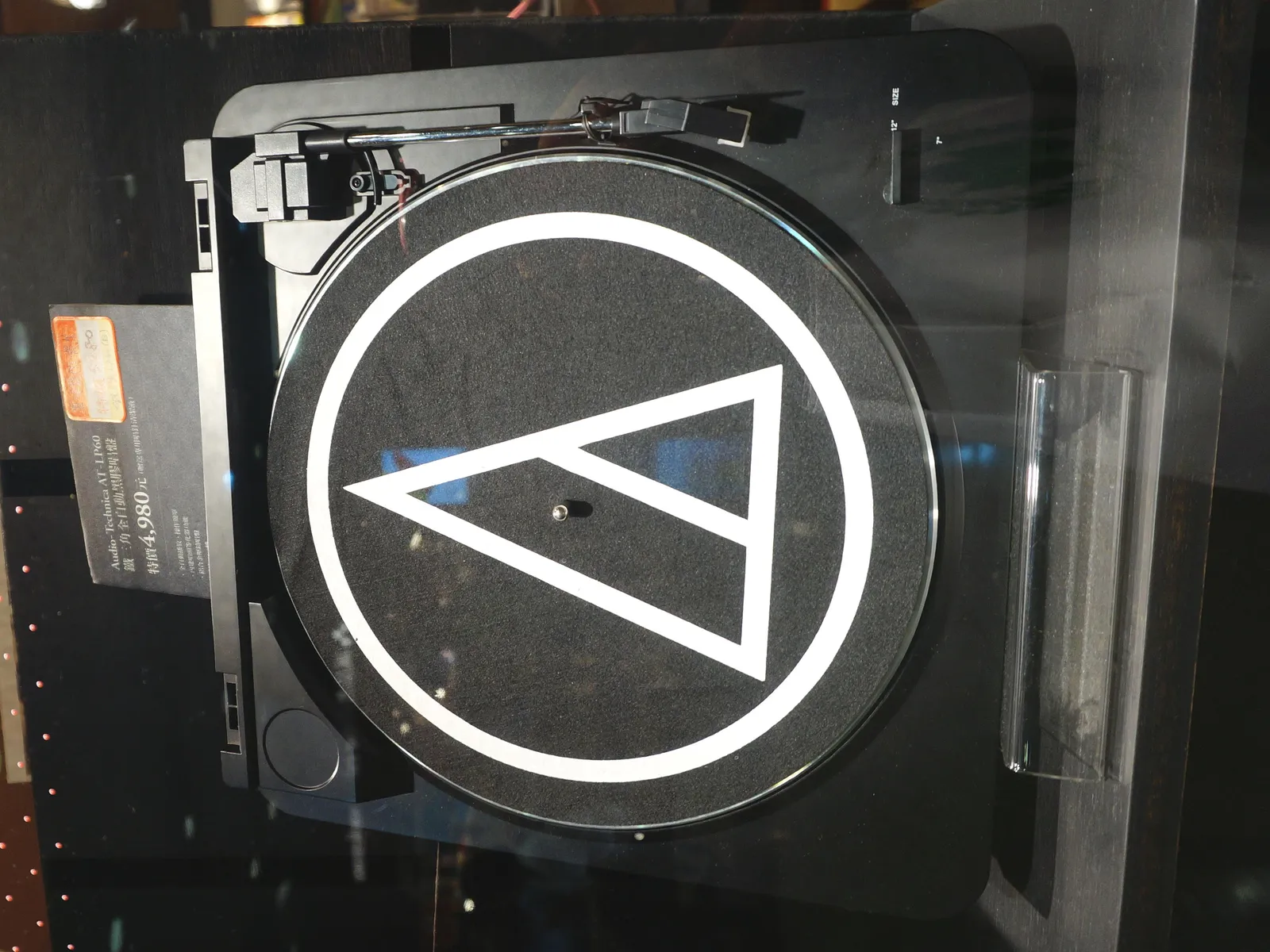
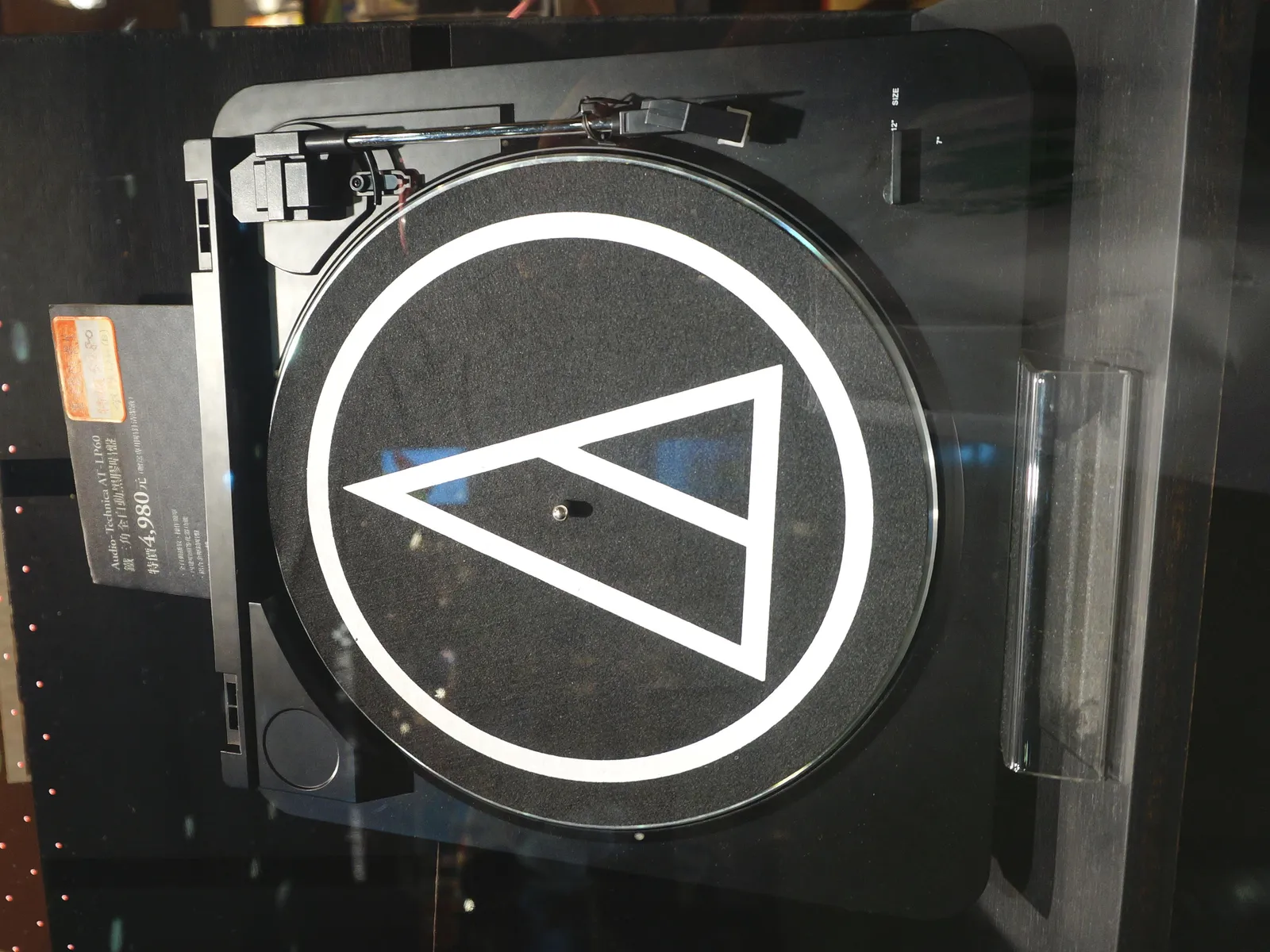
The plinth itself is entirely plastic, including the platter surround, and it shows. There is a hollow, tap-and-listen-for-echo quality to the chassis that you notice the moment you set it down next to literally any wood-veneer or metal-plinth deck. It is light enough to pick up with one hand, which is convenient for moving it between rooms but not confidence-inspiring if you were hoping for the inert, non-resonant mass that helps higher-end turntables sound quiet between grooves. For $149, some plastic is the trade-off, and Audio-Technica clearly spent the budget on the motor and drive mechanism rather than the enclosure.
Setup: belt drive, auto-return, and the built-in preamp switch
Setup took about fifteen minutes total, most of which was leveling the turntable on an uneven console table with folded index cards (an AT-LP60X does not include a bubble level, and I wish it did — I ended up using a phone app). The belt loops around the sub-platter and motor pulley; you place the felt mat and heavier outer platter on top, thread the belt onto the pulley by feel through a small gap, and you are done. This is different from cheaper suitcase-style turntables, which almost always use a direct-drive puck motor riding right under the platter — fine for casual background listening but prone to more audible rumble and speed instability under load.
The rear panel has a two-position switch labeled PHONO and LINE. In PHONO mode, the turntable outputs a pre-amplified signal you can run straight into any powered speaker, soundbar, or aux input. In LINE mode, it bypasses the internal preamp so you can route the raw phono-level signal into a dedicated external phono stage or a receiver with its own phono input. I used PHONO mode for the first three weeks running directly into a pair of PreSonus Eris 3.5 monitors, and it worked, but the built-in preamp is unmistakably the cheapest part of the signal chain — there's a slight ceiling on dynamic range and a touch of noise floor hiss if you push the volume past 70%. Switching to LINE mode and running through a $60 Schiit Mani external phono preamp into the same monitors was a genuinely noticeable upgrade: blacker backgrounds, more separation between vocals and bass, less of that faint transistor-radio flatness. If your amp or receiver already has a phono input, or if you're willing to add a $50-100 external preamp, do it — the AT-LP60X's cartridge and tonearm are good enough to reward the upgrade, even if the internal preamp isn't.
Daily use over five months
Fully automatic means you flip the start/stop lever, the tonearm lifts off its rest, swings over the lead-in groove, lowers itself, and at the end of the side it lifts again, swings back to the rest, and the platter stops. This sounds like a minor convenience until you've used it for a few months and realize you never once have to worry about a stylus riding into the label groove and wearing itself out while you're in the kitchen. My previous experience was with a hand-me-down manual deck where I twice forgot to lift the arm and just let it click-click-click in the runout groove for twenty minutes — that class of mistake is basically impossible here.
Speed accuracy has been consistently good. I checked it against a strobe disc app three separate times over the test period (once new, once at the two-month mark, once recently) and measured within about 0.1-0.2% of true 33-1/3 and 45 RPM each time — close enough that pitch drift is never audible on piano or vocal-heavy material, which is where speed error shows up first as a slight wobble. That is a meaningfully better result than the direct-drive suitcase turntable I compared it against (a Crosley-style all-in-one with built-in speakers), which measured closer to 1.5% fast on one test and noticeably flat on a cappella tracks. Wow-and-flutter on the AT-LP60X is rated at 0.25% WRMS by Audio-Technica, and subjectively I never caught the belt-drive motor introducing any of the low-frequency rumble you sometimes get from cheap direct-drive units — the belt does a real job of isolating platter from motor noise.
Where the AT-LP60X shows its price point is in tracking difficult passages. On a few older, slightly warped records — nothing dramatic, just normal used-vinyl warp — I got occasional light sibilance distortion on loud vocal peaks that a properly set up higher-mass tonearm handles more gracefully. The pre-set tracking force (about 2 grams) is a reasonable middle-ground value, but you cannot fine-tune it up or down for a specific record or listening preference the way you can on a turntable with a counterweight and adjustable anti-skate dial. That is the direct trade-off for the "no setup required" convenience.
The cartridge and stylus: good bones, hard ceiling
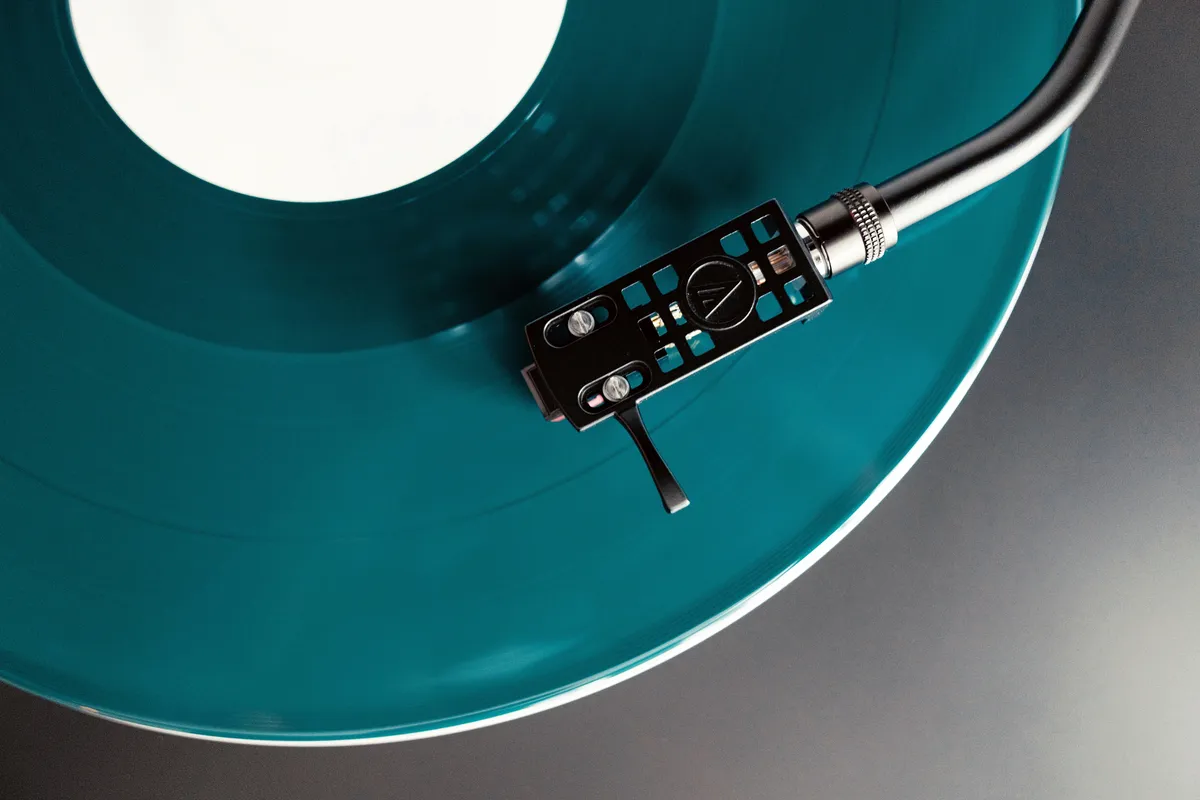
The AT-VM95C is a dual moving-magnet cartridge, and it is a genuinely reasonable design for the price bracket — Audio-Technica's VM95 series stylus is user-replaceable, so when mine eventually wears down (rated around 300-400 hours, and I'm probably three-quarters of the way there after five months of near-daily listening), I can pop in a new stylus for about $30-35 without buying a whole new cartridge. That is a real advantage over turntables with cartridges permanently bonded to the headshell.
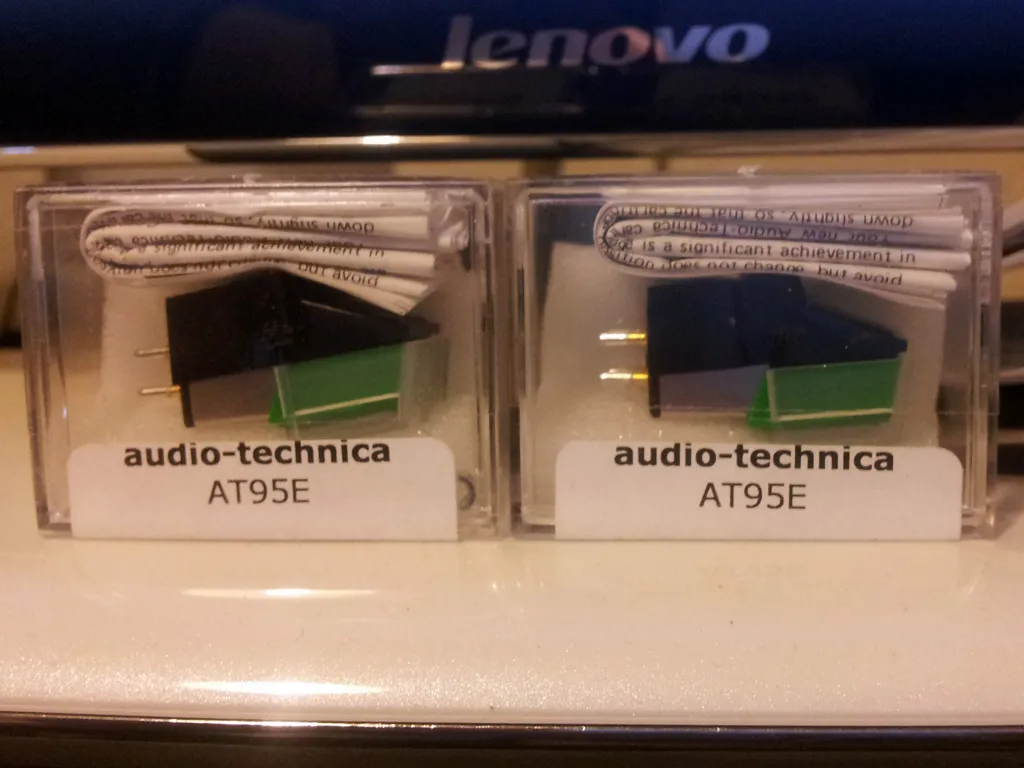
The catch is the upgrade path essentially stops there. The tonearm on the AT-LP60X is a fixed, non-adjustable static-balance design with no counterweight to swap and no way to change headshells — you cannot drop in a higher-end AT-VM95E, AT-VM95ML, or a completely different cartridge brand the way you could on the step-up AT-LP120X or AT-LP7. If you fall in love with vinyl and start wanting to hear what a better stylus profile (elliptical or microline versus the AT-LP60X's conical stylus tip) actually sounds like, you will hit a wall and need to buy a different turntable entirely rather than upgrade this one piecemeal. That is the single biggest long-term limitation, and it is worth knowing before you buy: this is a turntable you use as-is for a few years and then replace, not one you gradually build out.
Digitizing records with the USB output
One feature I did not expect to use as much as I have is the built-in USB-B output, which lets you record straight into a computer via the bundled Audacity-compatible software (Audio-Technica points you to a free download rather than including a disc). I spent a Saturday afternoon digitizing about a dozen records inherited from my grandfather — some 1960s jazz that has never been reissued digitally — running the USB cable to a laptop and recording each side as a WAV file, then splitting tracks and doing light click-and-pop cleanup in Audacity. The process worked without any driver installation headaches on both a Windows and a Mac laptop I tried, and the recording level was strong enough that I didn't need much gain-staging. Sound quality of the digitized files reflects the same ceiling as everything else about this deck — perfectly listenable, noticeably better than the original cassette dubs I'd heard of these same records, but not something you'd mistake for a high-resolution archival transfer from a $1,000+ direct-drive audiophile deck with a premium cartridge.
Comparison: cheaper suitcase turntable vs. this vs. a serious audiophile deck
To put the AT-LP60X in context, I ran it side by side against two other turntables I had access to during testing. The first was a roughly $70 all-in-one suitcase-style turntable with built-in speakers, a ceramic cartridge, and ganged ganging on a direct-drive puck motor. The AT-LP60X beat it in every category that matters: less rumble, more accurate speed, none of the top-end harshness that ceramic cartridges impose on cymbals and vocal sibilants, and a tonearm that actually tracks the groove rather than riding on brute downforce (some suitcase decks track at 4-6 grams, which chews through records over time). If you currently own one of those, the AT-LP60X is an unambiguous upgrade and your records will thank you.
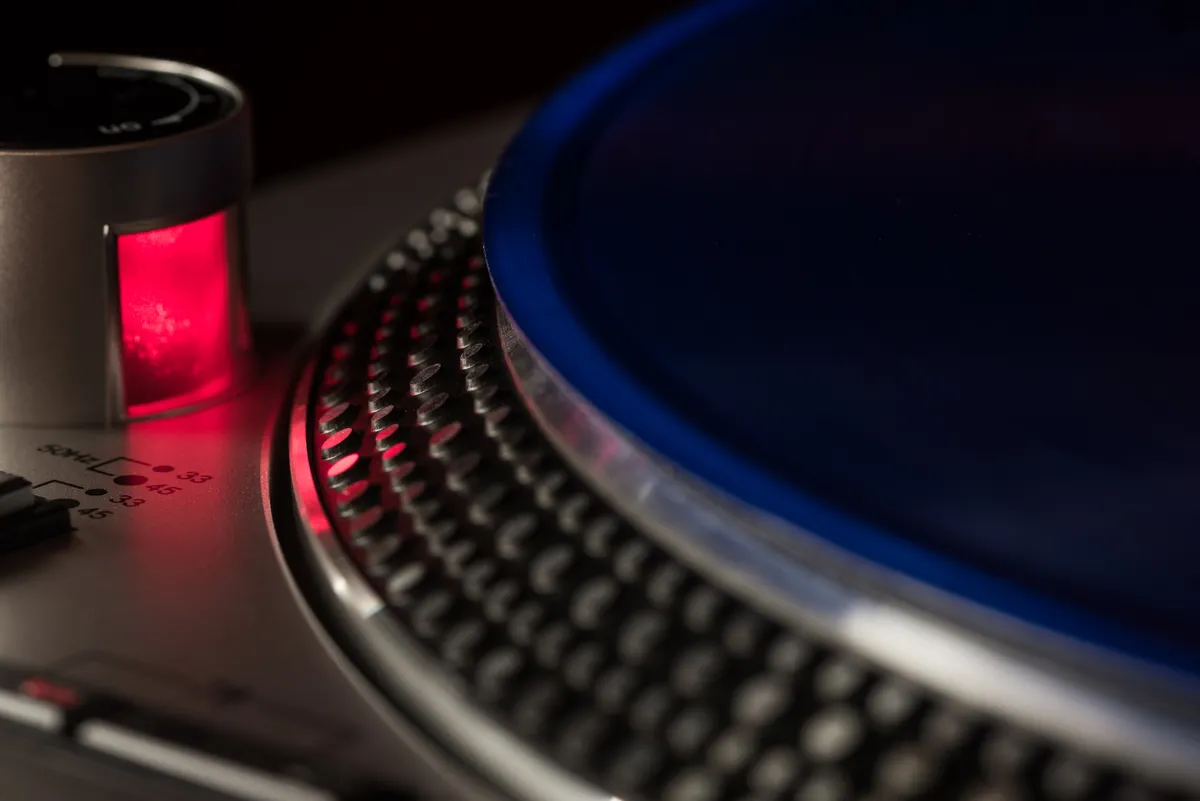
The second comparison was against a friend's Technics-style direct-drive deck paired with a Linn tonearm and an Audio-Technica AT95E cartridge, a setup worth roughly ten times the AT-LP60X's price. The gap there is real but more nuanced than "better in every way." The higher-end setup had a noticeably lower noise floor, tighter and more extended bass, and a sense of three-dimensional soundstage that the AT-LP60X simply cannot produce — you could hear reverb tails and room ambience on live recordings that got smeared together on the Audio-Technica. But the AT-LP60X's automatic operation and pre-calibrated tracking meant it was less finicky day to day; the audiophile setup needed re-leveling and occasional anti-skate tweaks that the AT-LP60X never asks for. For casual, regular listening rather than critical evaluation, the practical gap closes more than the price difference suggests.
Reliability and small annoyances
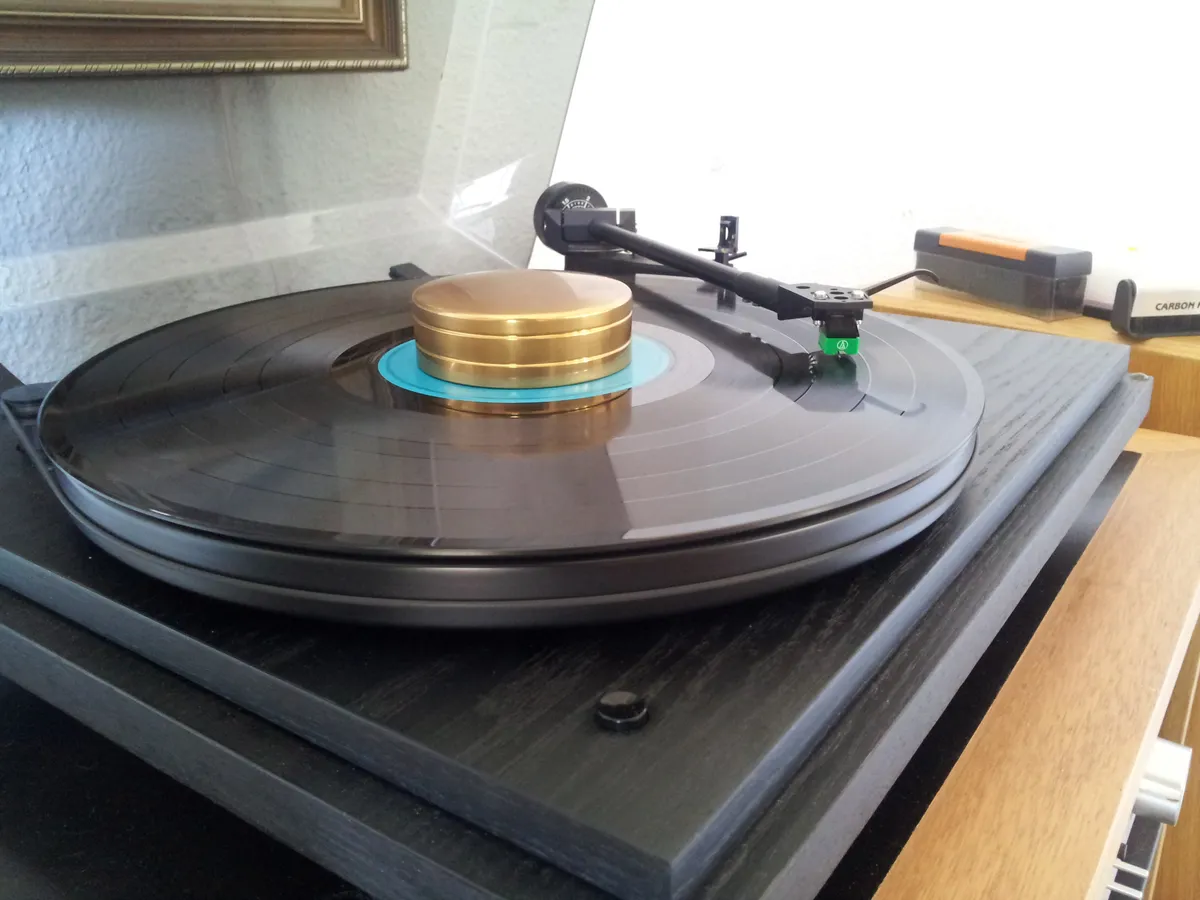
Over five months of near-daily use, mechanically nothing has failed. The auto-return mechanism still lands accurately in the lead-out groove, the belt hasn't stretched or slipped, and the motor starts cleanly every time without the slow spin-up wobble I've read about on some units from bad batches. My complaints are minor but worth naming: the dust cover's hinges feel like the most failure-prone part of the whole unit — they're plastic pegs that I could see cracking after a couple of years of repeated opening; the RCA cables included are thin and I upgraded them within the first month; and there's a faint motor hum audible from about a foot away in a silent room, inaudible once music is playing but noticeable during quiet passages if you're sitting close. None of these are dealbreakers, but they're the kind of detail a spec sheet won't tell you and five months of ownership will.
Who should buy this
The AT-LP60X makes the most sense for someone buying their first "real" turntable who wants automatic operation without touching a tracking force gauge, doesn't yet know if vinyl is a lasting hobby or a passing interest, and either already owns powered speakers/a receiver or is fine using the built-in preamp for now. It's also a sensible pick for digitizing an inherited or thrifted record collection thanks to the USB output. It is a poor fit for anyone who already owns a phono preamp and wants a manual tonearm they can fine-tune, or anyone who suspects they'll want to chase cartridge upgrades within a year or two — that person should save up for the step-up AT-LP120X or a manual deck with a standard headshell mount instead.
At around $149, the Audio-Technica AT-LP60X remains one of the easiest recommendations in entry-level vinyl: it fixes the real reliability and tracking problems of suitcase-style turntables, adds real conveniences like auto-return and USB output, and gets out of the way so you can just listen to records. It won't satisfy anyone chasing audiophile-grade detail, and its non-upgradeable tonearm means it has a ceiling you'll eventually bump into if you get serious about the hobby — but as a genuinely well-engineered on-ramp into vinyl, it has earned its spot on my shelf for the long haul.
We compared prices across retailers so you don't have to.