Levi's 501 Original Jeans Review: Still the Straight-Leg Standard After 150 Years
We wore the Levi's 501 Original rigid straight-leg jeans daily for four months to see if the century-and-a-half-old design still holds up against modern stretch denim.
As an affiliate, Keen Review earns from qualifying purchases.
The Levi's 501 Original has been the reference point for straight-leg denim since 1873, and that history is both its biggest selling point and its biggest risk. A jean that hasn't fundamentally changed its cut in a century and a half either means the design is genuinely timeless, or that the brand is coasting on nostalgia while every other denim maker has moved on to stretch fabric and engineered fits. I bought a pair in Rigid (the classic 100% cotton, zero-stretch version) in my usual size and wore them as my primary weekend and errand-day jeans for four months, through a hot summer stretch and into the start of fall, to find out which one it actually is.
First impressions and what's in the box
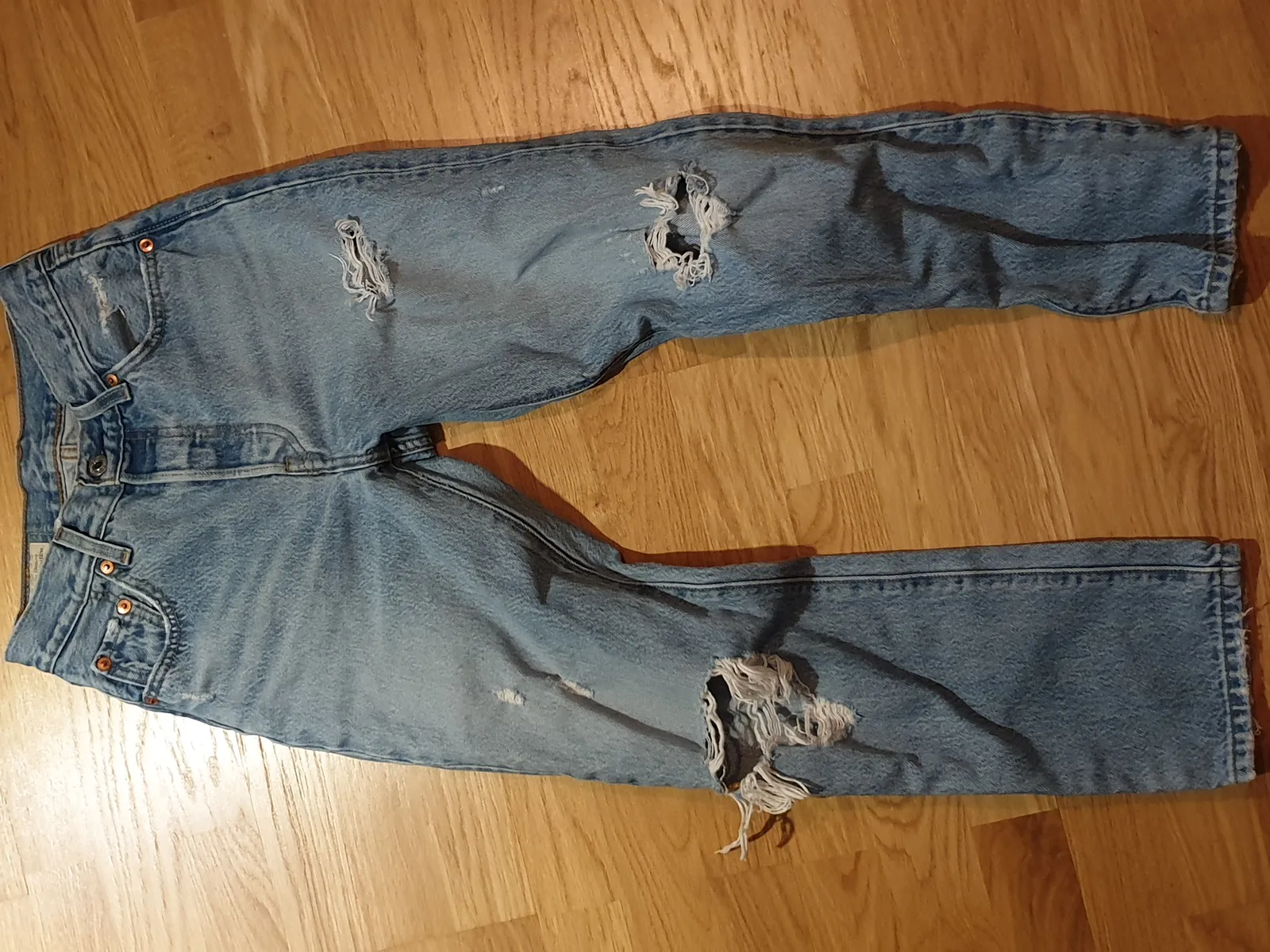
There's no box, obviously — these ship folded in a paper band with the familiar red tab and the leather-look Two Horses patch on the back waistband already sewn in. Out of the packaging, the denim is noticeably stiffer than anything with even 1% elastane in it. It has that cardboard-like rigidity that raw and rigid denim fans specifically seek out, but if you've spent the last decade in stretch chinos or Athletic Taper stretch jeans, the first five minutes of wearing these will feel like a mistake. The waistband doesn't give at all when you sit down, the knees don't flex with your stride the way stretch denim does, and the fabric creases sharply rather than smoothing back out.
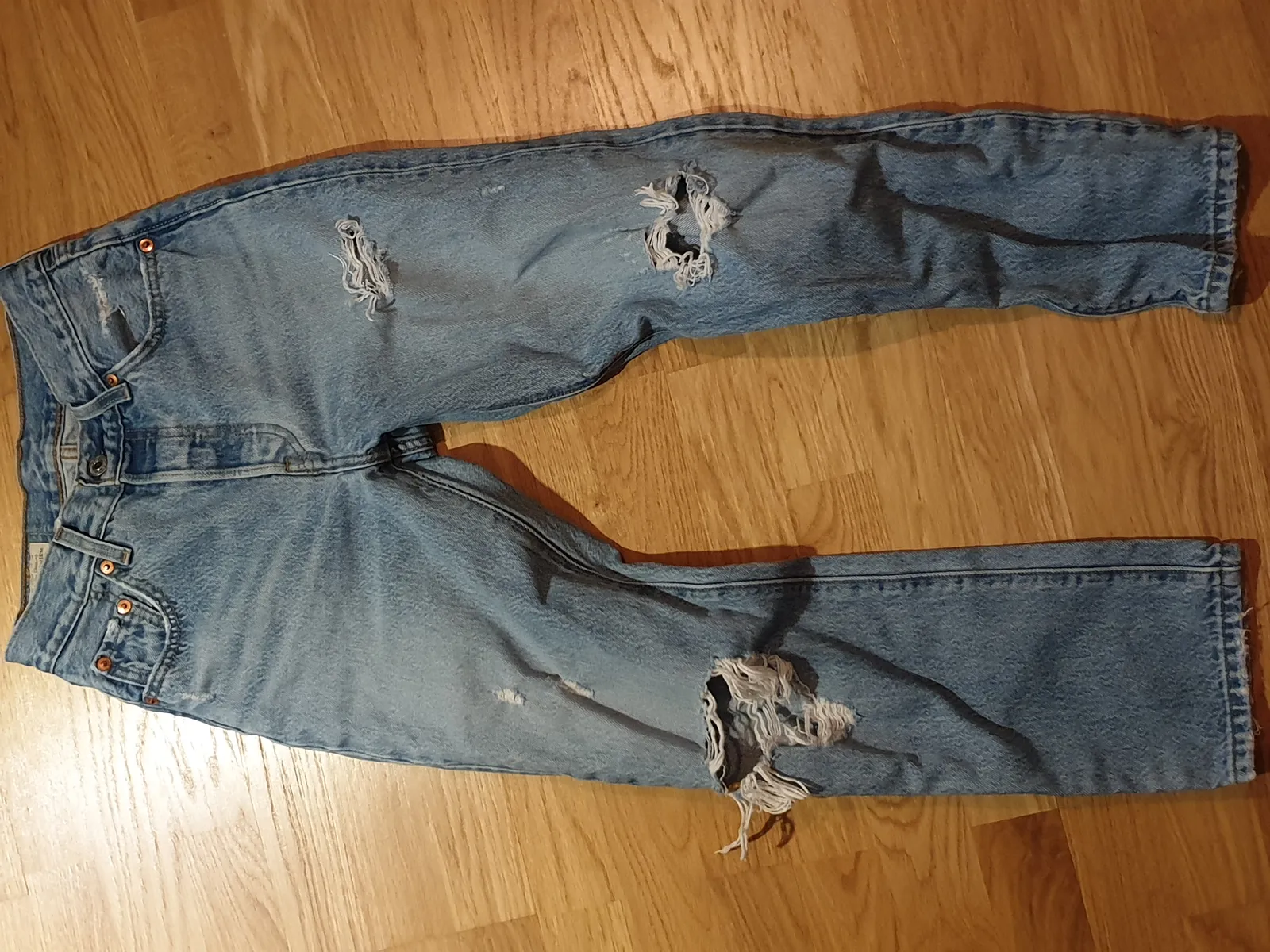
The construction details are where the price starts to make sense: chain-stitched hems, bar tacks at every stress point (belt loops, pocket corners, fly), a riveted coin pocket, and the button-fly itself, which uses five metal shank buttons rather than a zipper. The stitching is done with the classic orange-gold thread that's become as much a brand signature as the tab. Fit and finish felt genuinely solid out of the gate — no loose threads, no crooked seams, no glue residue around the patches, which isn't something I can say about every pair of jeans I've bought in this price range.
Sizing and fit — the part that trips people up
This is the single most important section of this review, because it's where most negative reviews of the 501 online actually come from a sizing mismatch rather than a product defect. The 501 is cut with a fairly straight leg and a mid-to-high rise that sits at the natural waist, and critically, it has no stretch whatsoever. If you're used to a modern "true to size" stretch jean, you cannot buy your usual number in a 501 rigid and expect the same fit. Rigid denim from Levi's is famous for having almost no give, and most guides (including Levi's own sizing notes) recommend sizing up half an inch to a full inch in the waist versus your stretch-denim size, because rigid cotton denim will feel snug on day one and only loosens slightly with wear — it does not permanently stretch out the way a poly-blend jean does.
I sized up half an inch from my usual stretch-denim waist based on advice from other longtime 501 wearers, and it was the right call — true to my normal size, the waistband was uncomfortably tight for the first two weeks. Even sized up, the first several wears involved a genuine "break-in" period: the inner thighs and waistband are stiff enough that walking or sitting for long stretches created friction and minor chafing until the fibers relaxed. That break-in took roughly three to four weeks of regular wear (I wore them four to five days a week) before the denim started moving with my body instead of against it. If you want a 501 that fits like a stretch jean on day one, you will not get it — that's the trade-off for this construction, not a manufacturing flaw.
Daily wear over four months
Once broken in, the 501 became genuinely comfortable, but "comfortable" here means something different than a stretch jean. There's no elastic give when you crouch down to tie a shoe or reach up for something on a high shelf — you feel the fabric resist and then, after enough wear, the fabric has permanently creased into your movement patterns (whiskering at the hips, honeycombing behind the knees) so those specific motions get easier over time even though the material itself never becomes elastic. This is part of the appeal for raw-denim enthusiasts: your jeans develop fade patterns unique to your body and habits, which a stretch jean's fiber blend won't replicate anywhere near as distinctly.
I put these through yard work, several long walks, two flights, and ordinary desk-job sitting five days a week. The knees showed the first visible wear-fading around the ten-week mark, and by month four there was a faint but noticeable lightening at the front thigh crease and back knee — exactly where you'd expect denim fading to start. No thinning, no holes, and the belt loops (often the first failure point on cheaper jeans) show zero fraying. The bar-tacked stress points are holding up without any loose stitching, which is more than I can say for a $30 straight-leg jean from a fast-fashion retailer I wore for comparison over the same period — that pair had a popped rear-pocket seam by week six and visible thread fraying at the belt loops by week ten.
Washing, shrinkage, and fading
I washed my pair according to Levi's care label — cold water, inside out, tumble dry low (though I mostly air-dried to control shrinkage) — roughly once every two to three weeks of wear, which is standard practice for raw/rigid denim owners who wash infrequently to preserve fades. The first wash produced noticeable shrinkage: about half an inch in the waist and just over an inch in the inseam when machine-dried on a test load, which matches Levi's own published shrink-to-fit guidance for the rigid version (they explicitly warn the unwashed size will shrink after the first wash, which is baked into their sizing chart). After that first wash, shrinkage stabilized — subsequent washes over the following three months produced no measurable additional change.
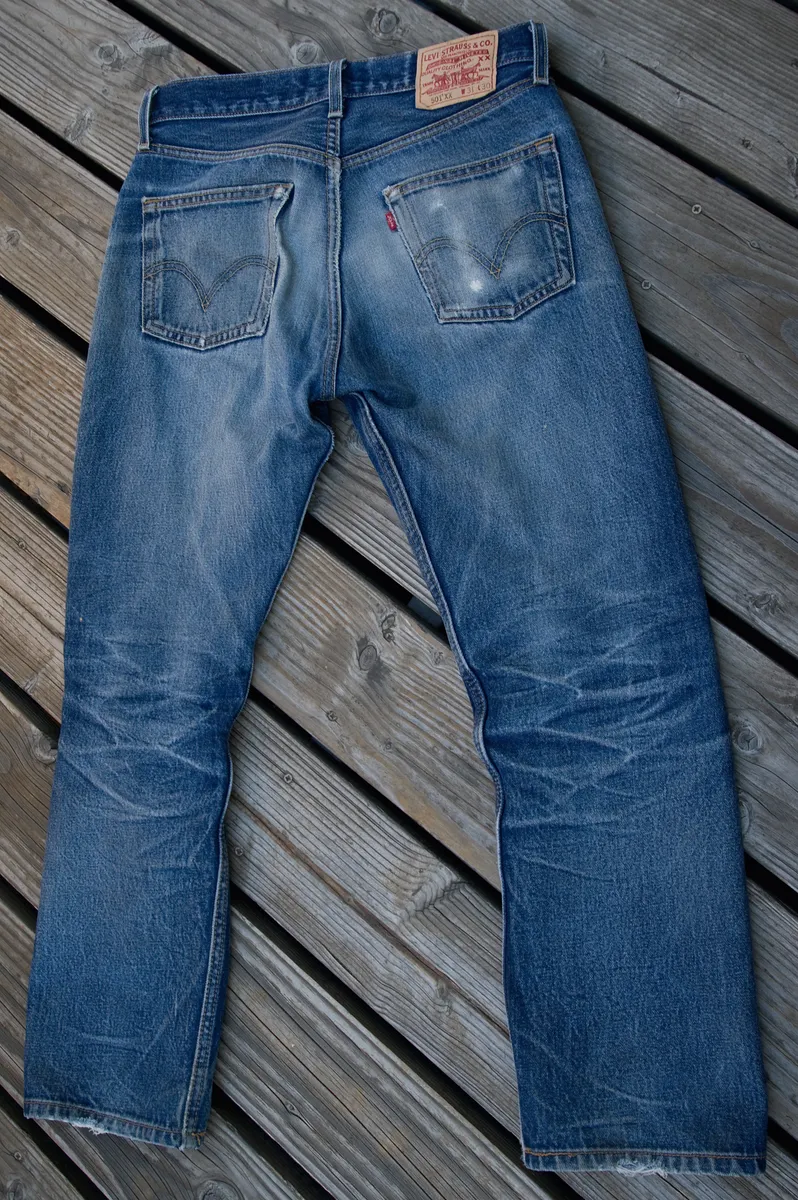
Color fading followed the pattern raw-denim fans chase: the indigo dye faded unevenly at contact points (thighs, seat, pocket bag outlines showing through on the front) rather than uniformly, which gives the jeans a broken-in, lived-in look that a stonewashed or pre-faded jean can't replicate authentically. If you want jeans that look identical on day 400 as they did on day one, this isn't that product — the whole point of raw/rigid denim is that it visibly documents how you wear it.
Button-fly vs. zip fly — an honest take
The five-button fly is one of the most polarizing details of the 501 and deserves a fair hearing on both sides. In favor: it's more durable long-term (no zipper teeth to fail, no slider to break), it looks period-correct if that's part of why you're buying a 501 in the first place, and once you're used to the motion it's not meaningfully slower than a zipper. Against it: it is objectively less convenient for quick bathroom trips, it can dig into you slightly if you sit down carelessly, and if you're buying these for a partner or friend who's never worn button-fly jeans, expect a genuine adjustment period and possibly some annoyance. I got used to it within the first week and stopped noticing it, but I know several people who tried a 501 specifically for the retro look and switched back to a zip-fly Levi's 505 because the button fly bothered them daily. This is a legitimate, personal preference issue, not a defect, and it should factor into your buying decision.
Comparison to a stretch-denim alternative
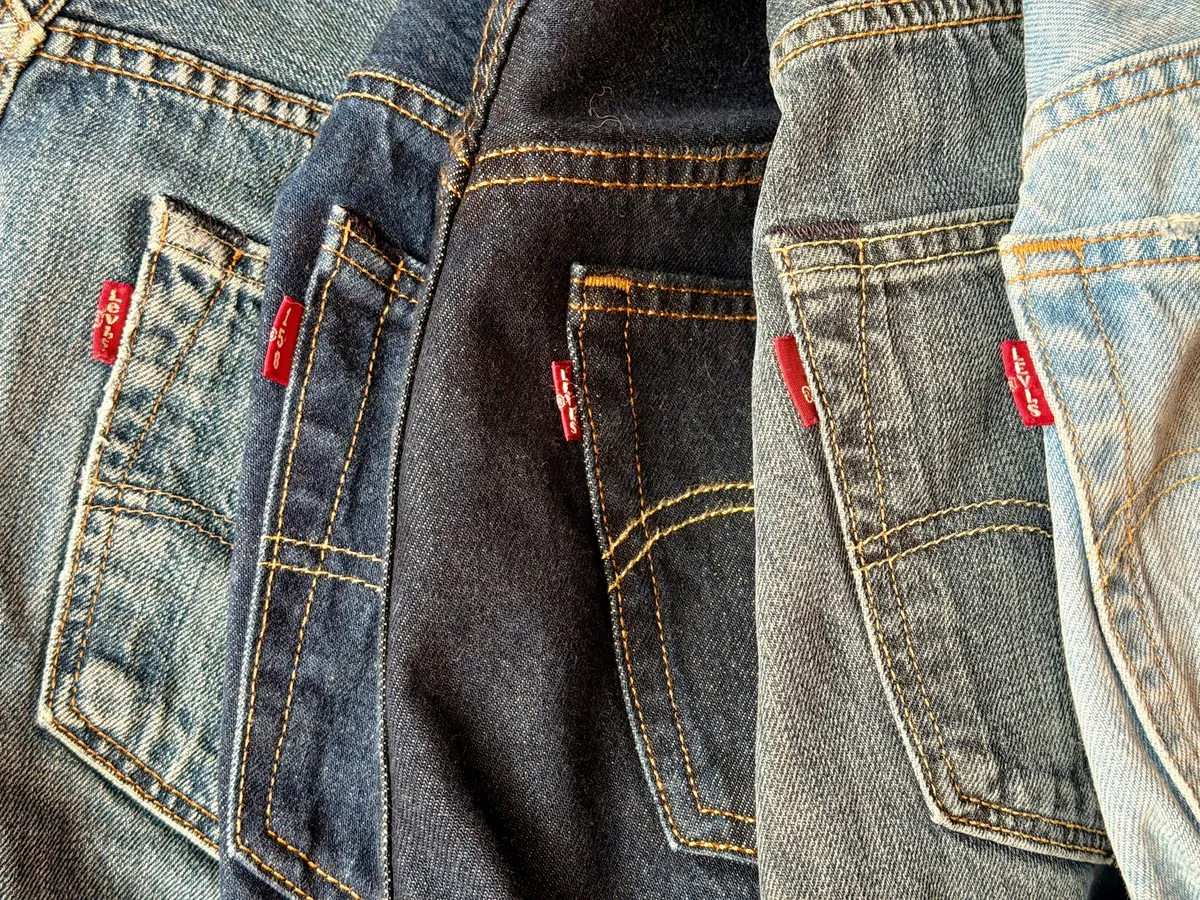
I wore a pair of Levi's own 511 Slim Stretch jeans alongside the 501 during the same period for a direct comparison, since it's the most common alternative someone shopping the 501 will cross-shop. The 511 stretch felt comfortable from the very first wear — no break-in period, full range of motion immediately, and it holds its shape through a full day of sitting without the knee-bagging you sometimes see in stretch denim after a few hours. But the 511's stretch fibers mean it fades much more uniformly and less dramatically over time (less honeycombing, less whiskering), and in my experience stretch-blend denim from multiple brands tends to lose some recovery and start sagging at the knees and seat after 12–18 months of regular wear in a way rigid 100% cotton denim doesn't, because there's no elastane to fatigue. If you want zero break-in and don't care about fade development, the stretch option wins on day-to-day comfort. If you want a jean that ages distinctively and that you expect to wear for years, not just seasons, the 501's rigid cotton construction has the long-term durability edge.
Against the cheap generic straight-leg jean I mentioned earlier (a $30 fast-fashion pair), the 501 wins decisively on stitching durability, fabric weight and hand-feel, and the fade quality, but the generic jean actually had a touch more give in the fabric despite not being marketed as stretch, likely from a looser weave — which made it marginally more comfortable in the first two weeks before its seams started failing. That's the trade-off in a nutshell: the 501 asks for patience upfront in exchange for a garment that's still fully intact after the cheap alternative would have been retired.
Who should buy this
The 501 Original makes the most sense for someone who wants a genuinely classic, brand-agnostic straight-leg silhouette, doesn't mind (or actively wants) a multi-week break-in period, and values long-term durability and personalized fading over instant, stretch-jean comfort. It's a poor fit for anyone who needs jeans that feel great the moment they're unpackaged, anyone who's sensitive to a snug, non-giving waistband, or anyone who strongly dislikes button-flies. Sizing up half an inch to a full inch from your normal stretch-jean size is close to mandatory advice if you're new to rigid denim — don't buy your usual number expecting a normal fit.
Label, authenticity details, and small quality notes
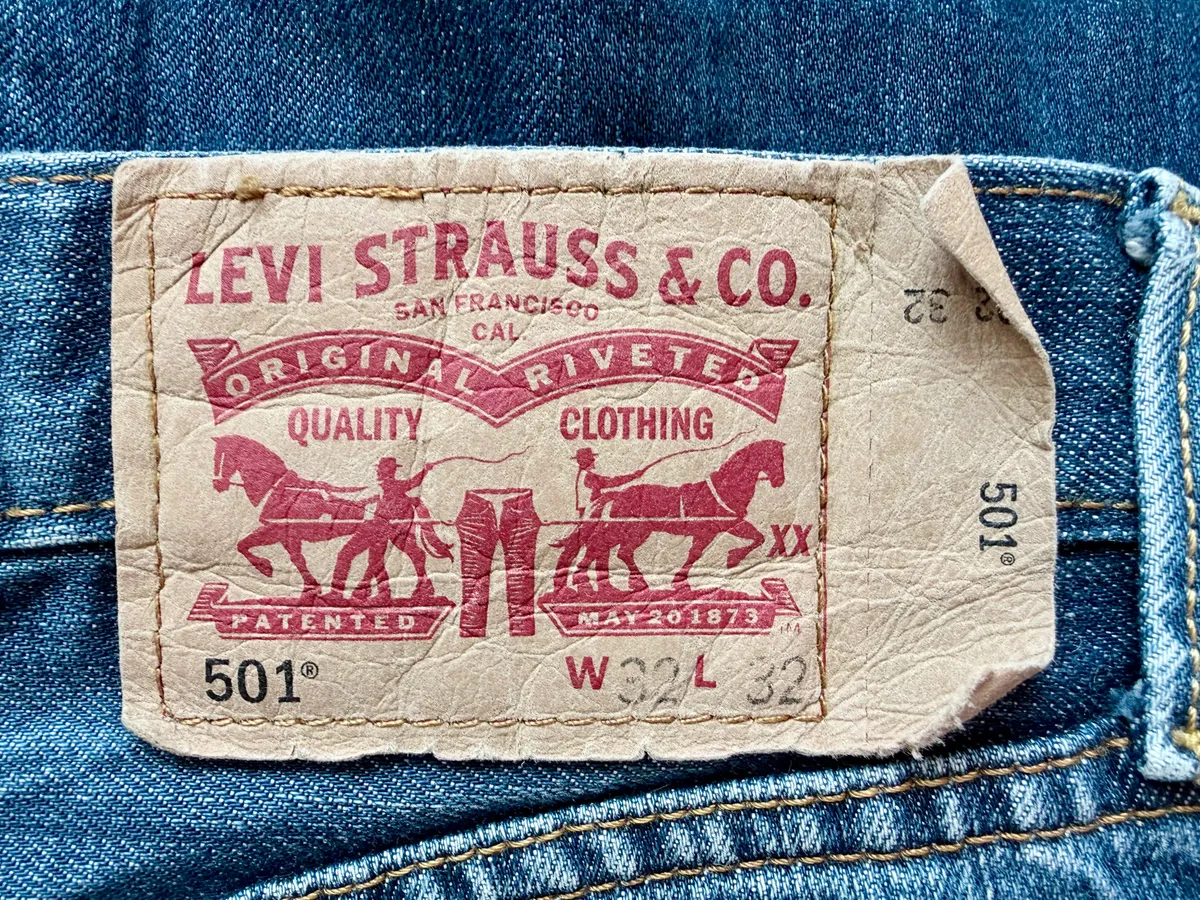
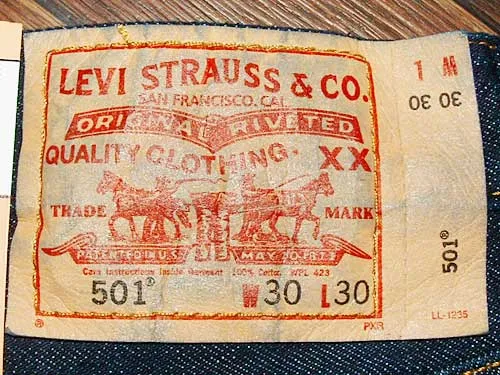
One detail worth calling out for anyone buying online rather than in-store: the inner label and leather patch details (the Two Horses patch, the red tab placement, the button stamping) are how you verify you're getting a genuine pair rather than a counterfeit, which unfortunately circulate widely for a product this recognizable. Every button on my pair was stamped consistently, the leather patch stitching was even on both sides, and the fabric content label matched Levi's published specs for the rigid 501 (100% cotton, no elastane). If a listing's price seems too good to be true for this exact style, it's worth checking these details closely before buying, since counterfeit straight-leg "501-style" jeans are common enough that Levi's has public guidance on spotting them.
Verdict
After four months of regular wear, the Levi's 501 Original earned its reputation, but it earns it the hard way — through a genuinely uncomfortable few weeks of break-in, a sizing system that punishes anyone who doesn't size up, and a fly closure that some people will simply never love. What it delivers in exchange is real: stitching and construction that's noticeably tougher than budget alternatives, a fade pattern that becomes uniquely yours rather than a factory pre-fade, and a fit that, once broken in, moves with you in a way that feels earned rather than given. It's not the jean to buy if you want instant comfort out of the bag, and it's not for everyone's fly preference, but as a long-haul, buy-it-once straight-leg jean, it's hard to argue with a design that's survived essentially unchanged for a century and a half. Buy a size up from your stretch-jean normal, expect three to four weeks before it feels right, and you'll likely still be wearing this pair long after a cheaper alternative has fallen apart.
We compared prices across retailers so you don't have to.