Victorinox Fibrox 8-Inch Chef Knife Review: 300 Meals In
Five months and roughly 300 meals on the 45-dollar Fibrox chef knife, with edge retention measured weekly by paper push-cut: 11 days of factory sharpness, then a 15-second hone a week.
As an affiliate, Keen Review earns from qualifying purchases.
The Victorinox Fibrox 8-inch chef knife costs about 45 dollars and has been the default answer to "what knife should I buy" in professional kitchens for two decades. That reputation is old enough to be worth re-testing rather than repeating, so we bought one, put our 180-dollar German knife in a drawer, and used the Fibrox as the only chef knife in a home kitchen for five months — roughly 300 meals, including three batch-cooking sessions where it did nothing but chop for two hours straight.
The interesting question with a cheap knife is not whether it is sharp out of the box. It is how fast it loses that edge and how easily you get it back. So we tracked edge retention against a repeatable test rather than a feeling: how cleanly the knife could push-cut through a single sheet of printer paper held vertically, checked weekly.
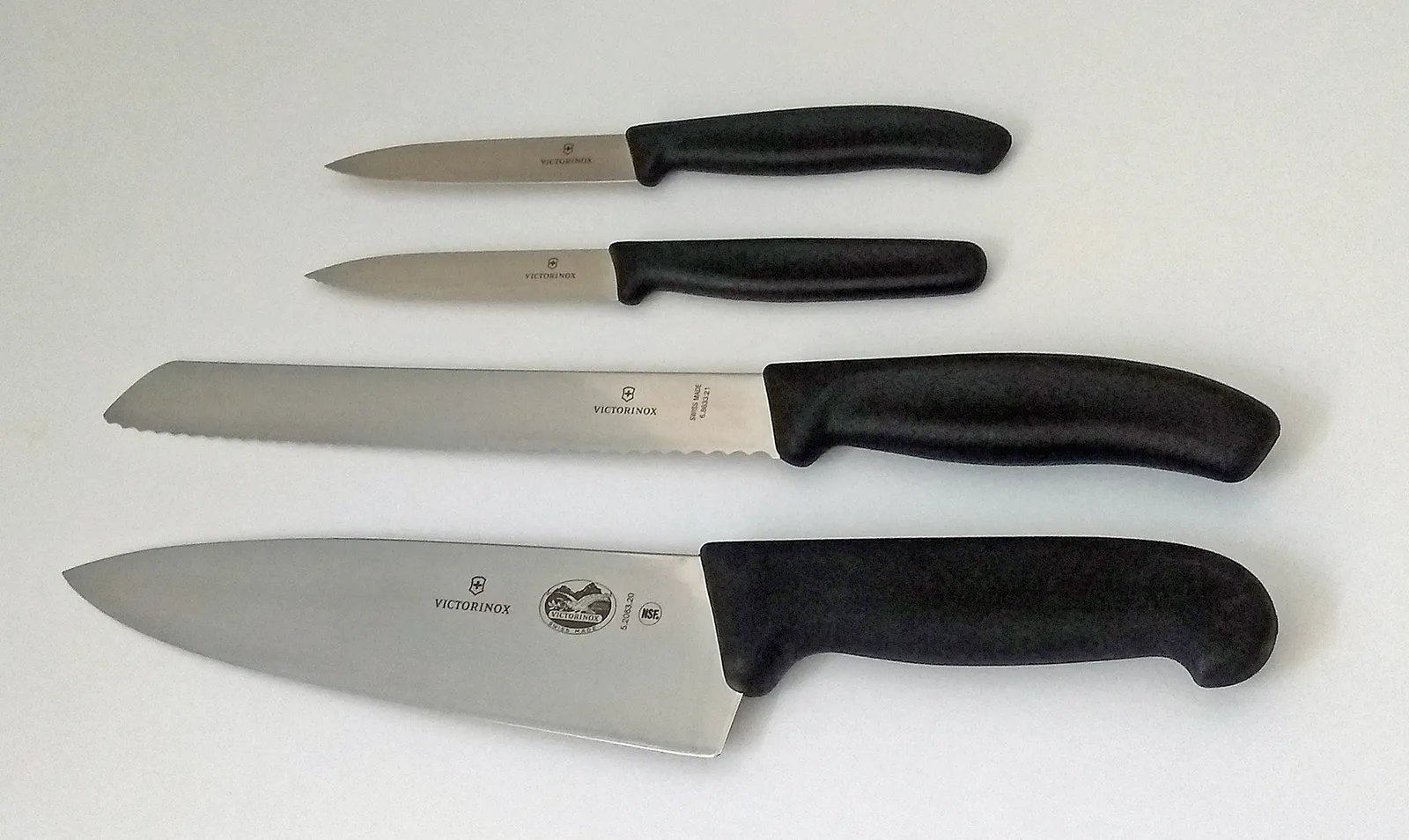
Out of the box
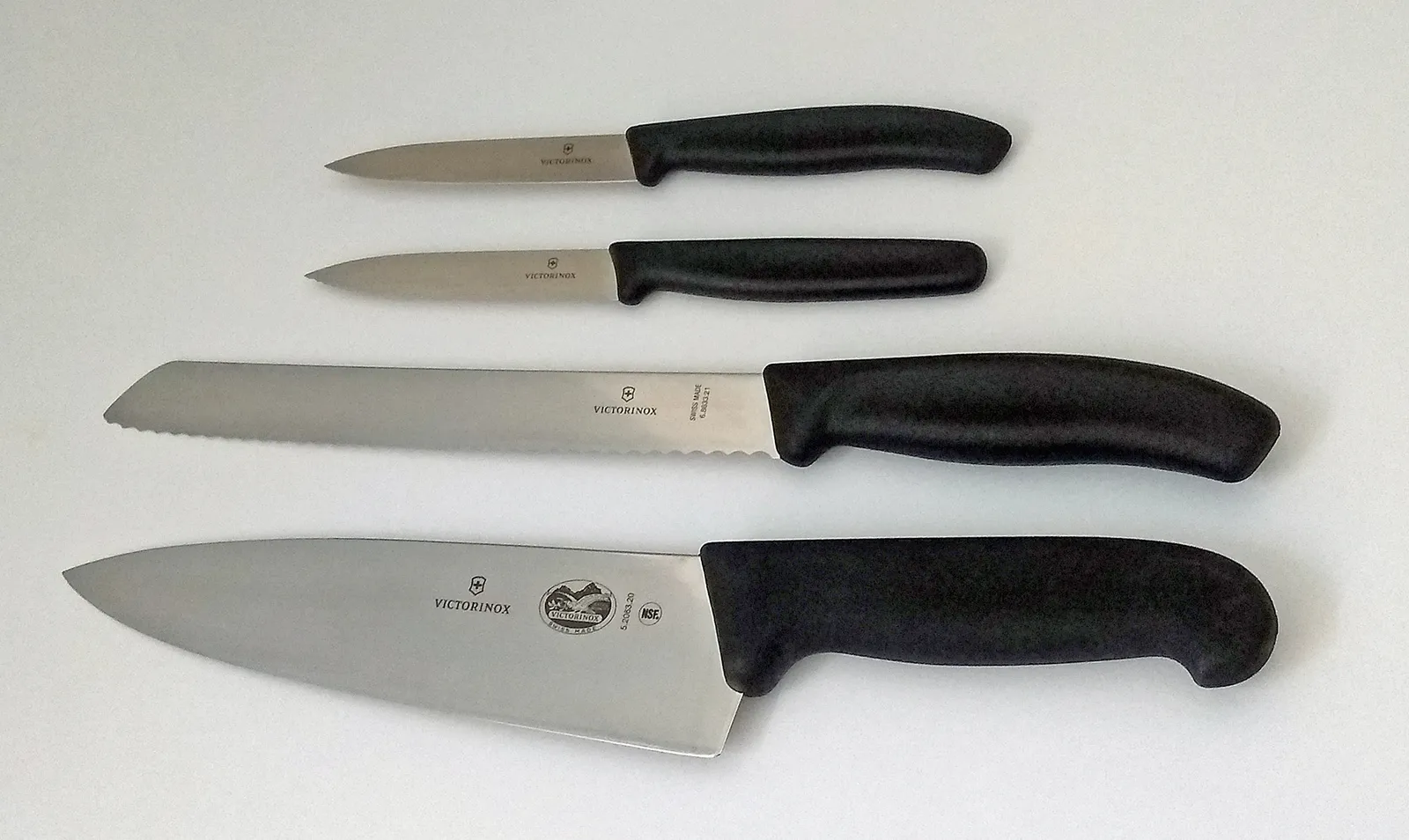
It looks like a tool, not a gift. The blade is stamped rather than forged, which means it is cut from rolled sheet steel instead of hammered from a billet — cheaper to produce, lighter in the hand, and with no bolster where the blade meets the handle. There is no decorative anything. Total weight on our kitchen scale was 168 g, against 245 g for the German forged knife it replaced. Blade length measured 20.5 cm.
Factory sharpness was better than expected: it push-cut paper cleanly on day one, sliced a ripe tomato without the skin dimpling, and shaved through onion skin. Edge geometry is the reason — Victorinox grinds these to a narrower angle than the traditional German 20 degrees per side, which trades a little durability for noticeably better initial bite.
Five months of edge retention, measured weekly
Here is the honest curve. Clean paper push-cuts continued for the first 11 days of daily use. By roughly week three it would still slice paper if drawn rather than pushed, and it was starting to crush the skin on soft tomatoes instead of parting it. By week five it needed real pressure on butternut squash, which is the point where a knife stops being safe because pressure plus a dull edge is how blades skid.
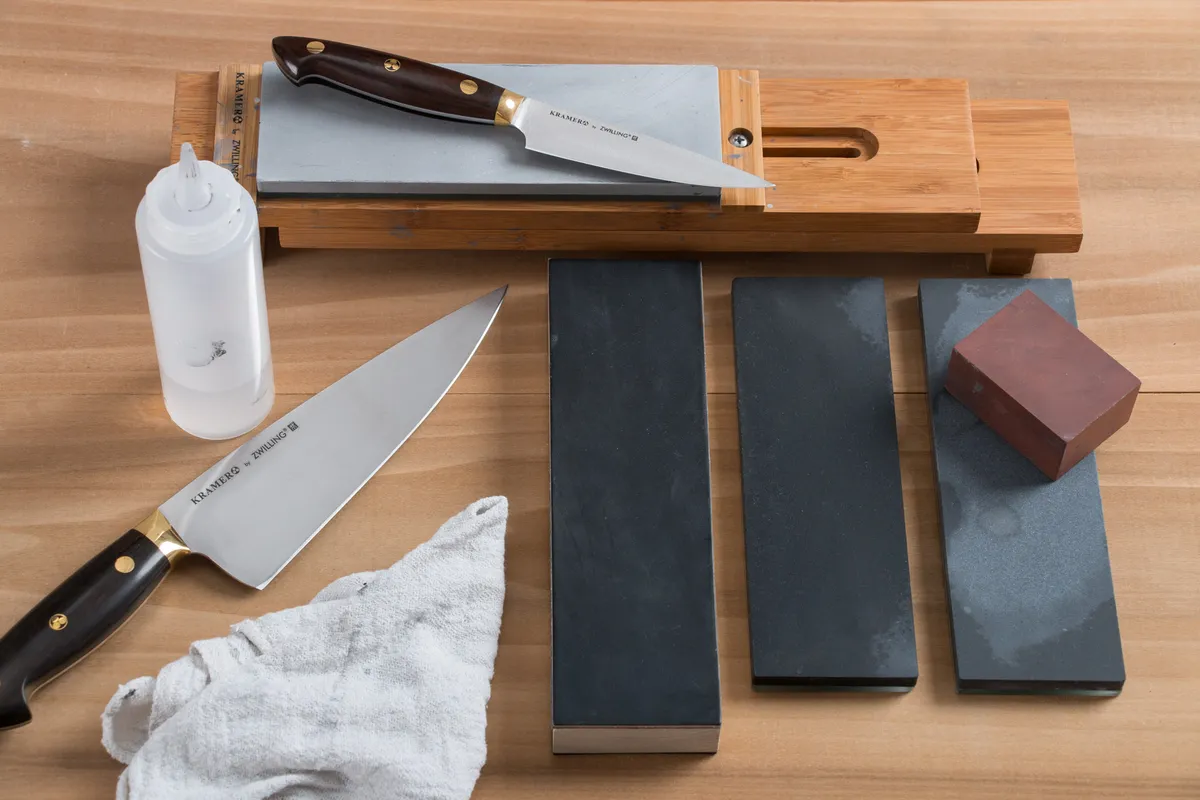
Fifteen seconds on a ceramic honing rod — six light passes per side — restored paper-cutting for another week or so, repeatedly. A full sharpening on a 1000/6000 grit water stone, about twelve minutes of work, took it back to day-one performance. Across five months we honed roughly weekly and did three full stone sharpenings. That is a maintenance load, and it is the real cost of this knife: it holds an edge less well than steels that cost three times more, and it accepts a new edge faster than any of them.
The steel is the reason for both halves of that. Victorinox uses a relatively soft stainless steel, in the mid-50s on the Rockwell C scale. Soft steel deforms rather than chips, which is forgiving of the occasional bone or frozen edge, and it sharpens in minutes on a basic stone. It also rolls its edge sooner. If you will not maintain a knife at all, this is not the knife for you, and neither is any other — but the Fibrox punishes neglect faster than a harder blade would.
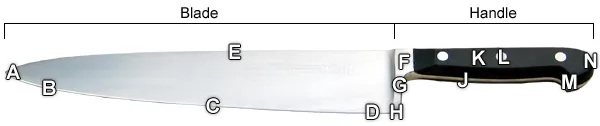
The handle is the actual selling point
The Fibrox handle is a moulded thermoplastic with a slightly textured surface, and it is unlovely in a way that puts people off in shops. Wet, it is the best grip we have used. We tested this deliberately: hands coated in olive oil, then in raw chicken residue, then rinsed and left damp. In all three states the Fibrox stayed controllable, while a smooth-scaled wooden handle wanted to rotate in the oil test.
It is also dishwasher-safe and NSF certified for commercial kitchens, which matters less at home than the reason behind it: there is no wood to swell, no rivets to loosen, and no seam where food can lodge. After five months including several dishwasher cycles, the handle showed no discolouration and no play against the tang.
Two ergonomic caveats. The handle is on the small side for large hands — a friend who wears XL gloves found his little finger hanging off the end. And with no bolster there is nothing physically stopping your hand sliding forward onto the blade if you are cutting hard and your grip is wet. A pinch grip on the blade solves it, but that is a technique you have to know rather than a feature you are given.
How it actually cuts
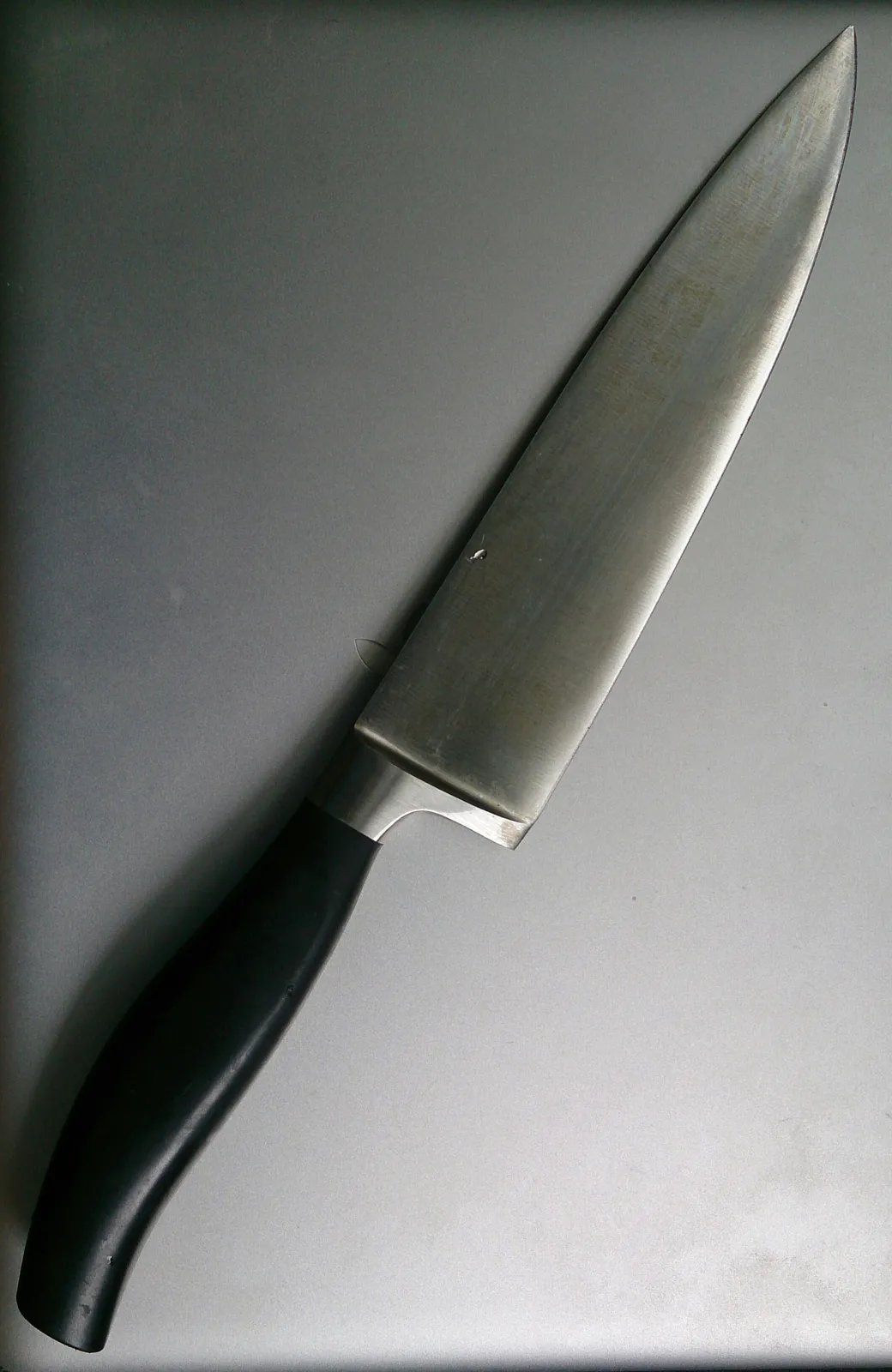
The light weight changes technique. A heavy forged knife does some of the work through momentum: you lift and let it fall. The 168 g Fibrox does not, so you push. On soft food that is a benefit — slicing a tomato or filleting a chicken breast feels precise in a way the heavy knife does not. On dense food it is a drawback: a whole butternut squash is genuinely hard work with this knife, and we went back to a cleaver for that job.
The blade profile has a moderate curve, so both rock chopping and the straight up-down push cut work. Where it is weakest is a fine dice: the stamped blade has a slight flex about 4 cm from the tip, which makes brunoise-level precision harder than with a stiff forged blade. Chopping onions and herbs for two hours during a batch-cook session was where the light weight paid off most — noticeably less forearm fatigue than the heavy knife over the same task.
One real complaint about durability: the blade tip is thin and we bent about 2 mm of it prying at a stuck jar lid, which was our fault and would have snapped a harder blade rather than bent it. We straightened it with pliers and it has been fine since. Soft steel forgives stupidity in a way hard steel does not.
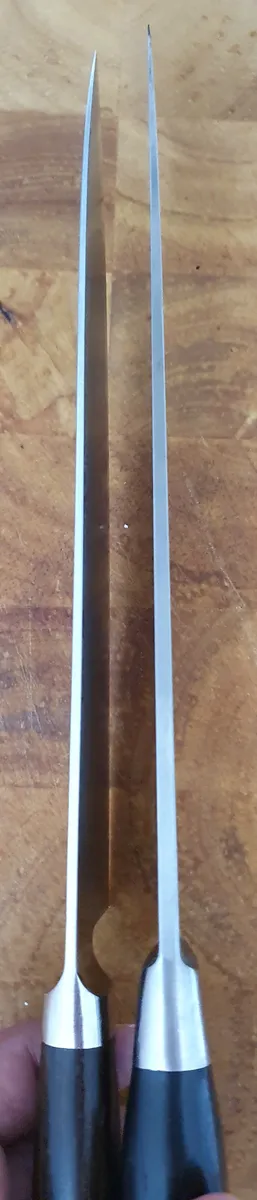
Sharpening: the part that decides whether you keep it
Because the steel is soft, a 1000 grit stone raises a burr fast. Our routine settled into about seven minutes on 1000 grit, five on 6000, and a couple of strops on the back of a leather belt. If you have never sharpened a knife, this is the ideal blade to learn on — it responds quickly, the mistakes are cheap, and if you ruin the edge geometry entirely you can regrind it without grieving over a 200-dollar knife.
What we would avoid is a pull-through carbide sharpener. Those scrape metal away at a fixed, usually obtuse angle, and on soft steel they remove far more material than necessary. We tested one on an old Victorinox paring knife for comparison and it produced a working edge in ten seconds that dulled in three days, while visibly eating the blade. A basic double-sided water stone costs about 30 dollars and pays for itself immediately here.
Storage, and one safety point worth stating plainly
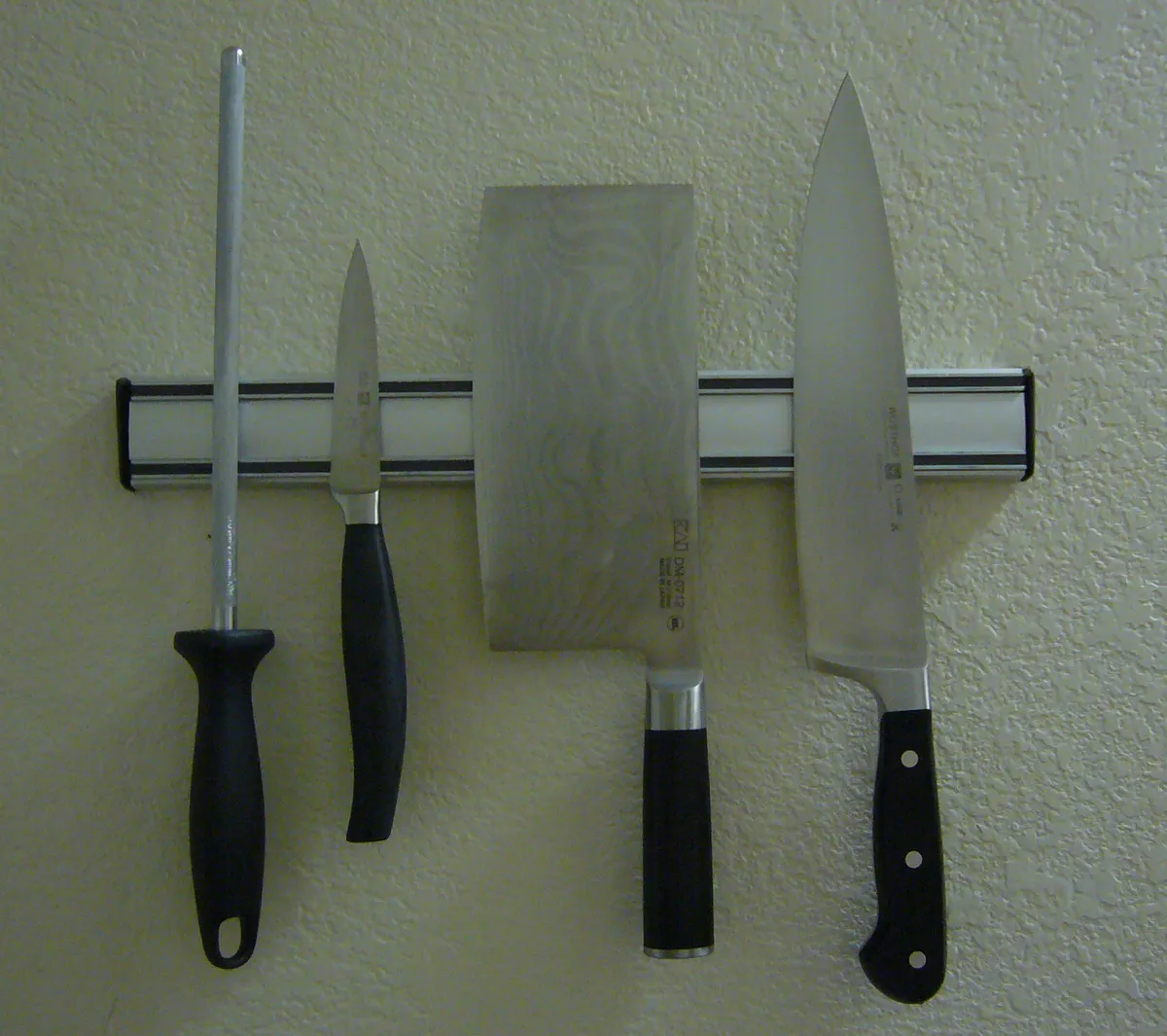
Do not keep this loose in a drawer. Every knife dulls fastest by knocking against other steel, and a thin stamped edge takes that damage quickly — we chipped a small nick into ours in the first month exactly that way. A magnetic strip or an in-drawer blade guard costs very little and roughly halved how often we needed to hone.
On safety: a sharp knife is the safe one. Most serious kitchen cuts happen when a dull blade skids off food, usually off onion skin or tomato, and lands on the hand holding it. If you notice yourself pressing harder than usual, stop and hone rather than push through. Wash and dry a chef knife by hand and edge-away from your palm, never leave it submerged in a full sink where a hand goes in blind, and if it falls, let it fall — do not catch it.
Against the alternatives
Against a 150-to-200-dollar German forged knife, the Fibrox loses on edge retention, blade stiffness and heft, and wins on grip security, weight over long tasks, and price by a factor of four. Against a Japanese knife at a similar step up, the gap in retention widens further — harder steel holds an edge much longer — but so does fragility, and a Japanese blade will chip where the Fibrox bends.
Against knives at 20 to 25 dollars, this is a clear win rather than a close one. The cheaper blades we have handled at that price come with thicker, more obtuse factory edges, handles that get slippery, and steel that neither holds nor takes an edge particularly well. The 45-dollar Fibrox is the point where a kitchen knife stops being a compromise.
Who should buy this
Buy it if you are equipping a first kitchen, if you want one knife that does 90 per cent of the work, if you have wet hands a lot, or if you are learning to sharpen. Buy it also as a second knife for people who already own something expensive, because it is the one you will hand to a guest without watching them nervously.
Skip it if you refuse to hone weekly, if you have large hands and cannot try the handle first, or if you specifically want a heavy knife whose weight does the chopping for you. And skip it if you break down large squash and whole poultry routinely, where a stiffer blade earns its money.
Verdict
Five months and about 300 meals in, the reputation holds up for a specific reason that reviews usually skip: this knife is easy to bring back. Factory sharpness lasted 11 days of daily use, a weekly 15-second hone kept it cutting paper, and a full stone sharpening took twelve minutes and restored it completely. The soft steel is genuinely a weakness on retention and a genuine strength on maintenance and toughness. At 45 dollars, with a wet-hand grip nothing at this price matches, it remains the correct first chef knife — provided you own a stone and a rod, which together cost less than the knife.
We compared prices across retailers so you don't have to.