22-Inch Weber Kettle Review: 31 Cooks on Fuel and Vents
A season and 31 cooks on the 22-inch Weber Original Kettle Premium, logging chimney times, dome versus grate temperatures, and a snake build that held 121-135 C for 4 hours 50 minutes.
As an affiliate, Keen Review earns from qualifying purchases.
A charcoal kettle is not a grill you buy for convenience. It is a grill you buy because you want control over a fire, and it will hand you that control only after you learn how its two air vents actually behave. We spent a full season — 31 cooks between April and September — with a 22-inch Weber Original Kettle Premium, keeping a notebook of fuel loads, dome temperatures, probe temperatures at grate level, and how long each configuration held.
This review is deliberately about fuel and temperature management rather than general backyard use, because that is the part every charcoal buyer underestimates. If you want the push-button version of outdoor cooking, a gas grill is the honest answer and we have reviewed one separately. This is about what 219 dollars of enamelled steel and two dampers can do once you stop guessing.
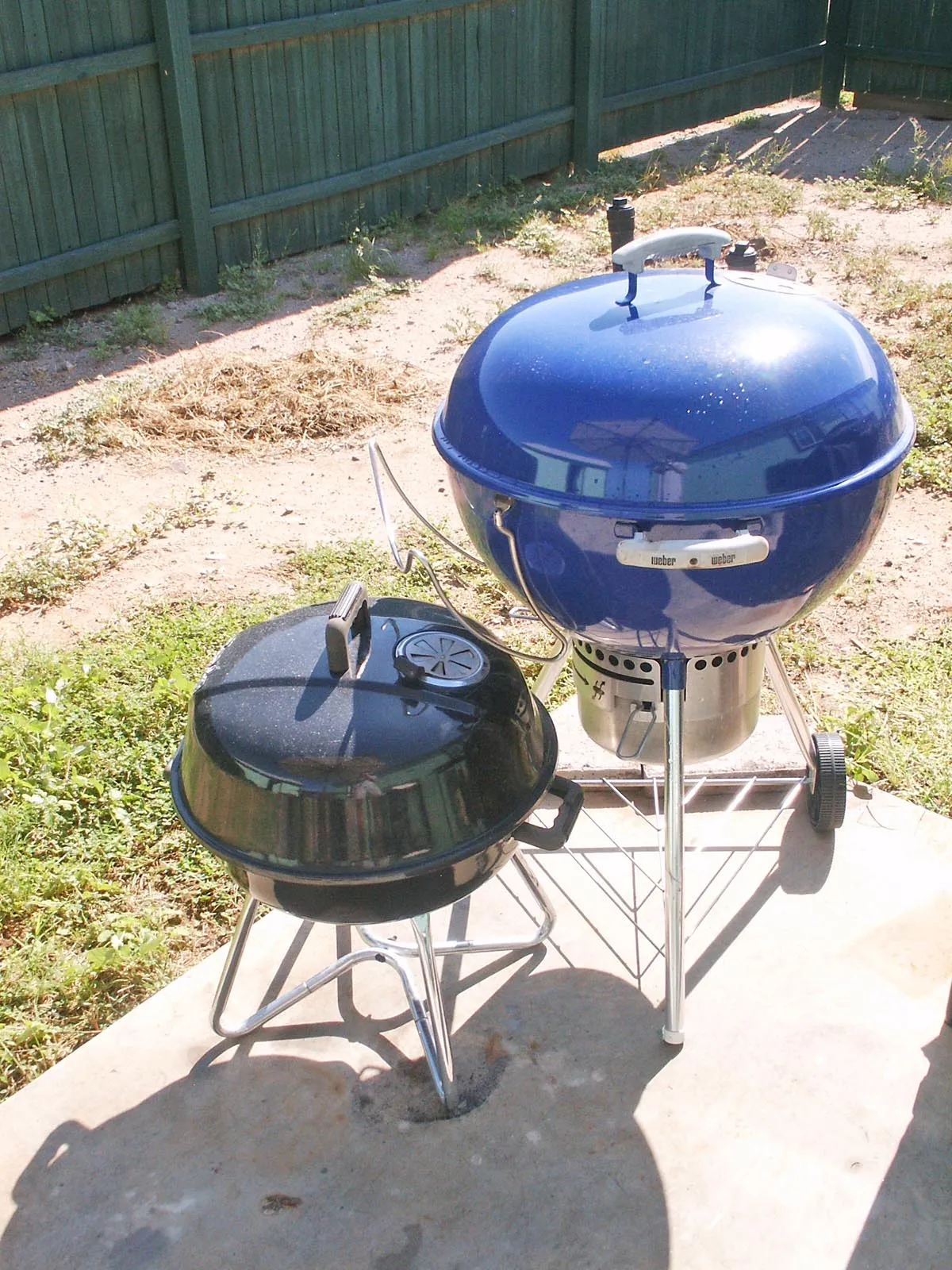
Assembly, and the one awkward step
Twenty-five minutes with a Phillips screwdriver, working alone. The bowl, lid and legs are all pre-formed, so most of the job is bolting the three legs into their sockets and clipping the ash catcher assembly underneath. The awkward step is the One-Touch cleaning system: the sweeper blades and the damper plate go in through the bottom of the bowl and have to line up with the exterior lever before you tighten anything. We got it wrong the first time, had to back out two screws, and lost about five minutes. Read that page of the manual twice.
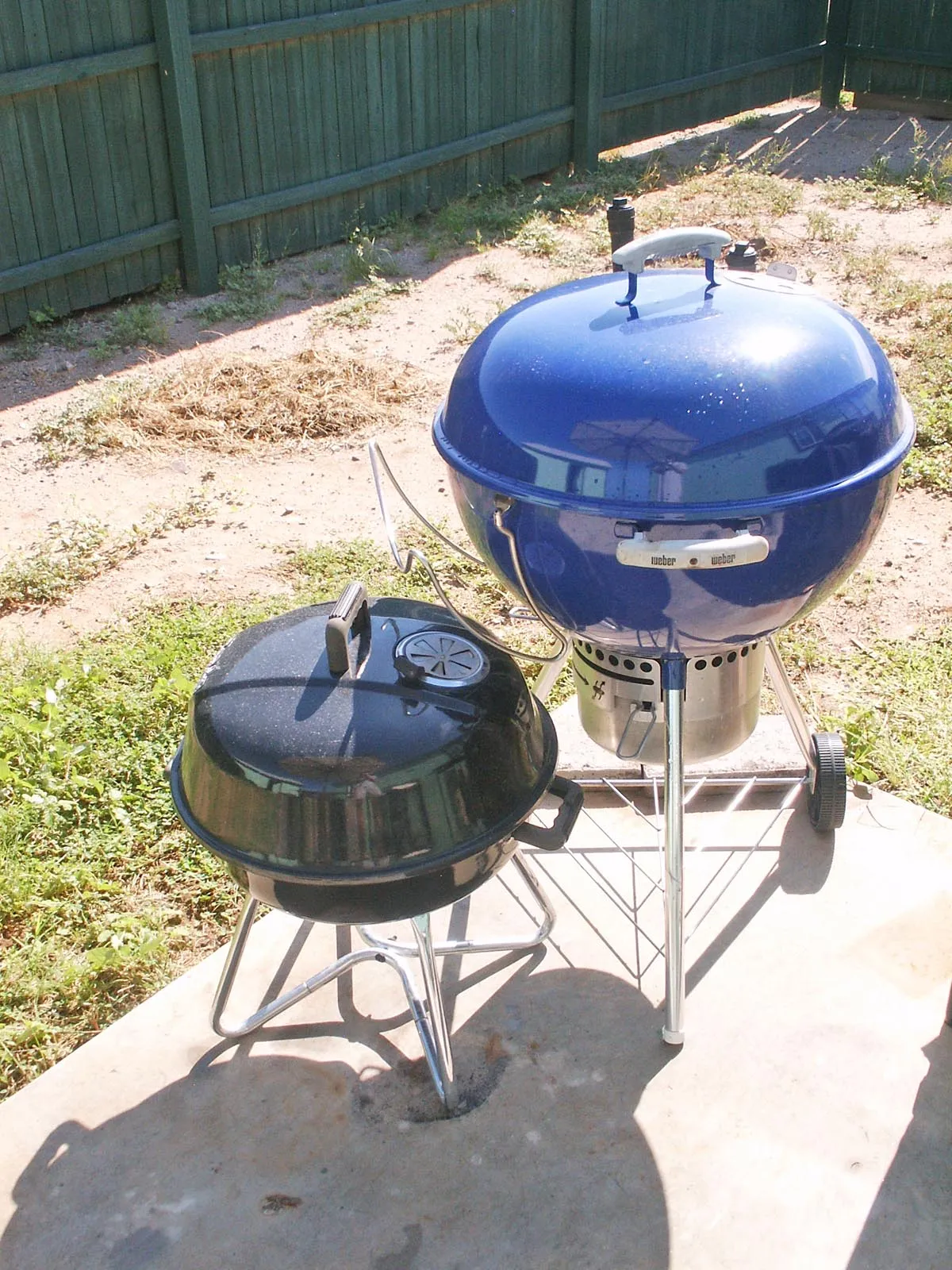
Finished, the grill stands about 100 cm tall with the lid on and weighs roughly 14.5 kg. Two of the three legs carry wheels, which means you tilt and drag rather than roll. On a smooth patio that is easy. On the gravel strip beside our house it was genuinely annoying — the wheels dig in and you end up carrying it by the bowl rim, which is fine cold and impossible hot.
Lighting it: the chimney versus the bottle
We tested both starting methods head to head with the same 40-briquette load, because this is the decision that determines whether your food tastes of charcoal or of petroleum distillate.
A chimney starter with two sheets of crumpled newspaper underneath produced fully ashed-over coals in 13 to 16 minutes across six trials, with 14 minutes as the median. Lighter fluid on a loose pyramid took 22 minutes to reach the same visual state, and the first thing we cooked over it — plain chicken thighs, no marinade — carried a distinct chemical edge on the skin that three tasters all identified without being prompted. The second cook over the same coals was clean. That is the whole story of lighter fluid: it works, it just taxes your first course.
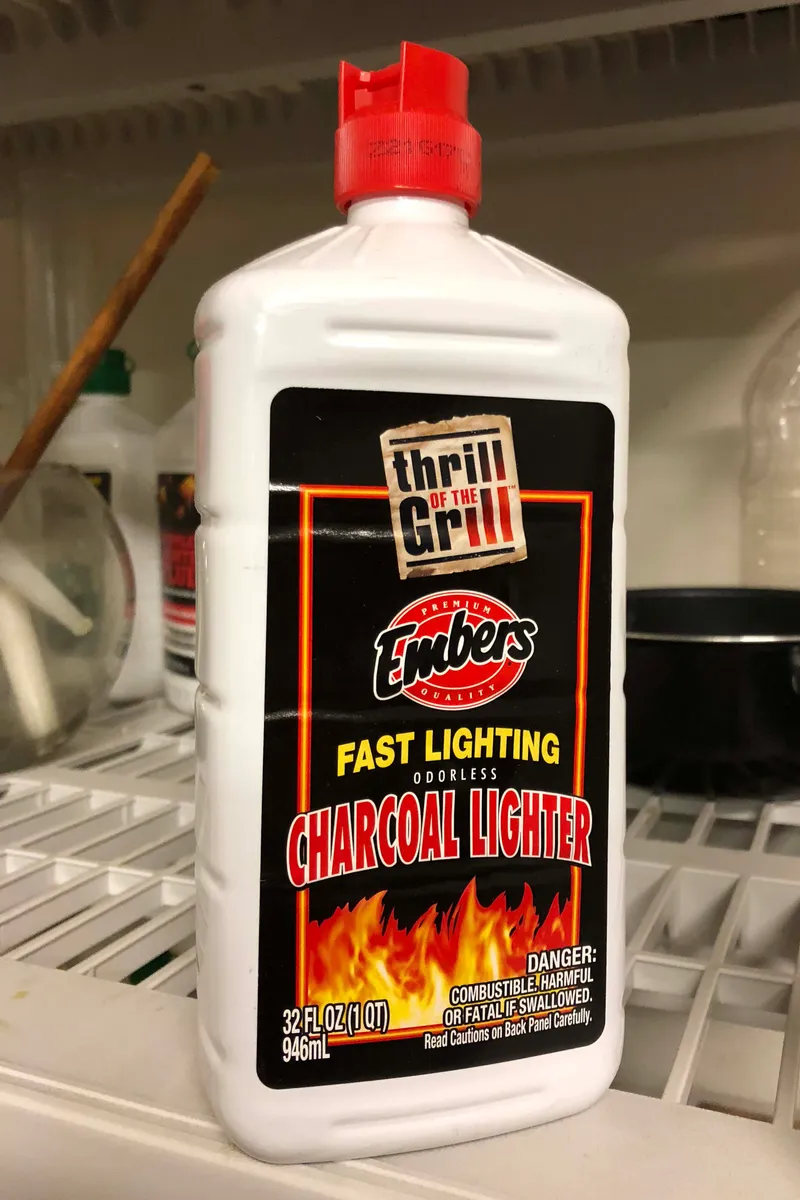
Safety, stated plainly: never add lighter fluid to coals that are already lit or still warm — the vapour can flash back up the stream toward the bottle. And charcoal produces carbon monoxide, which is odourless and can be lethal. Never burn charcoal indoors, in a garage, in a tent, or on an enclosed balcony, even one with an open window. A kettle grill needs genuinely open air, and so do its ashes.
Direct heat: what a full chimney gets you
With a full chimney of about 80 briquettes spread across the whole charcoal grate and both vents wide open, we logged 260 to 290 C at the dome for a usable 25-minute window, tailing off to around 200 C by minute 40. That is enough to put proper crust on a 3 cm steak in about 90 seconds a side, and it is more heat than any gas grill in this price range delivers.
The 22-inch grate gives roughly 363 square inches of cooking area. In practical terms we fitted 11 quarter-pound burgers comfortably or 8 with room to move them, and two whole spatchcocked chickens with about 4 cm of separation. The hinged grate on the Premium model is the feature we used most — the two flip-up sections let you drop briquettes onto the fire without lifting hot food off, which on a long cook is the difference between topping up and starting over.
Two-zone and low-and-slow: 4 hours 50 minutes on one load
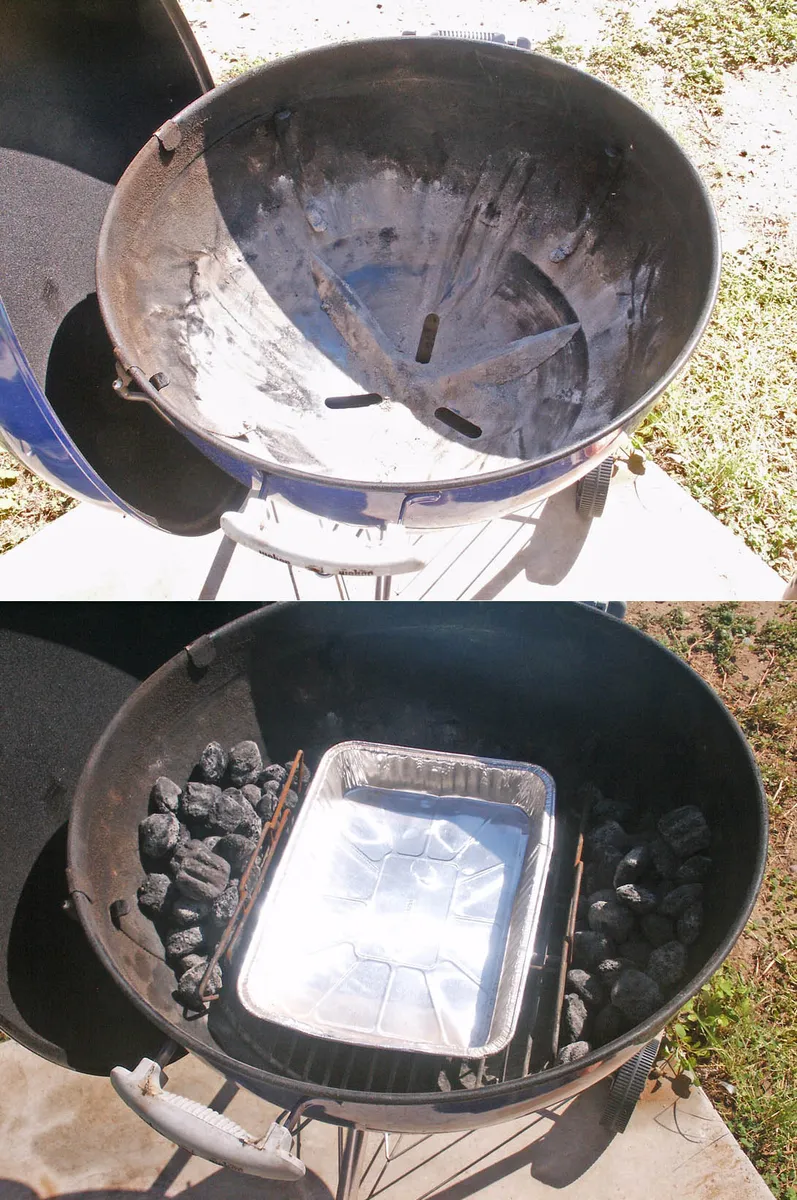
The kettle earns its reputation on indirect heat. Banking coals against one side with a foil pan of water on the other gave us a hot zone of roughly 190 square inches and a cool zone that sat stable enough for chicken pieces to render without burning. Closing the bottom damper to about a third and leaving the top damper half open held the dome between 160 and 180 C for over an hour with no intervention.
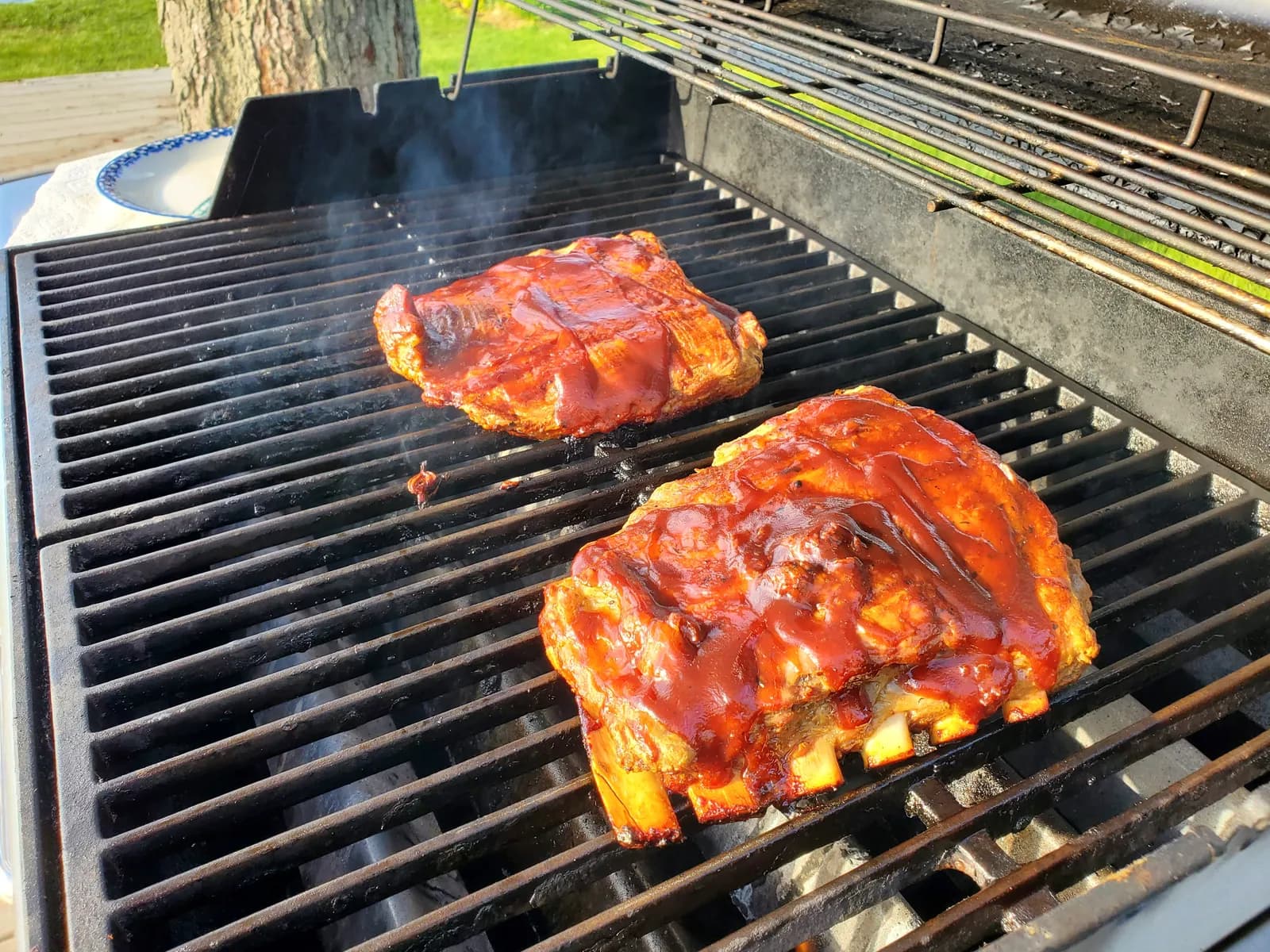
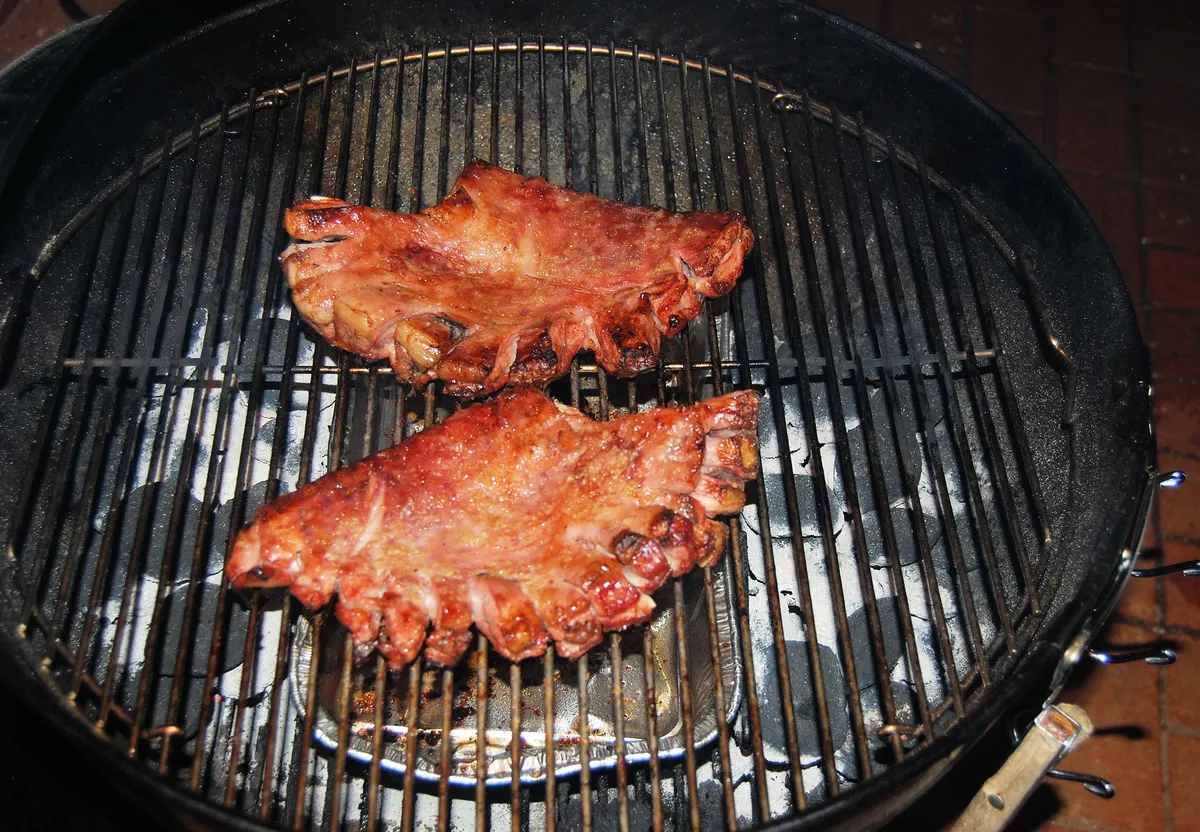
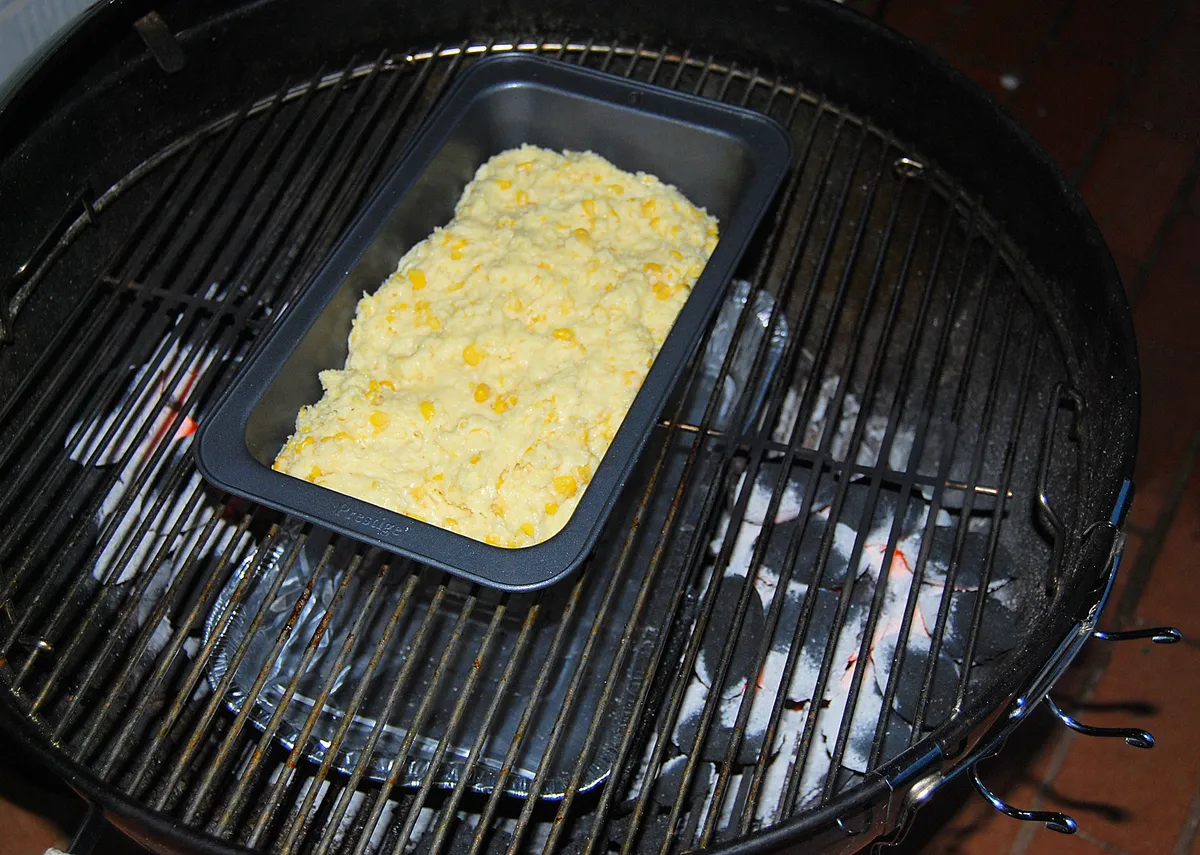
For real low-and-slow we used the snake method: unlit briquettes laid two wide and two high in a C around the outside of the charcoal grate, with 12 lit briquettes tipped onto one end. That configuration held 121 to 135 C for 4 hours 50 minutes on a single build, without opening the lid once. A rack of pork ribs took 5 hours 15 minutes to reach the bend test, with one small top-up at the 3 hour 20 mark because we had built the snake slightly short. Wood chunks placed on the snake at intervals gave smoke in the first two hours, which is when it matters.
The lid thermometer lies, in two different ways
The Premium model includes a built-in lid thermometer, and it is the component we trust least. First, calibration: in a boiling water check ours read 14 C low, consistently, across three tests. Second, and more importantly, position. The thermometer measures the dome, not the grate. On indirect cooks with the coals banked to one side, we saw the dome read 15 to 22 C higher than a probe clipped at grate level over the food, and on direct cooks the gap reversed depending on where the dome sensor sat relative to the fire.
Neither of those makes the built-in gauge useless — as a trend indicator, watching whether the needle is climbing or falling, it is fine. But if you are cooking anything where internal temperature matters, a two-probe digital thermometer with one probe at grate level and one in the meat costs about 30 dollars and turns this grill from guesswork into an instrument. We consider it a mandatory accessory, not an optional one, and that is a fair criticism of a 219-dollar product.
Wind, weather, and the trick nobody tells you
Charcoal is an air-fed fire, so wind is a variable in a way it never is with gas. On a day with a steady 15 to 20 km/h breeze, an indirect cook that had been holding 135 C fell to about 110 C over 20 minutes with no change to the dampers. The fix took ten seconds: rotate the whole bowl so the bottom damper faces away from the wind. That recovered the temperature within about eight minutes and it held for the rest of the cook. Nothing in the manual mentions this and it was the single most useful thing we learned all season.
Rain is less of a problem than expected. The porcelain-enamelled bowl and lid shrugged off a summer of being left outside uncovered, with no chipping and no rust bloom on either surface. What did rust was the plated-steel cooking grate, which developed surface spotting by August despite being brushed after every cook. That is normal for plated rather than stainless grate material, and a replacement is inexpensive, but if you plan to store the grill outdoors permanently, a cover is worth its 30 dollars.
Cleaning and the ash catcher
The One-Touch lever sweeps ash from the bowl into a sealed aluminium catcher below in about 20 seconds of back-and-forth. That is genuinely better than the open ash pans on cheaper kettles, which spill in the wind. The catcher's limit is capacity: after a high-heat cook with a full chimney it was around two-thirds full, so in practice we emptied it every second or third cook rather than the once-a-week we had assumed.
One more safety point worth stating clearly: ash can hold usable heat for well over 24 hours. We measured embers still glowing under a closed lid the morning after an evening cook. Empty the catcher into a metal container with a lid, keep it away from anything combustible, and give it a full day before it goes anywhere near a plastic bin. House fires start this way every summer.
The things it cannot do
There is no side shelf and no prep space of any kind, so you need a table beside it, and you need somewhere to put the lid — the Premium's lid hook hangs the lid on the bowl rim, which works but puts the hot inner surface at knee height. There is no gasket between lid and bowl, so at very low temperatures a little smoke escapes at the seam, which costs a small amount of efficiency and no flavour. Adding fuel mid-cook is easy with the hinged grate and awkward without it. And you cannot cook a 20-minute weeknight dinner on it, because 14 minutes of that is chimney time before you start.
Against a 60-dollar big-box kettle, the differences that mattered were the thickness of the enamel, the fit of the lid, and dampers that actually seal — our previous cheap kettle could not hold a low temperature because its vents leaked. Against a pellet grill at three times the price, the kettle loses on set-and-forget convenience and wins on searing heat and on having nothing electronic to fail.
Who should buy this
Buy it if you want to learn fire management, if searing heat and smoke matter more to you than speed, or if you cook for four to eight people and want one tool that does both high-heat grilling and long indirect cooks. It is also the right pick if you value repairability: every consumable part — grate, dampers, ash catcher, handle — is a stocked spare, and the 10-year limited warranty on the bowl and lid is credible given how the enamel held up.
Skip it if your cooking is mostly weeknight and time-pressed, if you have no safe outdoor space with real air movement, or if you are unwilling to buy a separate digital thermometer. In those cases the kettle will sit unused while you order takeaway, which is the most common way a charcoal grill disappoints its owner.
Verdict
Thirty-one cooks in, the 22-inch kettle did everything we asked of it and taught us most of it the hard way. It hit 290 C for searing, held 121 to 135 C for nearly five hours on one snake, survived a season uncovered with no damage to the enamel, and cleaned up in under a minute. Set against that: a lid thermometer that read 14 C low and measures the wrong place, a grate that spotted with rust by late summer, and no prep space at all. Buy the thermometer, learn where the wind is coming from, and this is the best 219 dollars in outdoor cooking.
We compared prices across retailers so you don't have to.