Weighted Wooden Staunton Chess Set Review: Five Months and Two Specifications That Matter
King-to-square ratio and weighted bases decide whether a chess set is pleasant to play on — everything else is decoration, including most of the price above $90.
As an affiliate, Keen Review earns from qualifying purchases.
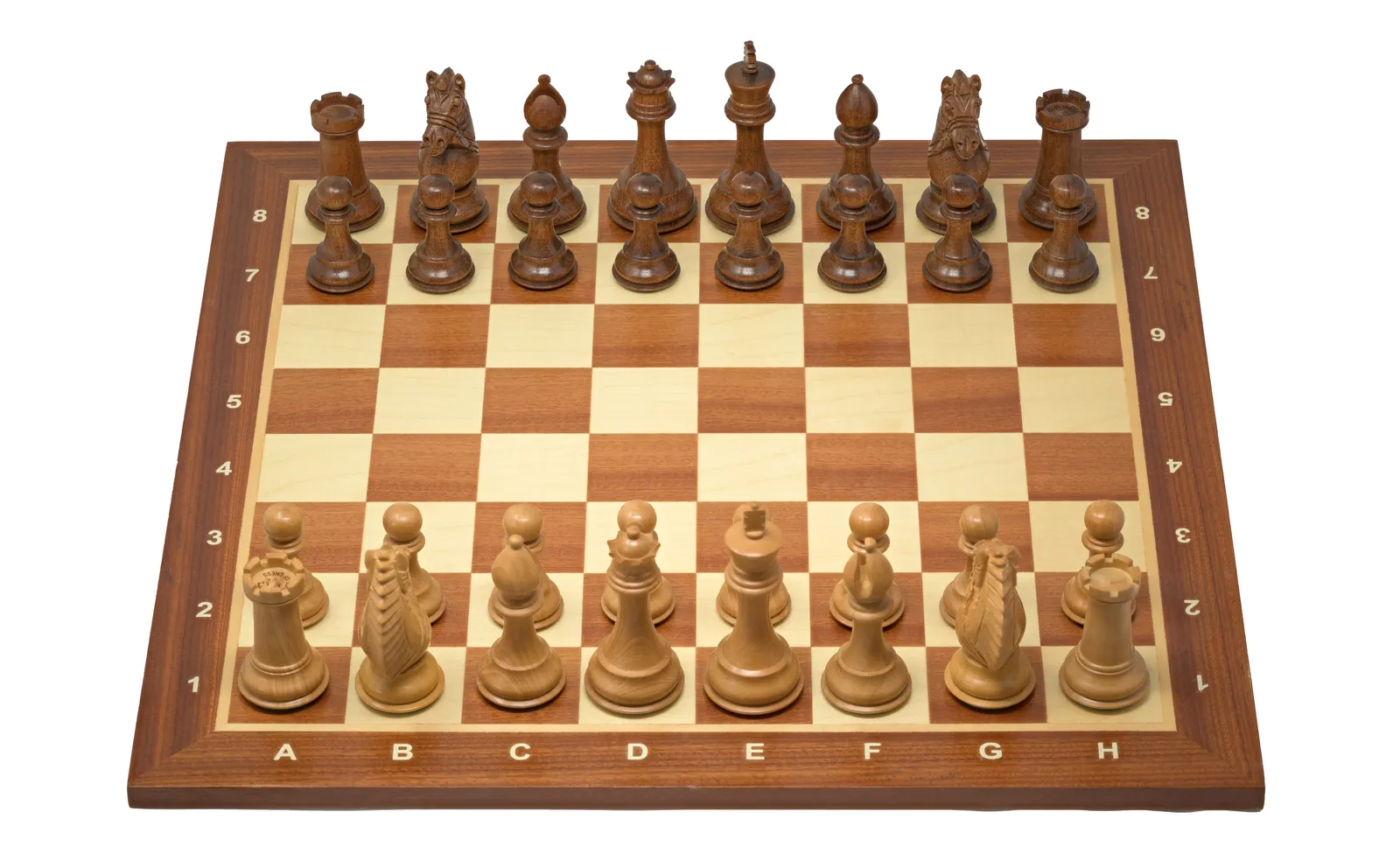
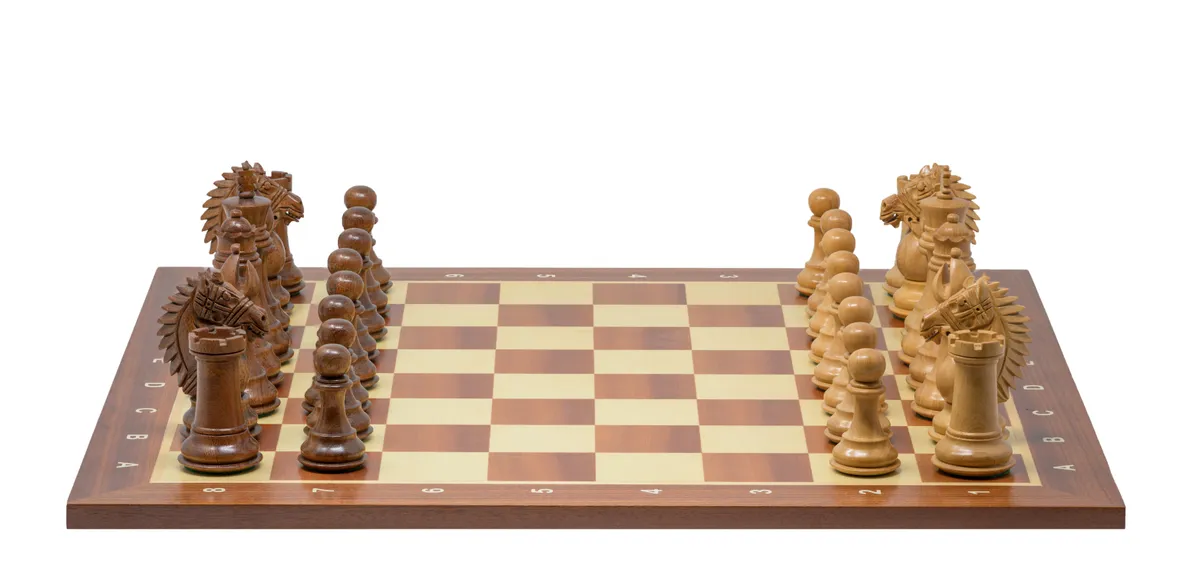
Everyone who plays chess online eventually buys a physical set, and most of them buy the wrong one. I bought a tournament-standard weighted wooden Staunton set with a 3.75-inch king and a 20-inch folding board for around $89, and used it for five months — a weekly club night, several hundred casual games at home, and a fortnight of working through an endgame book with the pieces on the table rather than on a screen.
The finding is that two specifications matter enormously and everything else is decoration. Get those two right and a $90 set will outlast you; get them wrong and you have an ornament you don't enjoy playing on.
The two specifications that decide everything
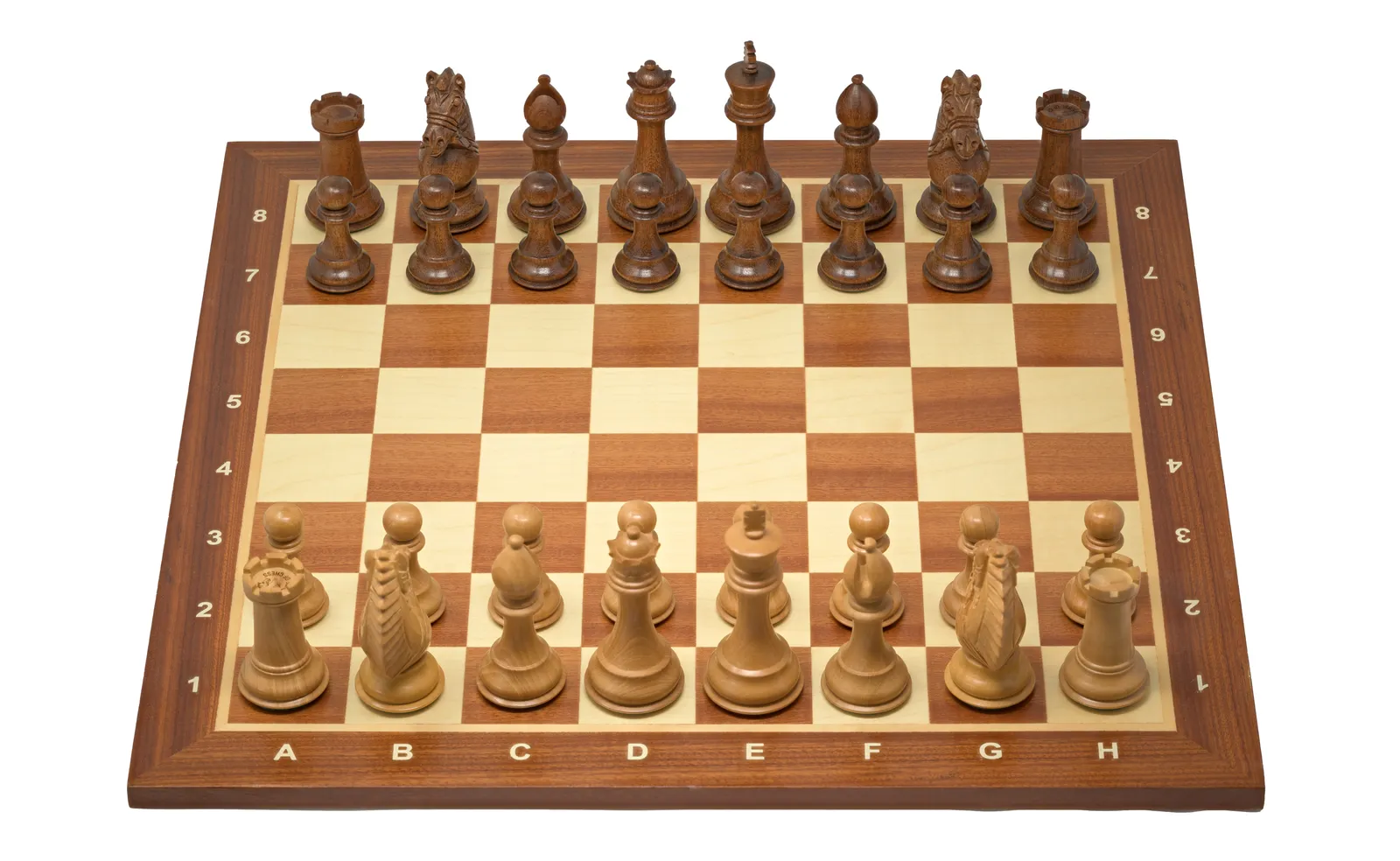
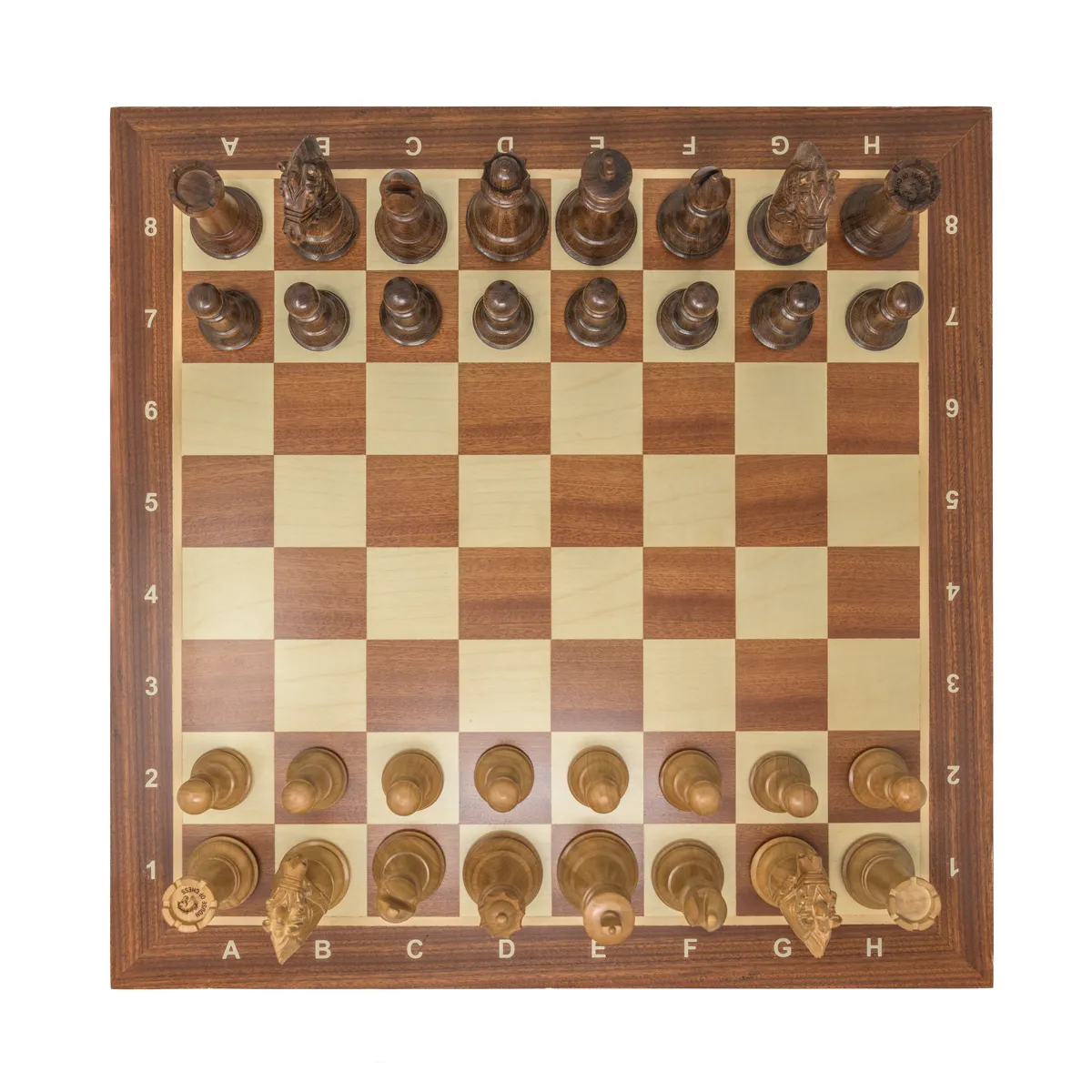
King height and square size must match. The accepted ratio is that the king's base diameter should be roughly 75-80% of the square width. My 3.75-inch king has a 1.5-inch base and the board has 2.25-inch squares, which puts it at 67% — comfortably inside the range and, more importantly, it means four pieces can sit adjacent without touching.
I tested a friend's decorative set for comparison: 3.5-inch king on 1.75-inch squares. Pieces physically collide in a crowded centre, you knock things over reaching across, and reading the position at a glance becomes genuinely harder. That single mismatch is why most cheap sets are unpleasant to play on.
Weighting. My pieces have metal weights in the bases: the king is 68 g, the pawns 22 g each on a kitchen scale. Weighted pieces stay put when you knock the table, land with a satisfying settle, and — this is the part I didn't anticipate — they are far easier to move accurately at speed. Unweighted pieces at the same size tip over during a fast exchange.
Five months of use, and what wore
The pieces are boxwood with a stained finish for the dark side. After several hundred games the finish shows minor sheen loss on the pieces handled most — the king, queen and knights — and nothing else. No chips, no cracks, no felt lifting from the bases.
The felt is the component I'd expect to fail eventually. Mine is still fully adhered on all 32 pieces, but two pawns have slightly compressed felt from being set down hard, which is cosmetic.
The folding board is where the design compromise lives. The hinge line runs through the middle of the board, and after five months there is a visible seam that pieces sitting on the E and D files can rock on slightly. It's minor and it is the price of a board that stores in a drawer. A solid one-piece board avoids it entirely and cannot be stored anywhere convenient.
Playing on wood versus playing on a screen
Worth reporting because it's the actual reason to buy this. I have played several thousand games online and perhaps three hundred over the board in five months, and the difference in how I think is not subtle.
On a screen the pieces are flat symbols and I calculate in a shallow, pattern-matching way, helped along by the fact that the interface prevents illegal moves. On a physical board I look at the position longer, I notice diagonals I miss on screen, and I have made — and been allowed to make — three illegal moves in five months, which was instructive.
The endgame study fortnight was the clearest demonstration. Working through king-and-pawn positions with real pieces, physically placing and re-placing them, produced retention that reading the same positions on a screen had not. That's anecdotal and I'd treat any stronger claim with suspicion, but it matched the standard advice from coaches and it's why I keep the set on the table rather than in the cupboard.
The knights, which are how you judge a set
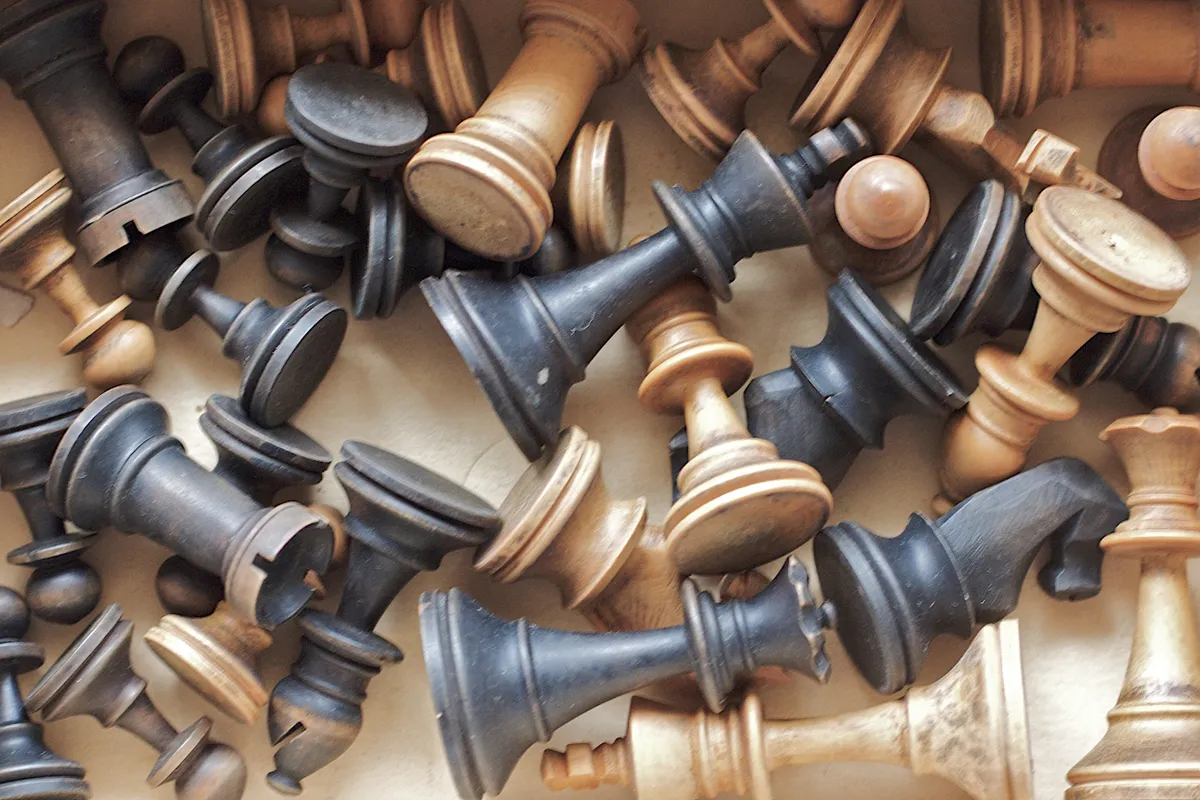
Knights are the only pieces requiring real carving, so they're the honest indicator of manufacturing quality. On a $20 set they are crude wedges with a suggested mane. On this set they have defined manes, distinct muzzles, and — the detail I look for — the two knights of each colour are near-identical rather than obviously hand-varied.
Mine are good rather than exceptional. There is a visible difference in the mane depth between the two white knights if you look closely, and the eye detail is a shallow impression rather than a carved socket. At $89 that's the right compromise; sets where the knights are genuinely beautiful start around $200.
Storage, and the thing nobody thinks about
The folding board has a felt-lined interior with moulded slots for each piece, which is the correct design and the reason I chose it. Setting up and packing away takes about 40 seconds and nothing rattles in transit.
What I underestimated is how much of the appeal is that packing away is easy. A set that lives in a drawstring bag with a rolled vinyl board takes three minutes to set up and I would have played fewer games. Convenience and frequency of play are directly linked, and the storage design is the mechanism.
The 20-inch board is also large enough that it does not fit on a small coffee table alongside two drinks, which is a real domestic consideration. Measure your table.
Two queens, and other completeness details
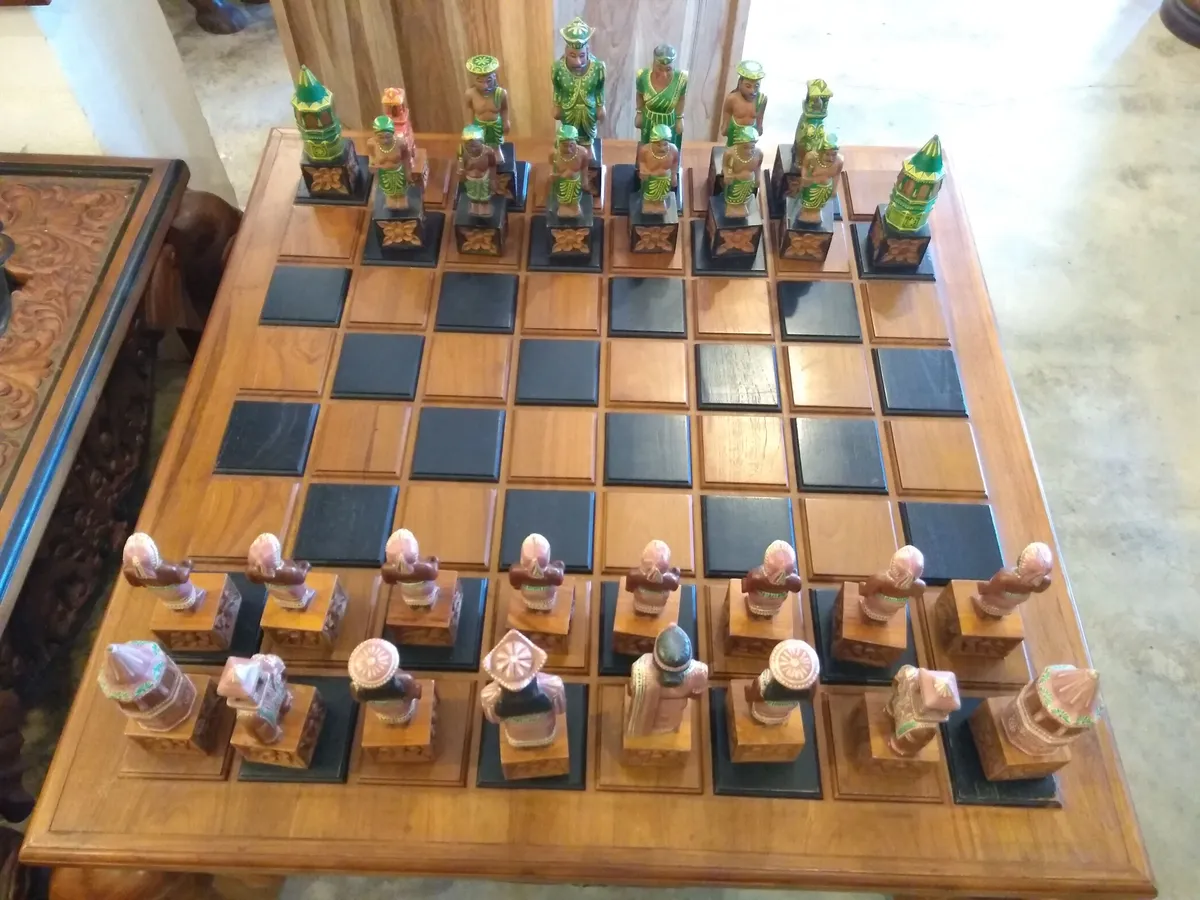
Check whether the set includes a second queen per side. Mine does — 34 pieces rather than 32 — and pawn promotion happens often enough in real games that the alternative is turning a captured rook upside down, which is how club players signal a queen and which looks exactly as improvised as it is.
Also worth checking: whether the board has algebraic notation printed along the edges. Mine does, and for anyone studying from books or reviewing games it removes a small constant friction. Purists dislike the look. I would not buy a study set without it.
Care, briefly
Wooden pieces want a dry cloth and nothing else. No water, no furniture polish, no oil unless it is a product intended for wood chess pieces. Five months in, mine have had a dry wipe monthly and nothing more.
Direct sunlight is the real hazard. The dark stained pieces will fade unevenly if the set lives on a sunny windowsill, and that damage is permanent. Mine sits on a side table away from the window.
Club night, and what a set gets judged on by other people
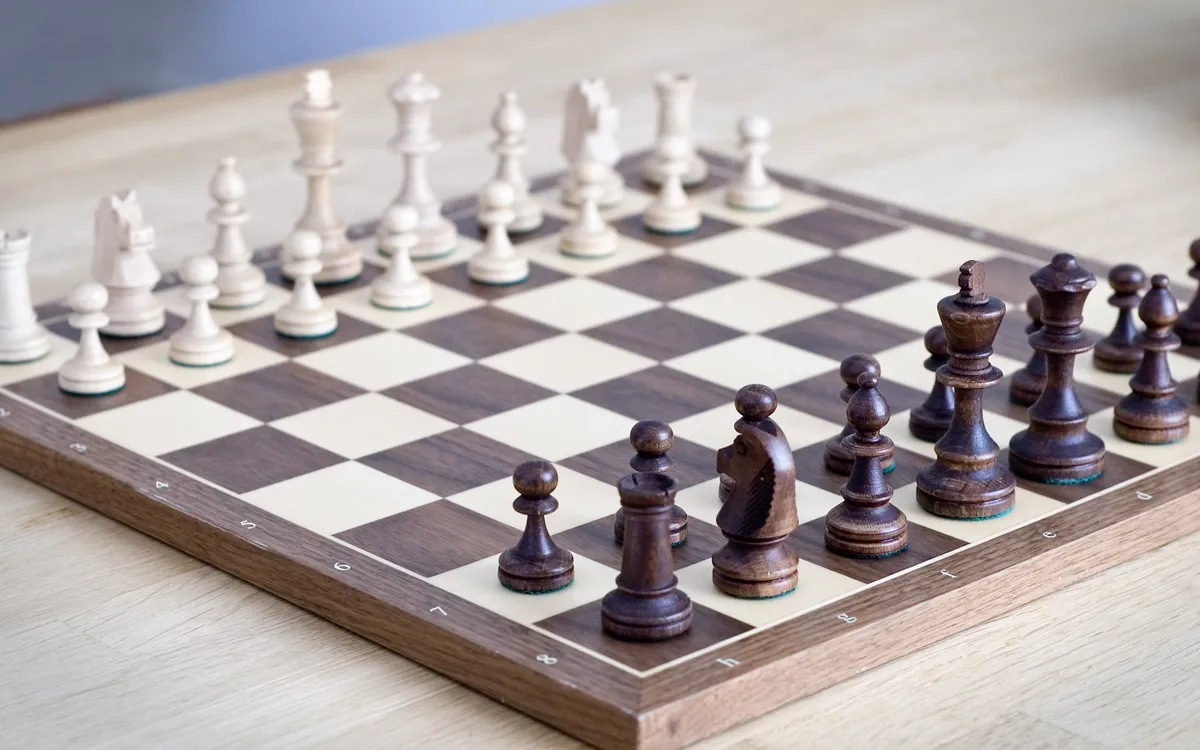
I took it to a weekly club for five months, which put it in front of maybe thirty different opponents. Two comments came up repeatedly and both were about practicalities rather than aesthetics.
The first was piece stability during time pressure. In a blitz game with both players moving fast, unweighted pieces get knocked flat constantly and every knock costs seconds off a clock. Nobody complained about mine once, which is the highest praise a chess set gets.
The second was colour contrast. My board's light squares are a pale maple and the dark squares a mid-brown, and under the club's fluorescent lighting a couple of opponents found the contrast lower than they liked. It has never bothered me at home under warmer light. If you're buying for a room with harsh overhead lighting, a higher-contrast board is worth choosing deliberately — walnut-and-maple reads more clearly than the browner combinations.
One thing nobody mentioned but I noticed: wooden pieces are quiet. The soft click of wood on wood against the plastic clack of a tournament set genuinely changes the feel of a long game, and it's the difference I'd miss most if I switched.
Against the alternatives
Against a $20 plastic set with a vinyl roll-up board, the plastic set is what tournaments actually use — it's lighter, cheaper, more durable and completely immune to sunlight and moisture. If your set travels to a club every week, buy the plastic one. It plays just as well and you will not mind when someone spills a drink on it.
Against a $250-400 hardwood set in ebony or rosewood, you're buying denser wood, sharper carving and a heavier board. It plays no better. Chess pieces have no performance characteristics.
Against a screen, the physical set costs $89 and gives you nothing measurable except a different quality of attention. That's either the whole point or a complete waste of money, and only you can tell which.
Who should buy this
Buy it if you play or study chess regularly at home and want a set that will sit out and get used. Insist on a weighted set, a 3.75-inch king with 2.25-inch squares, a second queen per side, and interior storage in the board. Those four things are the entire specification and they cost about $89 together.
Skip a wooden set entirely if it will travel weekly — buy plastic and vinyl. Skip it if your table is small, if it will sit in direct sun, or if what you actually want is an ornament, in which case buy whichever one you find beautiful and ignore everything above.
Verdict
Five months and several hundred games in, this set does the only job a chess set has: it makes playing physically pleasant enough that I do it more often. The weighting, the king-to-square ratio and the in-board storage are the three things that achieve that, and all three are specification rather than craftsmanship. Against that: the folding board has developed a slight seam, the knights are competent rather than lovely, a 20-inch board is bigger than many tables, and none of it makes anyone play better. Excellent value if you'll play on it; an expensive ornament if you won't.
We compared prices across retailers so you don't have to.