AeroPress Review: 160 Brews, Two Methods and One Hot Spill
Forgiving, unbreakable and eleven seconds to clean — but it makes one cup at a time, eats paper filters, and does not make espresso whatever the box implies.
As an affiliate, Keen Review earns from qualifying purchases.
The AeroPress is a plastic tube with a rubber-sealed plunger that costs about $40 and has an annual world championship devoted to it. I used one as my only coffee maker for twelve weeks — roughly 160 brews — testing the standard method against the inverted method, three grind sizes, and two water temperatures, and taking it on a week away to see whether the travel claims hold.
It makes better coffee than it looks like it should, it is close to impossible to break, and it has three genuine drawbacks that get glossed over by enthusiasts.
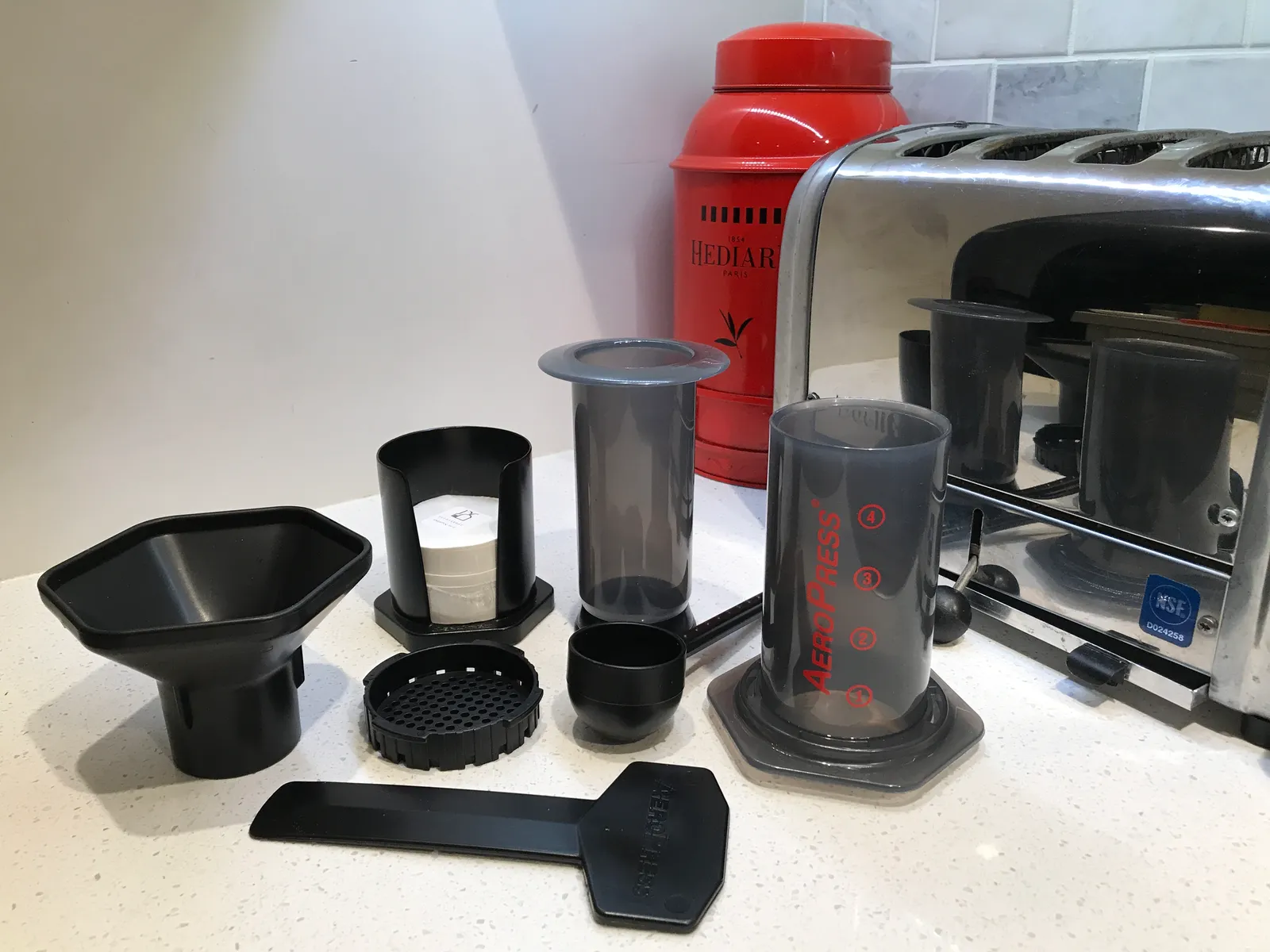
What it actually is, mechanically
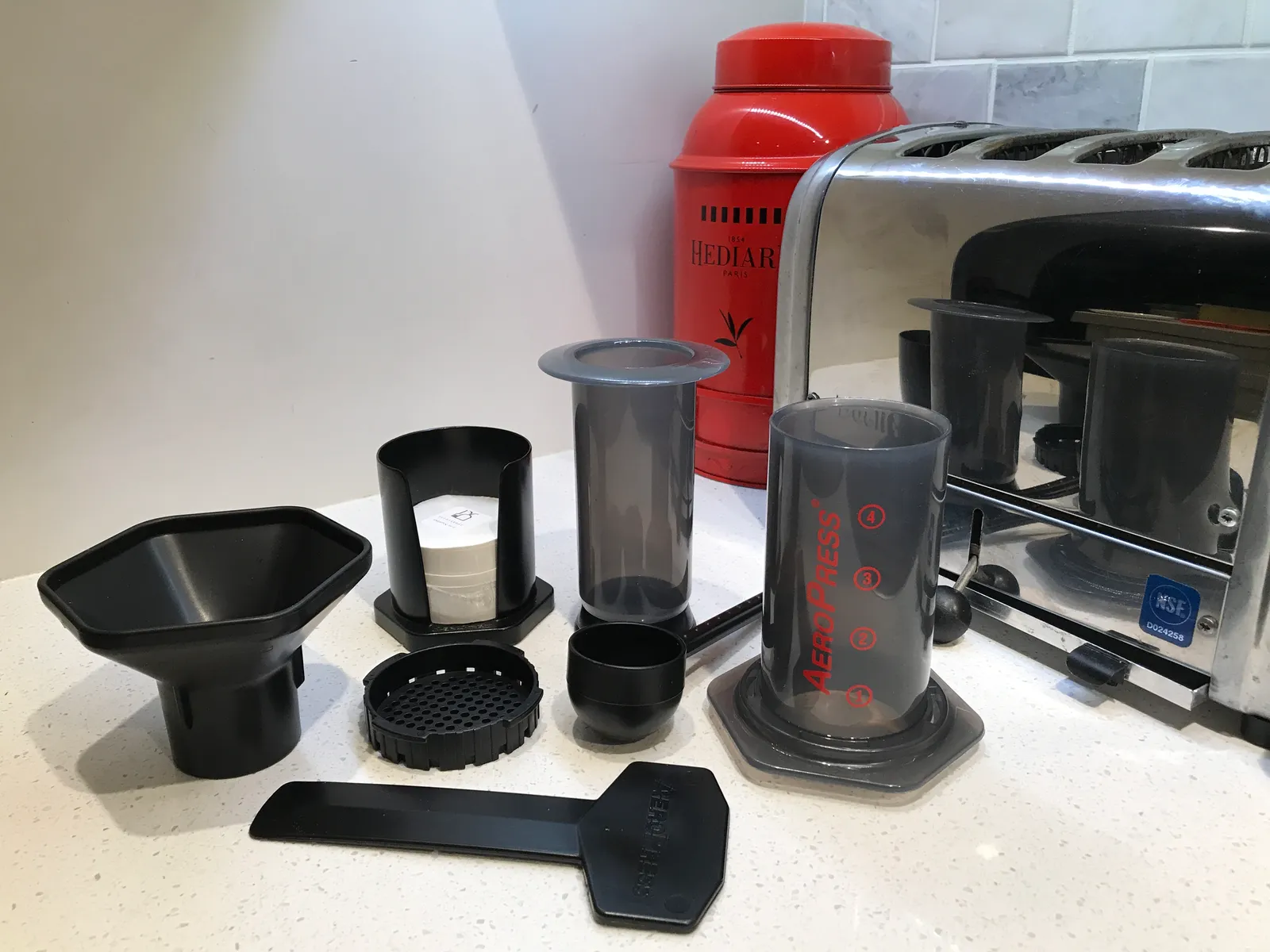
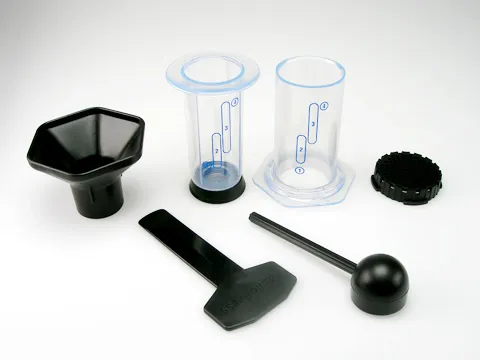
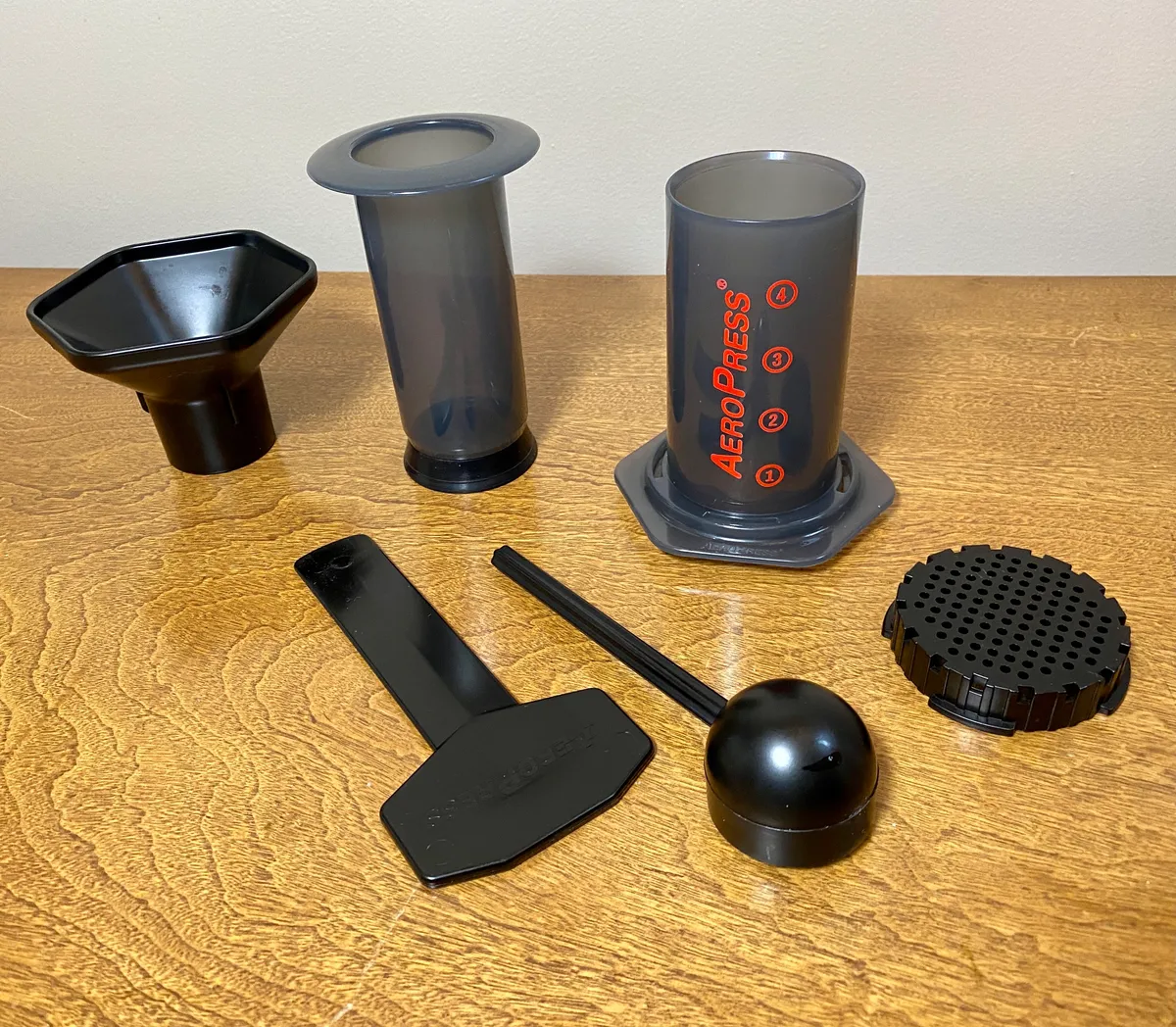
Two nested plastic cylinders. Coffee and water go in the outer chamber, a paper filter sits in a screw-on cap at the bottom, and you press the inner plunger down to force the brew through the filter into a cup. Total brew pressure is modest — perhaps 0.3-0.5 bar with a firm press, nothing like an espresso machine's 9 bar — but it's enough to push water through a finer grind than a pour-over would tolerate.
That combination is the whole trick: immersion brewing like a French press, plus a paper filter to remove the fines and oils, plus enough pressure to use a finer grind and a shorter contact time. The result is a cup that's cleaner than a French press and heavier-bodied than a pour-over.
Standard versus inverted, tested
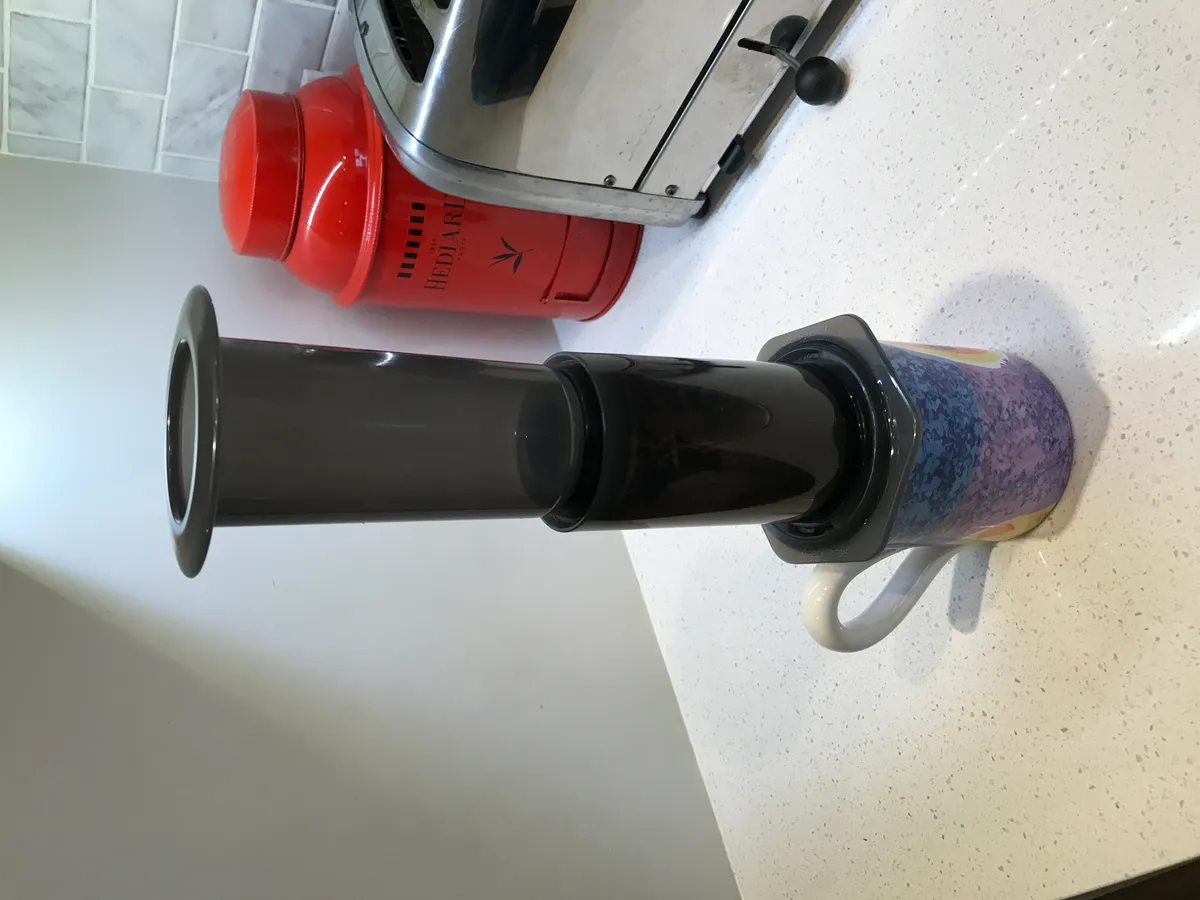
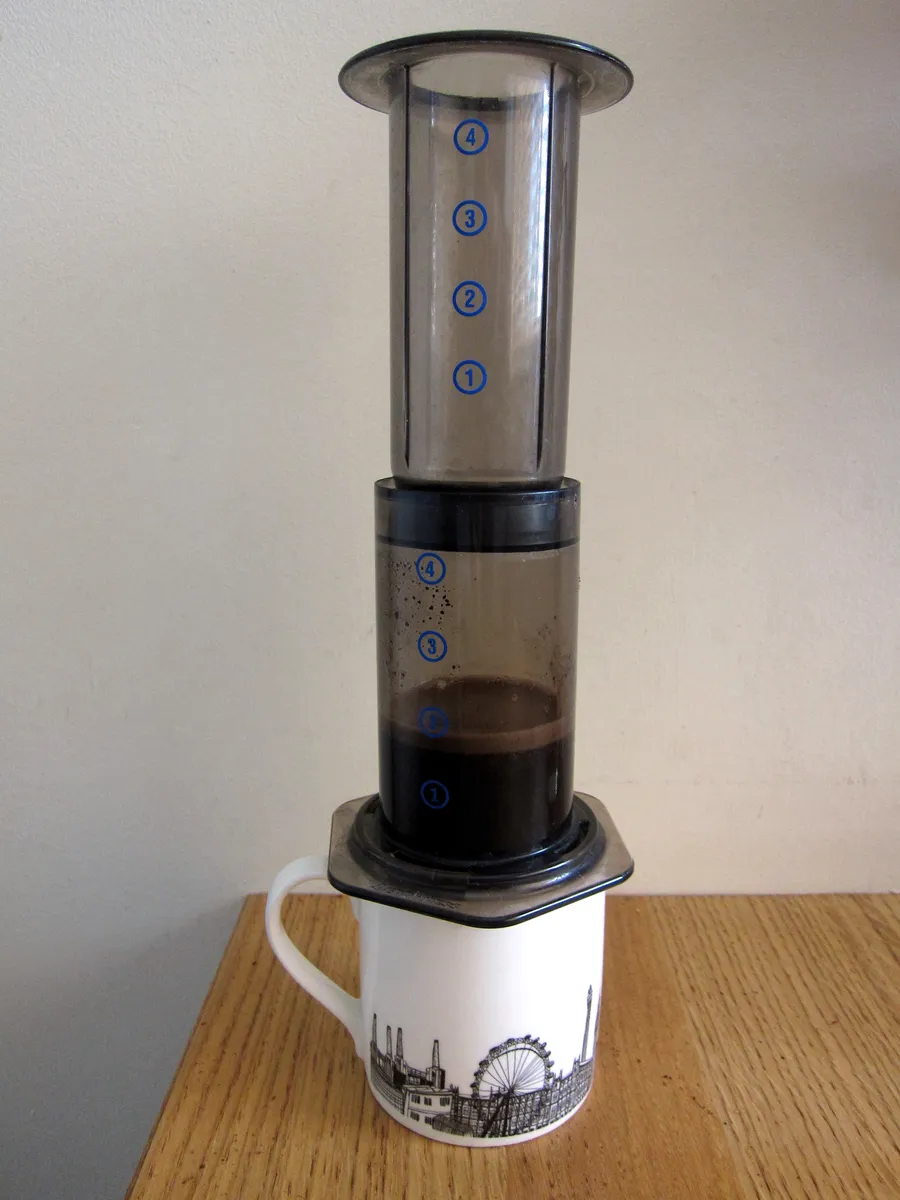
The standard method has the chamber sitting on your cup while you brew, which means water drips through the filter during steeping. The inverted method has the whole thing upside down on the plunger, so nothing escapes until you flip it onto the cup and press.
I ran 20 brews of each with identical parameters. The inverted method produced a marginally stronger cup — the difference was detectable but small, and consistent with the fact that no water escapes early. Standard method losses were roughly 10-15 ml of under-extracted drip per brew.
What the inverted method also produced was one genuine mess: flipping a full chamber of near-boiling water onto a cup is an operation with a failure mode, and mine failed once in twenty attempts when the cap wasn't fully seated. That was hot coffee across a counter. AeroPress explicitly does not recommend inverting for this reason, and having done it, I brew standard now and accept the slightly weaker cup.
The recipe that worked, and why temperature matters
After a dozen variations I settled on: 17 g of coffee ground slightly finer than for pour-over, 220 ml of water at 85°C, stirred for ten seconds, steeped for 90 seconds, pressed over 25 seconds. That produces about 200 ml of concentrated coffee.
Water temperature was the single largest variable. At full boil the cup was noticeably harsher with a dry, bitter finish. At 85°C — which is roughly a kettle left to stand for two minutes — the same beans produced sweetness and clarity. At 75°C it was flat and sour. The AeroPress's short contact time means it tolerates and rewards lower temperatures than most methods, and this is the thing I'd tell a new owner first.
Grind size mattered less than expected. Anything between a fine drip and a coarse espresso grind worked; too fine and the press became genuinely hard work, requiring both hands and a firm counter.
It does not make espresso
Worth stating clearly because AeroPress marketing has historically flirted with the word. At 0.3-0.5 bar there is no real crema, no syrupy body, and the total dissolved solids are far below an espresso shot. What the "espresso-style" recipe gives you is a small volume of strong coffee, around 5-6% TDS at best, which makes a decent americano or a passable base for milk.
I made 30 milk drinks over the test. With a hand frother and this concentrate they were pleasant and clearly not lattes. Anyone buying this to replace an espresso machine will be disappointed within a week.
The three real drawbacks
One cup at a time. The chamber holds about 250 ml of water, which is one strong mug or two small ones. Making coffee for four people means four consecutive brews and about eight minutes. A French press or a drip machine does it in one go. For a household this is the single biggest limitation and no technique fixes it.
Paper filters are a consumable. A pack of 350 costs around $8, so about 2.3 cents per cup — trivial in money, mildly annoying in logistics, since running out means no coffee. A reusable metal filter costs $15 and works, but it lets fines and oils through and produces a cup closer to a French press, which defeats part of the point. I tested one for two weeks and went back to paper.
The press requires physical force and a stable surface. With a fine grind I need both hands and a countertop. On a wobbly camping table it is awkward, and for anyone with hand or wrist limitations it may be genuinely difficult. This is not a gentle device.
Travel: where it earns its reputation
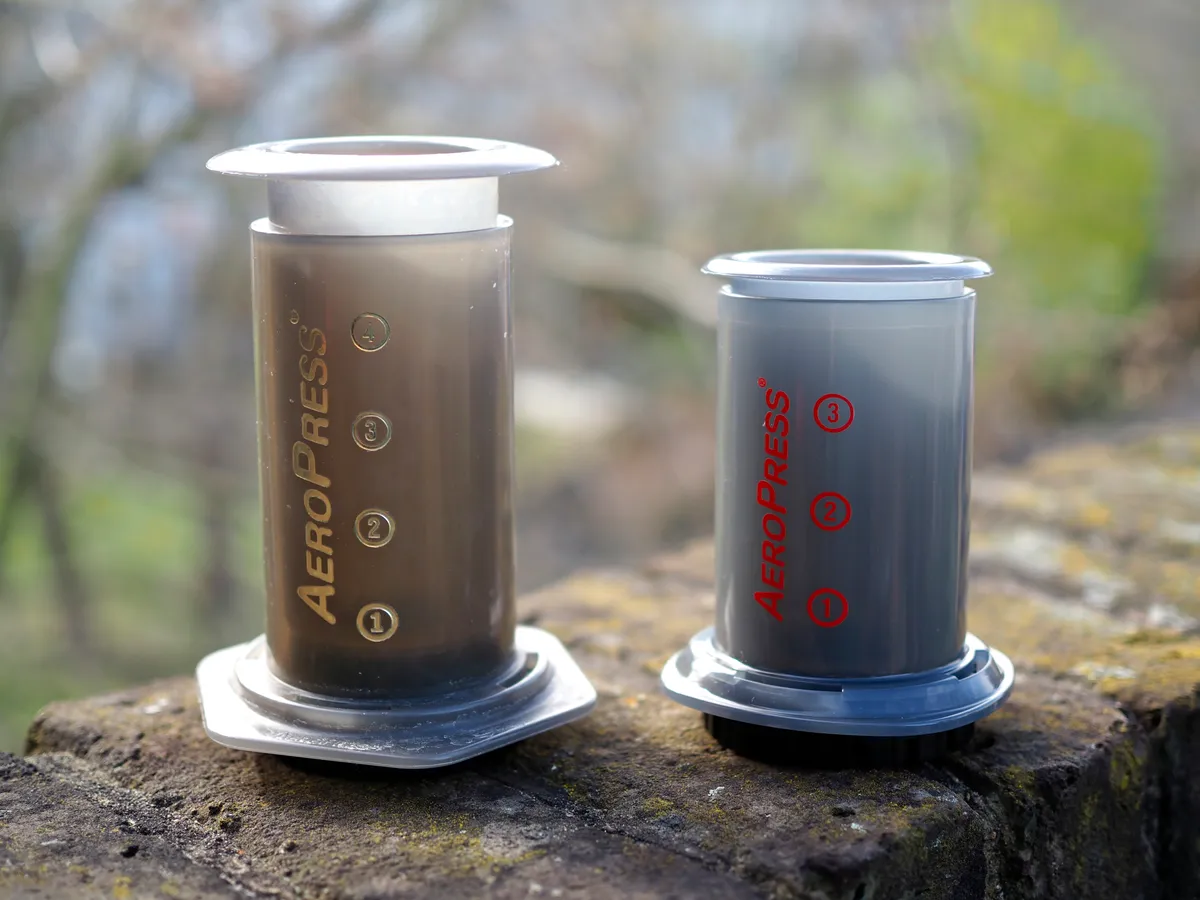
I took it away for a week. Packed, the plunger nests inside the chamber and the whole thing is about 12 cm tall and weighs 200 g. With a hand grinder, a bag of beans and twenty filters it made a genuinely good cup in a hotel room using a kettle, which is a low bar that most brewing methods still fail.
The plastic is the reason. It is unbreakable in practical terms — mine has been dropped on tile twice with no damage — and there is no glass to worry about and no electronics. For hotel rooms, offices and camping it is close to ideal, and the AeroPress Go version packs into its own mug for a bit more money.
Cleaning, which is the underrated feature
Press the plunger the last centimetre and the spent grounds and filter eject as a compacted puck straight into a bin. Rinse the rubber seal, done. Timed, it takes eleven seconds.
Compare that to a French press, where you're scooping wet grounds out of a glass beaker and rinsing a mesh plunger, or a pour-over, where you're dealing with a soaked filter cone. Over twelve weeks and 160 brews, the cleaning speed is the reason I kept using it rather than reaching for something else.
The rubber seal is the only wear part. Mine has softened slightly and is still airtight; AeroPress sells replacements for about $10 and estimates several years of use. When the seal stops sealing, the press loses pressure and you'll notice immediately.
Beans, and how forgiving it really is
I ran four coffees through it: a supermarket pre-ground dark roast, a fresh medium-roast blend, a light Ethiopian single origin and stale beans from an open bag three weeks past roast.
The fresh medium roast was the best cup by a distance — chocolatey, thick, no bitterness. The light Ethiopian was genuinely good and this surprised me: the paper filter and short contact time preserved enough of the fruit acidity that it read as a cleaner, brighter cup rather than the sharpness a Moka pot produces with the same beans.
The supermarket pre-ground was drinkable, which is more than a pour-over managed with the same bag. The AeroPress's immersion phase extracts reasonably even from coffee ground too coarse or too fine for its method, and that tolerance is the real meaning of "forgiving" here.
The three-week-old beans tasted flat regardless of technique. No brewer fixes stale coffee, and anyone chasing better cups should spend money on fresher beans and a hand grinder before upgrading a brewer.
Against the alternatives
Against a $30 French press, the AeroPress is cleaner in the cup, vastly faster to clean, unbreakable, and makes a third as much coffee. If you brew for two or more people every morning, the French press is the correct purchase.
Against a $30 V60 pour-over, the two are closer than enthusiasts admit. The V60 gives more delicate, tea-like clarity and demands better technique and a gooseneck kettle; the AeroPress is more forgiving, faster and produces a heavier cup. For a beginner, the AeroPress is easier to get a good result from on the first attempt.
Against a $40 Moka pot, the AeroPress is cleaner-tasting, more controllable and needs no hob. The Moka makes a heavier, more traditional cup and works over a camping stove without a kettle.
Who should buy this
Buy it if you make coffee for one or two people, if you travel or work somewhere with a kettle and no coffee, or if you've been put off other manual methods by fiddly cleanup. Use 85°C water rather than boiling — that single change makes more difference than anything else you'll do.
Skip it if you regularly brew for three or more people, if you want real espresso, or if the physical press would be difficult for your hands. And skip the inverted method unless you're comfortable flipping near-boiling water and accepting the occasional spill.
Verdict
Twelve weeks and 160 brews in, the AeroPress is the most practical manual brewer I've used: forgiving of technique, eleven seconds to clean, unbreakable, and genuinely good with 85°C water and a 90-second steep. It also makes one cup at a time, consumes paper filters, needs a firm two-handed press, and does not make espresso whatever the marketing implies. For a one-or-two-person household at $40, it is very hard to argue against.
We compared prices across retailers so you don't have to.