Granite Mortar and Pestle Review: 60 Sessions Against a Grinder
Five months and about 60 grinding sessions pitting a 34-dollar granite mortar against an electric blade grinder: it loses badly on dry spices and wins outright on anything wet.
As an affiliate, Keen Review earns from qualifying purchases.
The argument for a mortar and pestle over an electric grinder is usually made in vague terms about tradition and aroma. We wanted a specific one, so we ran a five-month test: every spice mix in our kitchen made twice, once in a 34-dollar granite mortar and once in a 25-dollar electric blade grinder, and we tracked what actually differed. Roughly 60 grinding sessions, plus timing, cleaning tests, and one dropped pestle.
The result is narrower than the romance suggests and more useful. For dry spices the electric grinder is faster and, for most people, good enough. For anything containing moisture — garlic, ginger, chillies, herbs, anything you want to become a paste rather than a powder — the mortar is not merely better, it is the only one of the two that works at all. That distinction is the whole review.
What to look for, measured
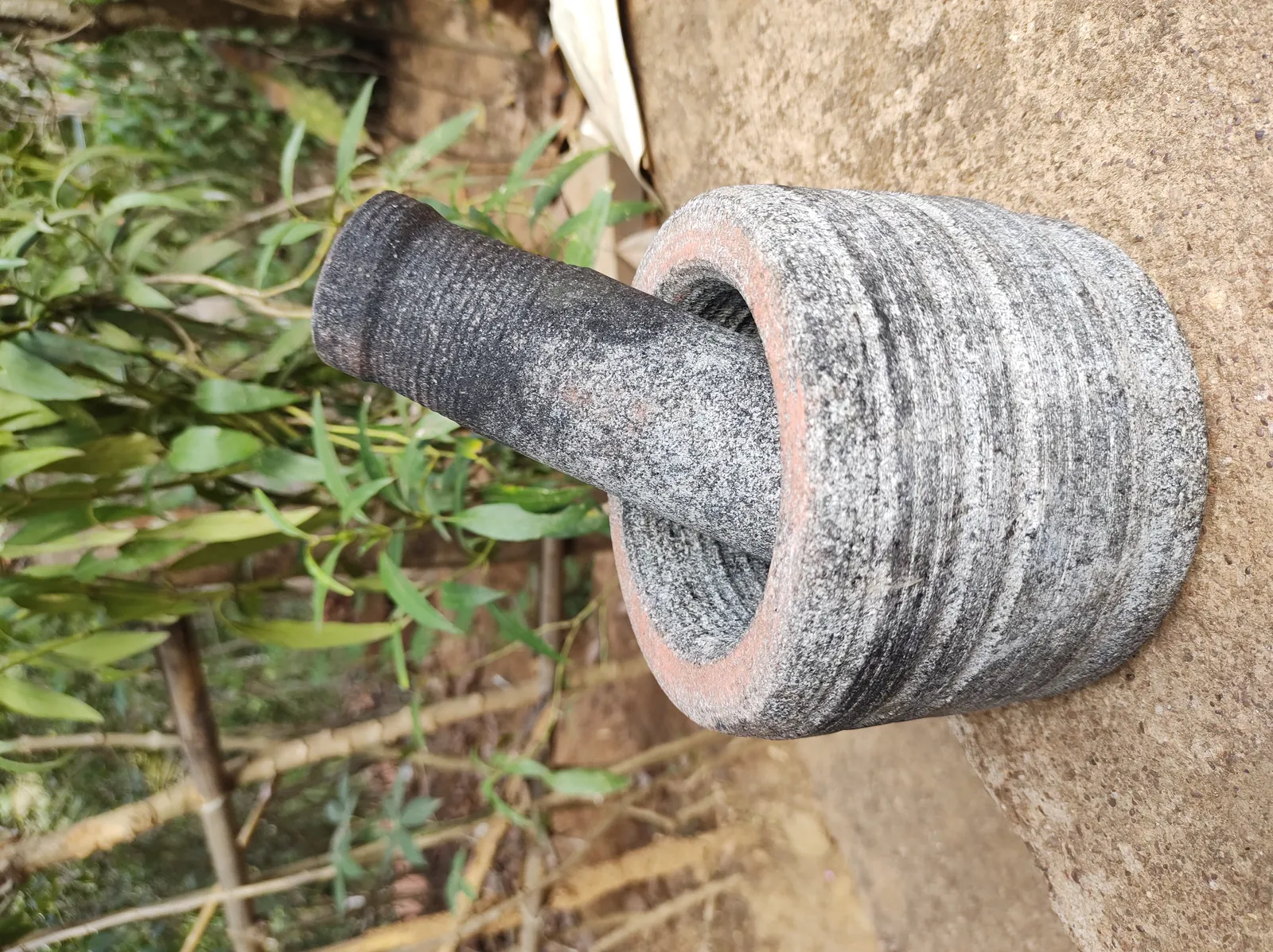
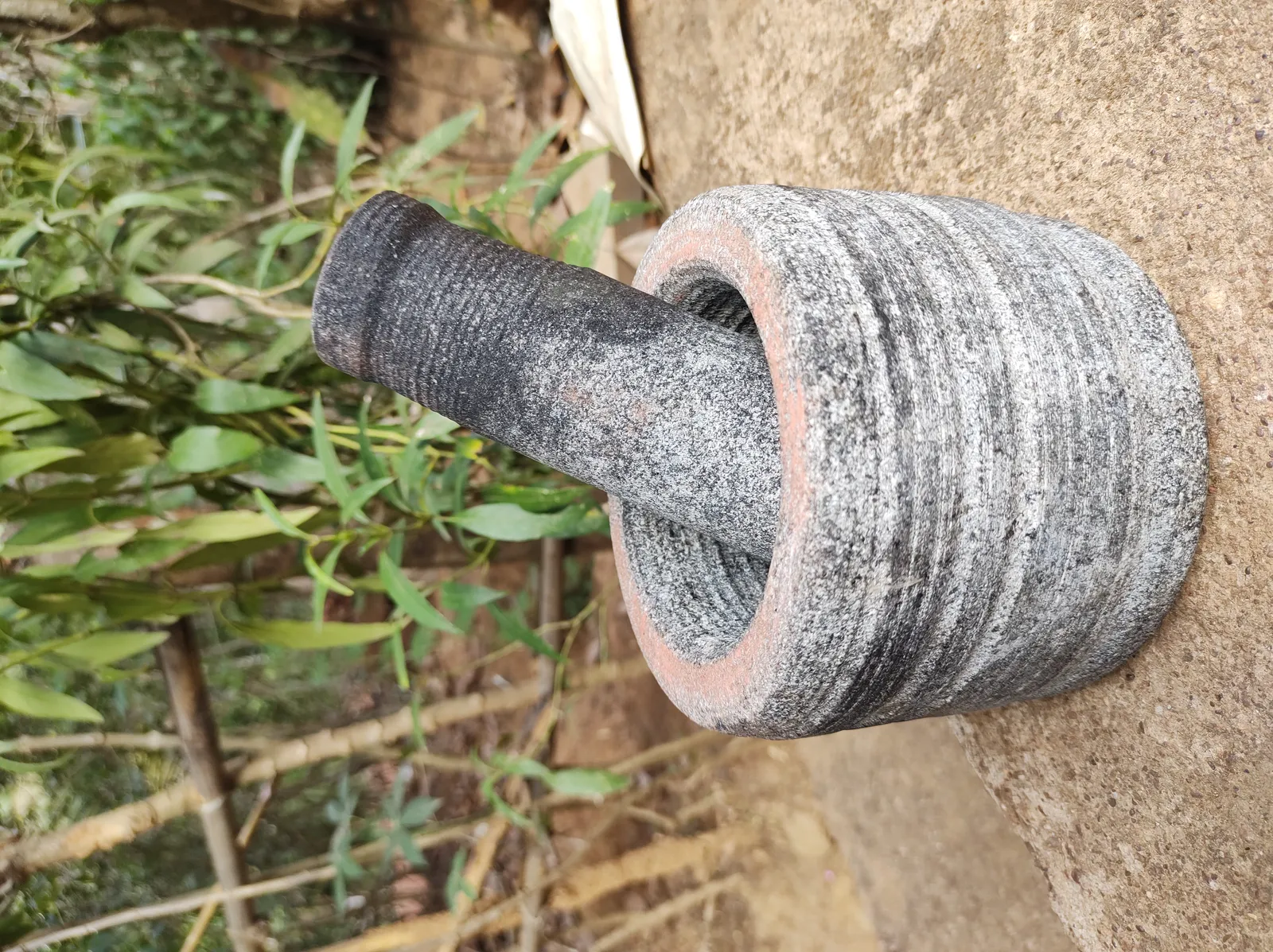
Ours is unpolished granite: bowl 18 cm across at the rim, 9 cm deep, with an interior that has been left deliberately rough. Total weight 3.6 kg, of which the pestle is 780 g. Those three numbers — diameter, weight, and interior texture — are the entire specification that matters, and only one of them is usually listed.
Weight does the work. A heavy mortar stays still while you grind, so both hands work on the pestle rather than one holding the bowl. We tested against a 900 g ceramic mortar borrowed for comparison: on the ceramic, grinding peppercorns needed one hand clamped on the bowl and the bowl still crept across the counter. The granite has not moved once in five months.
Interior texture decides whether you grind or merely chase. A polished marble or glazed ceramic interior is smooth, so hard seeds skid rather than shatter. The rough granite catches them. We timed the difference on 10 g of black peppercorns to a medium grind: 55 seconds in the granite, 2 minutes 40 in the polished ceramic, with a coarser and less even result. If a mortar looks glossy inside, it is a serving bowl.
Seasoning it first, which is not optional
New unpolished granite sheds stone dust. Skipping the seasoning step means your first curry paste contains grit, and we know because we tried it deliberately once — the result was gritty enough to be unpleasant on the teeth and we threw it out.
The process: rinse with water and no soap, then grind a handful of raw white rice to a powder, discard, and repeat. Ours needed four rounds before the powder came out white rather than grey. Then we ground a small amount of garlic, salt and cumin and discarded that too. Total time about 20 minutes, and afterwards no grit at all. Do this before the first real use and never with soap, which soaks into porous stone and comes back out in the next thing you make.
What it does better than a grinder, specifically
A blade grinder chops. A mortar crushes and shears. For dry spices the difference in the finished flavour was smaller than we expected — in a blind test with four people on cumin ground both ways and stirred into plain yoghurt, only one identified the mortar-ground sample consistently, and the reason given was texture rather than aroma.
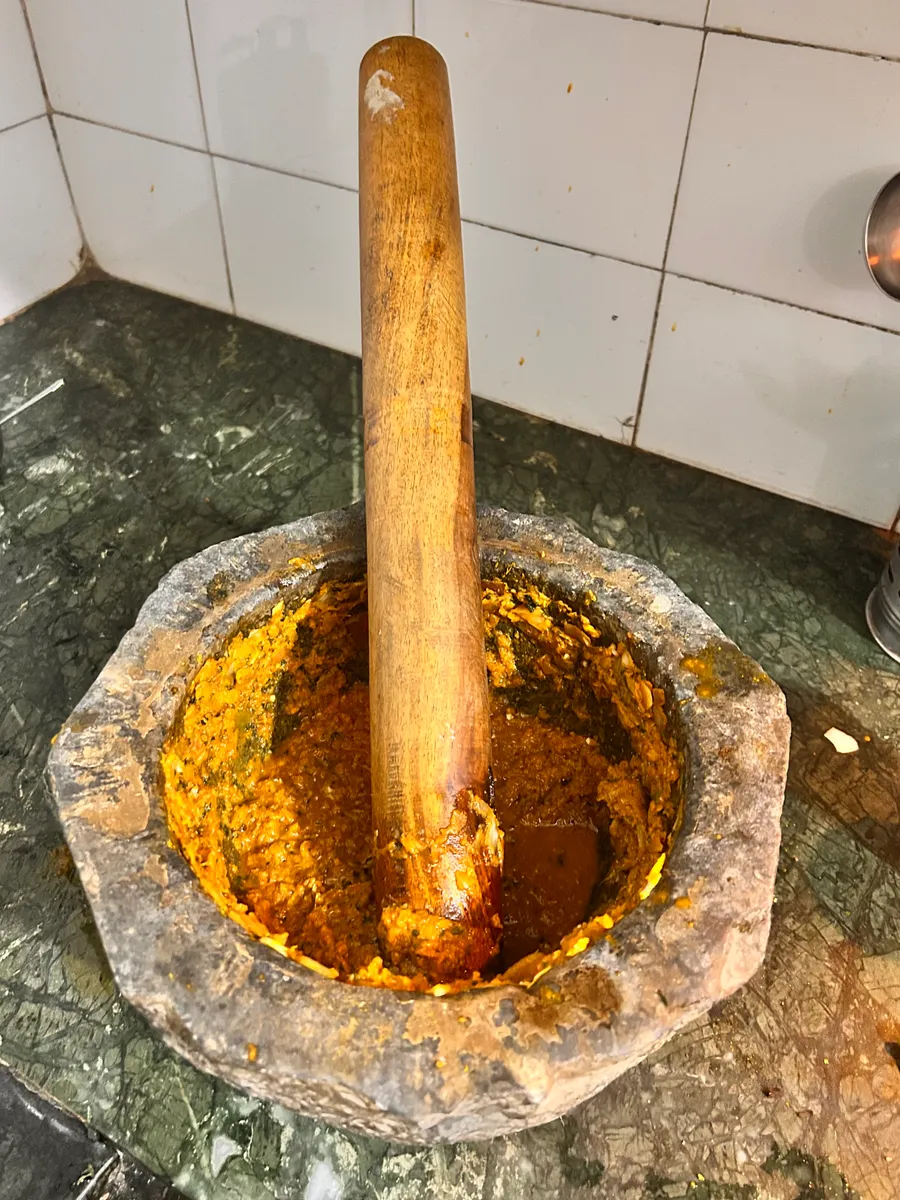
Wet ingredients are a different story. Garlic in a blade grinder becomes chopped garlic in a slurry that clings to the walls, and you cannot get a paste out of it without a rubber spatula and swearing. Garlic with a pinch of coarse salt in the mortar becomes a genuine smooth paste in about 40 seconds — the salt acts as an abrasive and the crushing ruptures cells that chopping leaves intact. Same for ginger, lemongrass, fresh chillies and a Thai-style curry paste, which took us 11 minutes by hand and simply cannot be made properly in a blade grinder at household quantities.
Basil pesto was the clearest win. Ground in the mortar it stayed green for days; blitzed in the grinder it browned within hours, which is oxidation driven by the fast steel blade heating and aerating the leaves. That is a visible, repeatable difference rather than a matter of taste.
The other advantage nobody mentions: small quantities. Half a teaspoon of coriander seed disappears under a blade grinder's blades and never gets touched. In the mortar, any quantity works, which in practice means we now grind spices per meal instead of grinding a jar's worth and letting it go stale.
Where it loses
Time and effort, honestly. Toasted whole spices for a garam masala — about 25 g of mixed cumin, coriander, cardamom, cloves and cinnamon — took 6 minutes 30 in the mortar against 25 seconds in the grinder, and the mortar version was slightly less uniform, with a few coarse cinnamon fragments we had to sieve out. Anything involving hard cinnamon bark or dried turmeric root is genuinely hard work, and turmeric also stains porous stone yellow, which never fully leaves.
Noise is worth mentioning because it surprised us. We measured 82 dB at one metre during vigorous grinding, which is louder than the grinder's 78 dB — the difference being that the grinder does it for 25 seconds and the mortar for six minutes. In a flat with a sleeping child, the electric option wins.
And it is heavy. 3.6 kg means it lives on the counter, because nobody lifts that in and out of a cupboard daily. If you have no permanent counter space to give it, you will not use it.
Technique, and the mistake everyone makes first
The instinct is to pound straight down. Pounding cracks things open, which is step one, but the grinding happens on the second motion: pressing the pestle against the wall and rotating, so the ingredient is sheared between two rough stone surfaces. Beginners pound for two minutes and wonder why they have coarse fragments.
Our working method settled into: crack with 10 to 15 firm vertical taps, then switch to a circular grinding press with the pestle angled against the bowl wall. Held loosely with the heel of the hand on top rather than gripped, which is less tiring. For hard seeds, a pinch of coarse salt as an abrasive halves the time and you can account for it in the recipe.
One thing not to do: fill it. Working in batches of no more than about a third of the bowl depth was consistently faster than trying to do everything at once, because a deep pile cushions the pestle instead of being crushed by it.
Cleaning, and a genuine hygiene point
No soap. Porous granite absorbs detergent and releases it into the next thing you grind, which we confirmed by accident with a mortar washed in dish soap that produced faintly soapy hummus. The routine that worked: scrape out residue, rinse with hot water, scrub with a stiff brush, and for stubborn oily residue grind a spoonful of coarse salt and rice and discard. Dry it fully.
The hygiene point worth stating plainly: because you cannot use detergent and the stone is porous, a mortar used for raw garlic, chillies and herbs should be rinsed and dried immediately rather than left overnight with residue in it. Damp organic residue in a warm kitchen is a bacterial growth medium. We also keep chilli work to a separate small mortar, because capsaicin lingers in porous stone and will turn up in something sweet weeks later — and if you grind hot chillies, wash your hands before touching your eyes, since capsaicin oil transfers easily and stings badly.
Do not put a stone mortar in a dishwasher and do not pour boiling water into a cold one. Thermal shock can crack stone, and a cracked mortar traps residue in the fissure permanently.
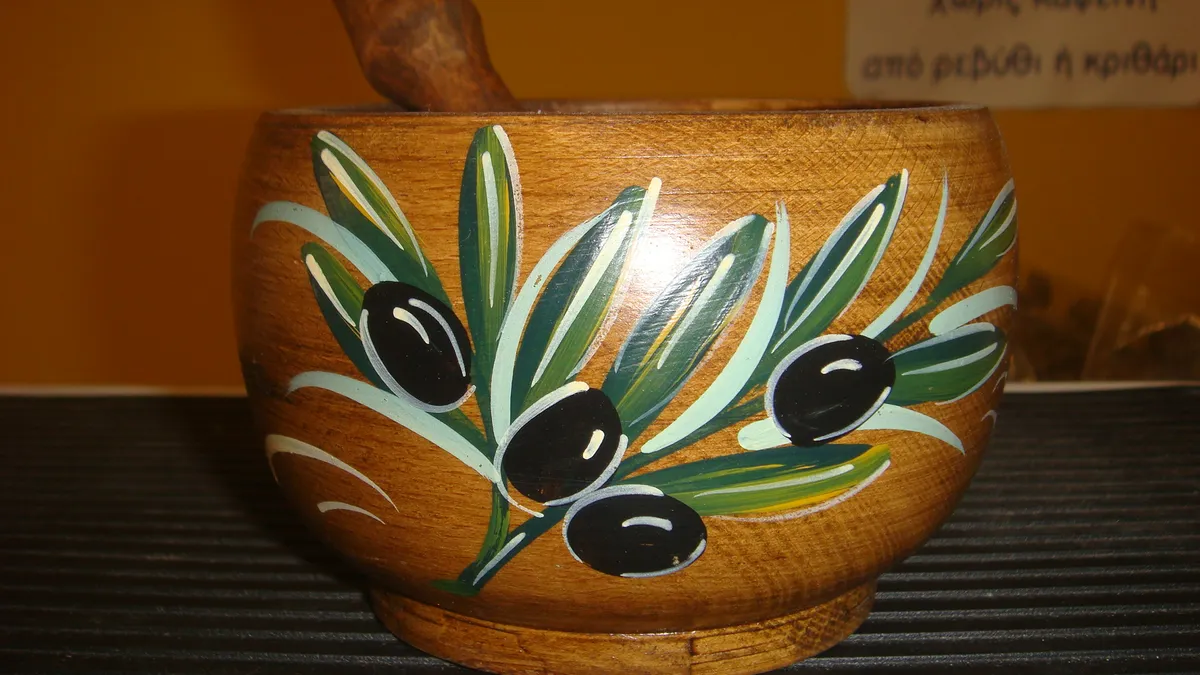
Five months of durability, including one drop
We dropped the pestle onto a tiled floor from about 90 cm. It chipped a 6 mm flake off the base and is otherwise fine, still usable, slightly less even on the grinding face. The mortar itself is unmarked. Granite is hard but brittle: it does not wear out, it chips. The realistic lifetime of this thing is decades, and the realistic failure mode is dropping it on a tile floor — or dropping it on your foot, which at 2.8 kg for the bowl alone would be a genuine injury.
Staining is the only cosmetic change. Turmeric left a permanent yellow tint on the bowl interior and the pestle tip, and paprika added a faint orange. Neither affects function or transfers to food after a rice-and-salt scrub, but the pristine grey look does not last.
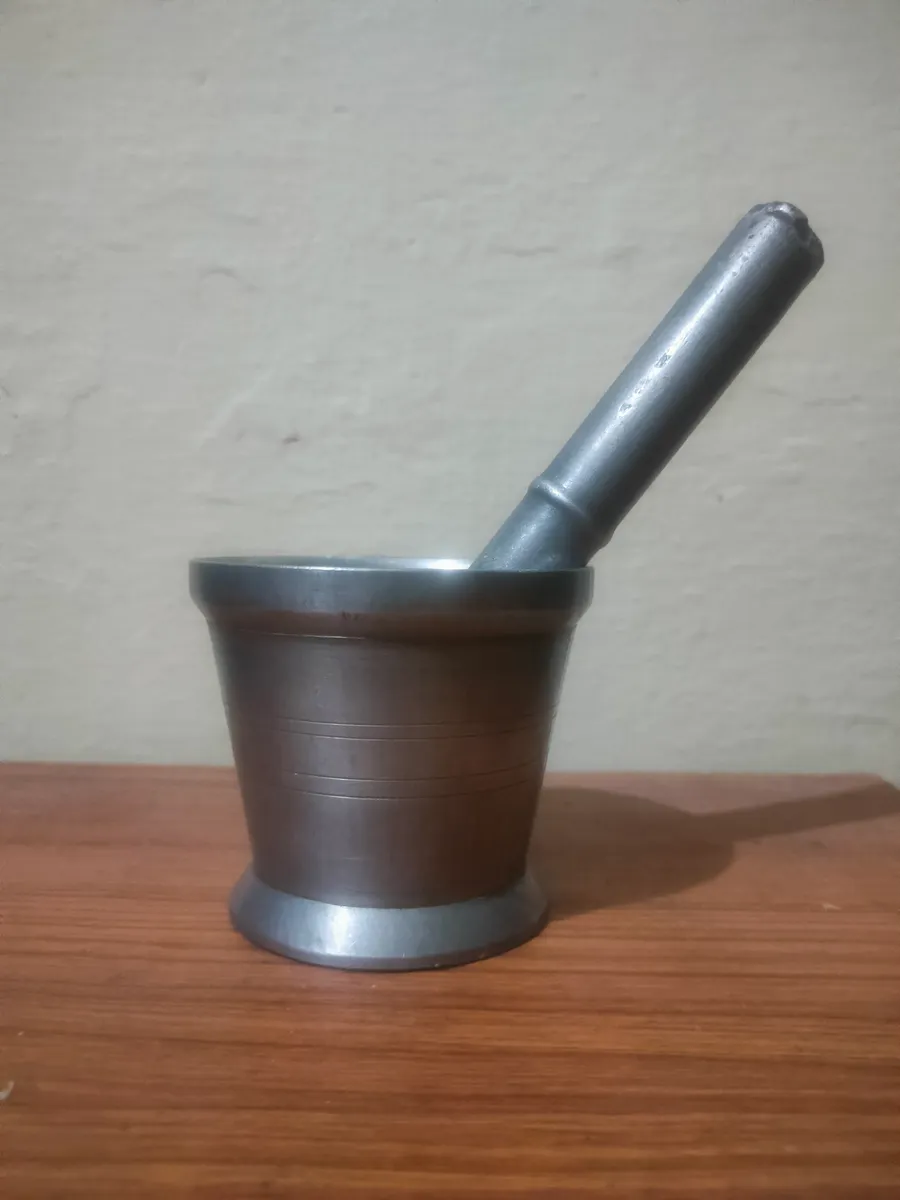
Against the alternatives
Against a 25-dollar electric blade grinder, they are complementary rather than competing. If you buy only one and you mainly grind dry whole spices, buy the grinder. If you cook Thai, Indian, Mexican or Italian food where pastes matter, buy the mortar. We now use both, roughly two-thirds mortar by session count.
Against marble and ceramic mortars at 20 to 30 dollars, our measurements were clear: too light and too smooth. They are fine for crushing a few peppercorns or pills and poor at real work. Wooden mortars are traditional for softer jobs like garlic and lemongrass but will not touch hard seeds, and they absorb flavours more than stone.
Against a 60-dollar polished granite mortar with a matching stand, you are mostly paying for looks. The unpolished bowl grinds better. Money is better spent on a second small mortar dedicated to chilli.
Who should buy this
Buy it if you cook cuisines built on pastes rather than powders, if you want to grind spices per meal instead of per jar, if you make pesto, or if you want one kitchen tool that will outlive every appliance you own. Buy the biggest and heaviest one you have counter space for — 18 cm and 3.6 kg was right for a two-person household and we would not go smaller.
Skip it if you have no permanent counter space, if noise or effort is a constraint, or if your spice use is entirely dry and volume-based, where an electric grinder does the same job in a twentieth of the time. And skip the polished decorative ones entirely.
Verdict
Five months and about 60 sessions in, the case for a granite mortar is specific rather than mystical. On dry spices it lost on time — 6 minutes 30 against 25 seconds for a garam masala — and only one of four tasters could pick it blind. On anything wet it won outright: a real garlic paste in 40 seconds, a curry paste that a blade grinder cannot make, and pesto that stayed green for days instead of browning in hours. The 3.6 kg mass and rough unpolished interior are what make it work, seasoning with rice first is mandatory, and detergent must never touch it. At 34 dollars for a tool with a multi-decade life and no cord, it earns its counter space — as a companion to a grinder, not a replacement.
We compared prices across retailers so you don't have to.