Away The Carry-On Review: Eighteen Months and Forty Flights Later
After a year and a half of real travel, the Away Carry-On's wheels, zippers, and compression system have held up — but the battery compartment and the price tag come with real caveats.
As an affiliate, Keen Review earns from qualifying purchases.
I bought the Away The Carry-On with my own money eighteen months ago, after watching three separate seatmates on a red-eye home from Denver wrestle broken spinner wheels off their old hardshells at baggage claim. Since then it has flown with me to nine cities across four airlines, ridden in the bed of a pickup truck on a dirt road in New Mexico, and spent a week getting rained on outside a rental cabin in the Pacific Northwest because I forgot it on the porch. This review is built on that use, not a spec sheet — including the parts of owning this suitcase that Away's marketing photos conveniently leave out.
First impressions and what's in the box
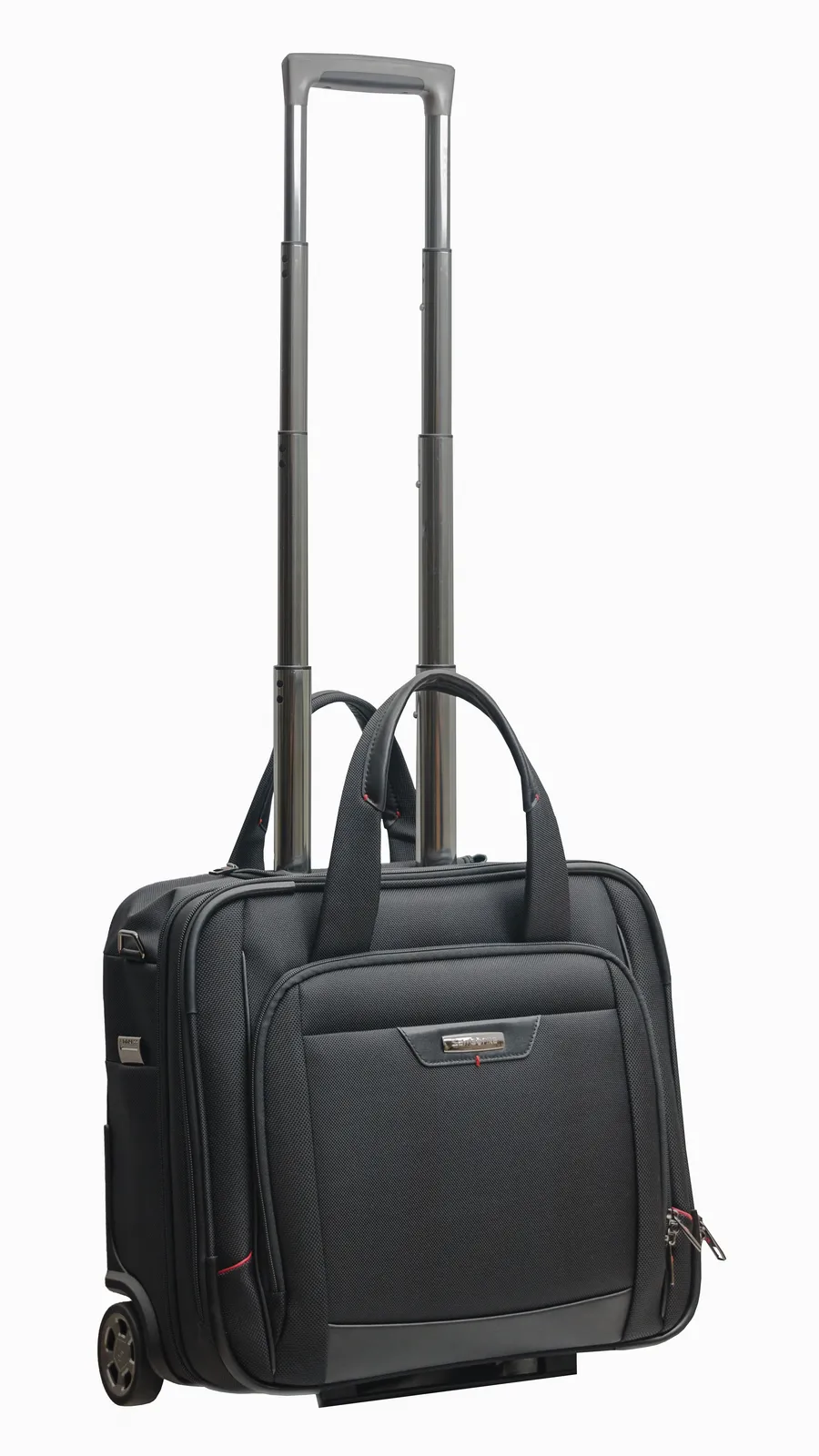
Away ships the Carry-On in a plain cardboard sleeve with a thin dust cover, a small luggage tag on a leather-look strap, and — if you paid the extra for the battery version, as I did — a printed card explaining the airline battery rules. There's no charger brick included; the built-in battery is meant to top up your phone via USB-A and USB-C ports on the exterior, not the other way around. Out of the box the shell has a satisfying density to it — this is not the hollow, tinny knock you get from a $90 hardshell at a big-box store. Tapping the polycarbonate gives a dull thud rather than a rattle, and the seam where the two shell halves meet is tight enough that I initially had trouble finding it without looking closely.
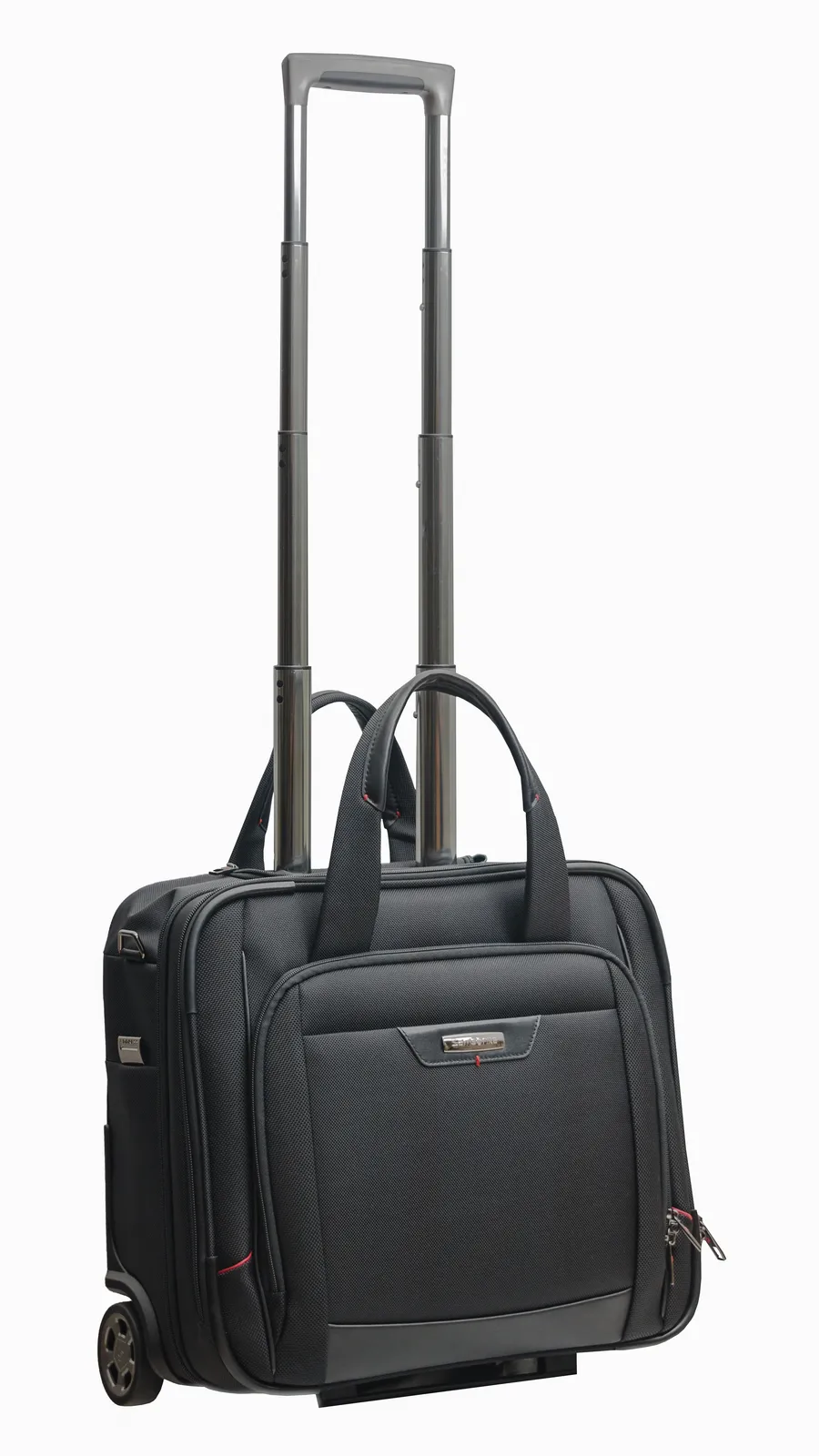
The four wheels spin freely and independently in every direction, which matters more than it sounds — cheaper spinners bind up after a few months because the axle housings aren't sealed against grit. The telescoping handle has two height stops instead of the usual three or four, which I initially found limiting, then appreciated once I realized Away tuned both stops around actual adult heights rather than a false sense of adjustability. There's a compression system inside — a zippered mesh divider on one side and a set of compression straps on the other — that's genuinely useful rather than decorative, which I'll get into below.
Interior layout and the compression system
Open the shell and you get two roughly equal halves. One side has a zip-mesh laundry-style pocket good for shoes or dirty clothes; the other has two adjustable compression straps that cinch down over folded clothing. On a nine-day trip to Portugal I packed the Carry-On to genuine capacity — four days of city clothes, a pair of boots, a light rain jacket, and a dopp kit — and the compression straps were the difference between the lid closing cleanly and me sitting on it. Without cinching, the case was noticeably domed and the zipper strained at the corners. With the straps tightened, it closed flat and the zipper pull moved smoothly, no fighting.
The main zipper itself is a chunky, YKK-style pull that has never snagged fabric on me in eighteen months, which is a bigger deal than it sounds — I've ruined shirts on cheaper suitcase zippers that bite into loose threads at the corners. The two interior zip pockets are nice for cables and toiletry bags but genuinely small; a passport and a phone charger fill one of them most of the way. If you're the kind of packer who likes packing cubes, they fit well in the main compartment, though the compression straps work better directly against folded clothes than against rigid cube shapes.
The battery compartment: useful, but with a real asterisk
Away sells the Carry-On both with and without a removable battery pack. I bought the battery version, and the honest verdict after a year and a half is: it's handy about twice a year and a mild annoyance the rest of the time. The battery pops out from a compartment near the top handle with a small latch and gives roughly two full phone charges via USB-A or USB-C. It saved me during a six-hour tarmac delay out of O'Hare with no outlets nearby, and again at a hostel in Lisbon where the one wall outlet was already claimed. That's genuinely valuable when it happens.
What Away's marketing doesn't emphasize enough: several international carriers, and a few US ones on certain routes, require the battery to be removed before check-in — and if you're gate-checking a bag unexpectedly (which happens more than people plan for on full regional flights), you need to remember to pop the battery out and carry it separately before the suitcase disappears down the belt. I forgot once, on a full flight out of Charlotte, and spent an anxious ten minutes at the gate agent's desk before they let me retrieve it planeside. If you rarely check bags and always fly domestic, the battery is close to pointless overhead: it adds cost and a small amount of weight for a feature you'll use rarely. If you travel internationally with occasional gate checks, budget the extra two minutes at check-in to remove it, every time, without exception.
Wheels, zippers, and durability over real trips
The spinner wheels are the single most tested part of any carry-on, and this is where cheap luggage usually fails first. After roughly forty airport transits — cobblestone plazas in Porto, marble floors at LAX, gravel parking at a rental in Taos — the wheels still roll true with no wobble and no grinding. I did have one wheel pick up a small pebble that jammed the housing for about a day; it worked free on its own after a few more trips across pavement. There's no visible wear pattern on the wheel material itself, which is a rigid polyurethane rather than a softer rubber — quieter on carpet, louder and slightly harsher on tile and concrete than I expected going in.
The exterior shell picked up cosmetic scuffs faster than I'd like, especially on the corners and the front face where it contacts overhead bin doors and gate-check conveyor rollers. None of these are structural — the polycarbonate flexes rather than cracks under normal impact, and I intentionally didn't baby it — but if you want a suitcase that looks new after a year of real travel, this isn't that suitcase in a light or bright colorway. My navy unit hides scuffs reasonably well; friends with the white version report visible scuffing showing up much sooner. The telescoping handle has stayed rattle-free, and the two aluminum poles show no play side to side, which is more than I can say for a Samsonite I owned previously that developed a wobble in the handle within a year.
Overhead-bin fit across airlines
Away sizes the Carry-On to fit most major US domestic carrier size charts, and in my experience it has fit in the overhead bin on American, Delta, United, Southwest, and JetBlue without being gate-checked for size — including on regional jets with smaller bins, where I've had to turn it sideways or nose-first more than once. The one carrier where it got flagged was a budget international carrier with notably tighter carry-on dimensions than the US majors; the sizing template at the gate was visibly smaller than the standard US bin-check cage, and the case didn't clear it. If you fly ultra-low-cost or many European budget carriers regularly, measure their specific limits before assuming any US-marketed "carry-on" size will pass — this is a limitation of the entire premium hardshell category, not something specific to Away, but it caught me off guard once and cost a gate-check fee.
On regional jets with 50-plus seats and standard overhead bins, the case slides in wheels-first without a fight most of the time; on the smallest 50-seat regional jets I've occasionally had to place it sideways, which a couple of the larger duffel-style rollaboards near me couldn't manage at all. That's a real advantage of Away's slightly more tapered profile versus a boxier hardshell competitor.
Comparison to a budget hardshell alternative
I also travel with a roughly $90 hardshell carry-on from a mass-market brand for shorter, rougher trips where I don't want to worry about scuffing the Away. Side by side, the differences are real but narrower than the price gap suggests. The budget case is about 1.5 pounds lighter empty, which matters if you're packing close to airline weight limits for checked items on connecting international itineraries. Its zippers are functional but noticeably stiffer and have already started to fray slightly at one corner after a similar number of trips. Its wheels are serviceable but audibly rattle on tile in a way the Away's do not, and the telescoping handle has more side-to-side play than the Away did even when brand new.
What the budget case does not have, and what actually justifies part of Away's price premium in daily use: the compression system, the smoother-rolling and quieter wheels, and a shell that has visibly outlasted the cheaper one's zipper and handle hardware. What it also does not have is a $95 surcharge for a battery most travelers will rarely use. If your travel is infrequent — a few trips a year, mostly domestic, mostly short — the budget alternative is a genuinely reasonable choice and the price difference is hard to justify. If you fly more than eight or ten times a year, the wheel and zipper durability gap compounds fast enough that the Away pays for itself in avoided replacements.
Weight, handling, and the one real physical complaint
The shell itself is not light. Empty, the non-battery Carry-On weighs a little over seven pounds, and the battery version I own is closer to seven and a half. On airlines with strict combined carry-on weight limits — several international carriers cap total cabin baggage around fifteen to eighteen pounds, unlike the size-only rules common in the US — that empty weight eats a meaningful chunk of your allowance before you've packed a single shirt. This is the case's most legitimate ongoing complaint from me: the shell material and compression hardware that make it durable also make it heavier than most soft-sided carry-ons and some competing hardshells. If you fly a lot of international routes with enforced weight limits rather than just size limits, weigh this suitcase empty against your airline's rule before you commit.
Handling on the ground is otherwise excellent — the four-wheel spinner design means one-handed steering through crowded terminals, and the case tracks straight without pulling to one side, which I can't say for every hardshell I've used. The top and side carry handles are rigid and comfortable enough to lift the packed case into an overhead bin without strain, which is not true of every suitcase in this price range; some competitors use a softer webbing handle that digs into your hand under a full load.
Who should buy this
The Away Carry-On makes the most sense for travelers who fly regularly enough — call it eight or more trips a year — that wheel, zipper, and handle durability actually matter over time, and who want a genuinely useful interior compression system rather than a bare shell. The battery version is worth the extra cost specifically if you travel internationally with occasional gate-checks or long layovers with scarce outlets; if you rarely check this bag and mostly fly short domestic hops, skip the battery and save the money, or consider a lighter competitor if empty weight against strict international limits is your main constraint. If your travel is occasional and mostly short domestic trips, a $90-120 mass-market hardshell will serve you nearly as well for a fraction of the price, and the Away's premium is harder to justify.
After eighteen months and roughly forty flight segments, my Carry-On still rolls true, closes flat thanks to the compression straps, and hasn't needed a single repair — while a similarly aged budget case in my closet already has a fraying zipper and a wobbly handle. That real-world gap, more than any marketing copy, is why I'd buy this suitcase again, battery compartment hassle and all.

We compared prices across retailers so you don't have to.