Baseplate Compass Review: 40 Bearings and 3 Degrees of Error
Four months and 19 walks with a 42-dollar baseplate compass, measuring needle settling at 2.4 seconds and about 3 degrees of real user error — roughly 52 m of drift per kilometre.
As an affiliate, Keen Review earns from qualifying purchases.
A baseplate compass is one of the few pieces of outdoor equipment that does not improve when you spend more, up to a point, and then improves in ways that are invisible in a shop. We bought a 42-dollar baseplate compass with a declination adjustment and a sighting-free flat plate, and used it over four months of navigation practice: 19 walks, six of them deliberately in poor visibility, plus a set of repeatable accuracy tests in a field with known bearings.
The core question we wanted to answer is how much error a normal person introduces with a normal compass, because that number decides how far you can walk on a bearing before you need to re-check. Our answer, from 40 measured trials: about 3 degrees of user error with a plain baseplate, which is roughly 52 metres of sideways drift per kilometre walked. That is the honest working accuracy of a hand-held compass, and it is nothing to do with the compass being cheap.
What you are actually buying
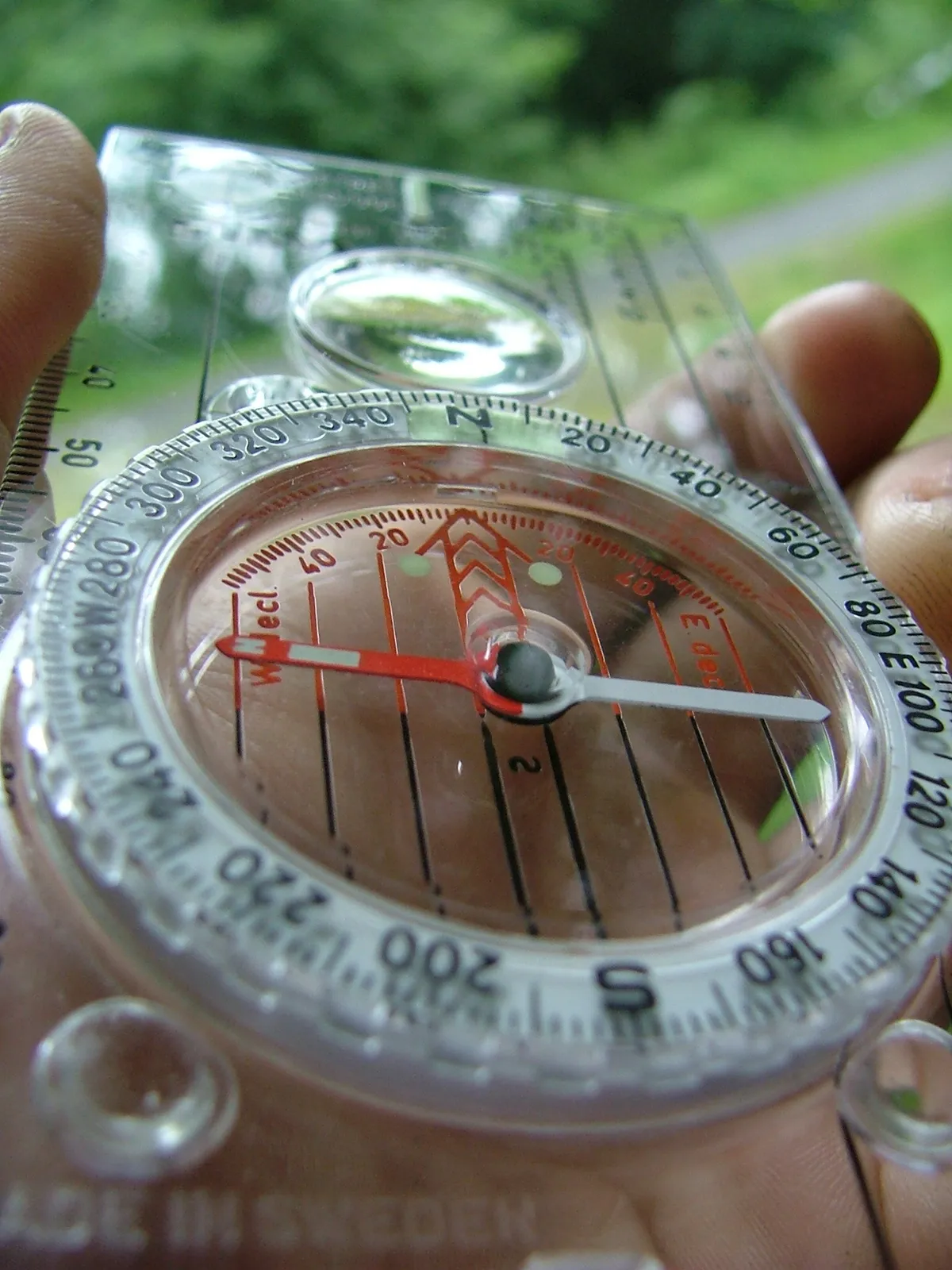
Four things distinguish compasses at this price from the 8-dollar ones: a liquid-damped needle, a declination adjustment, a transparent baseplate with map scales, and jewel bearing quality. The first two matter most, and only one of them is visible in a product photo.
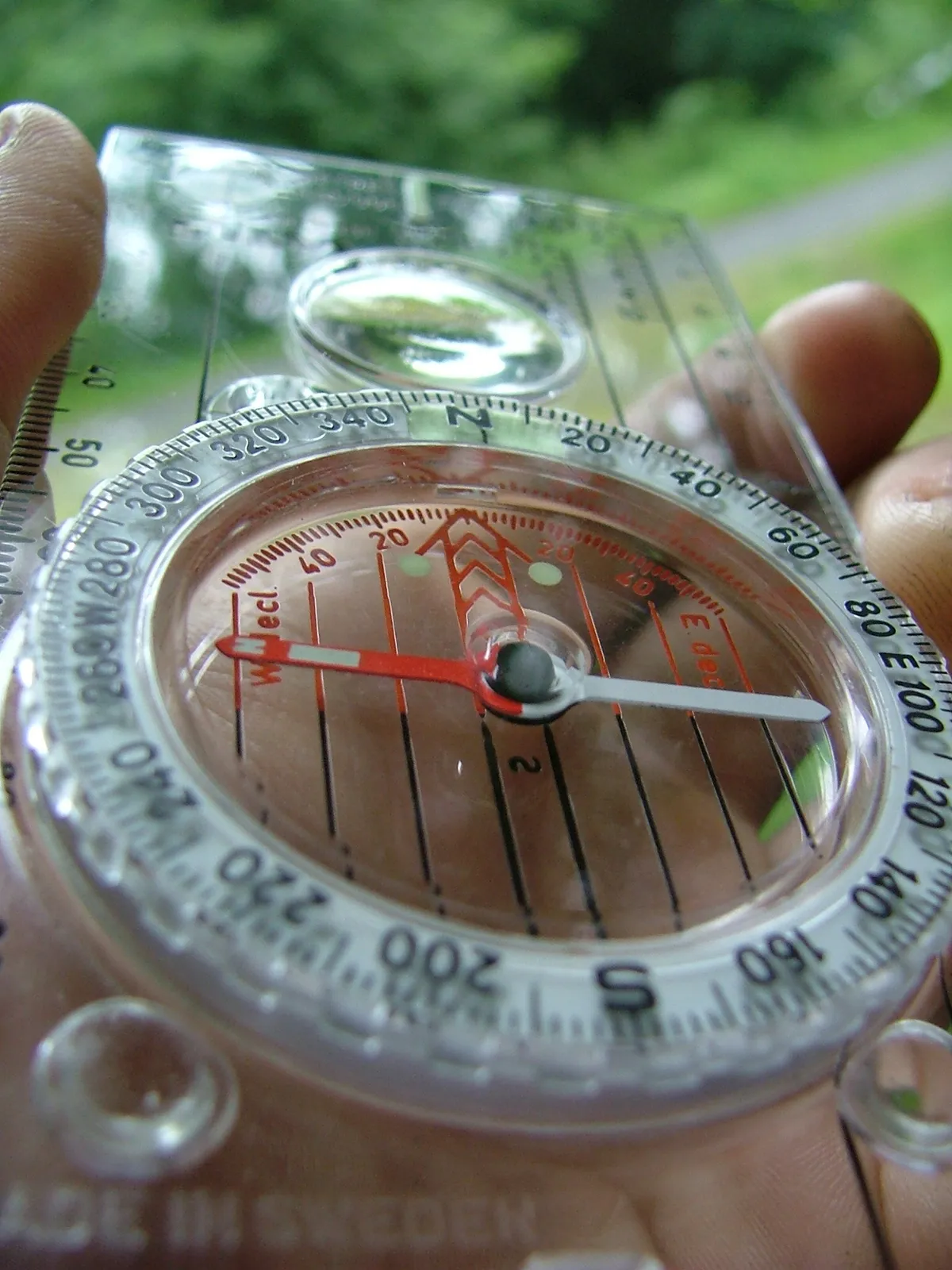
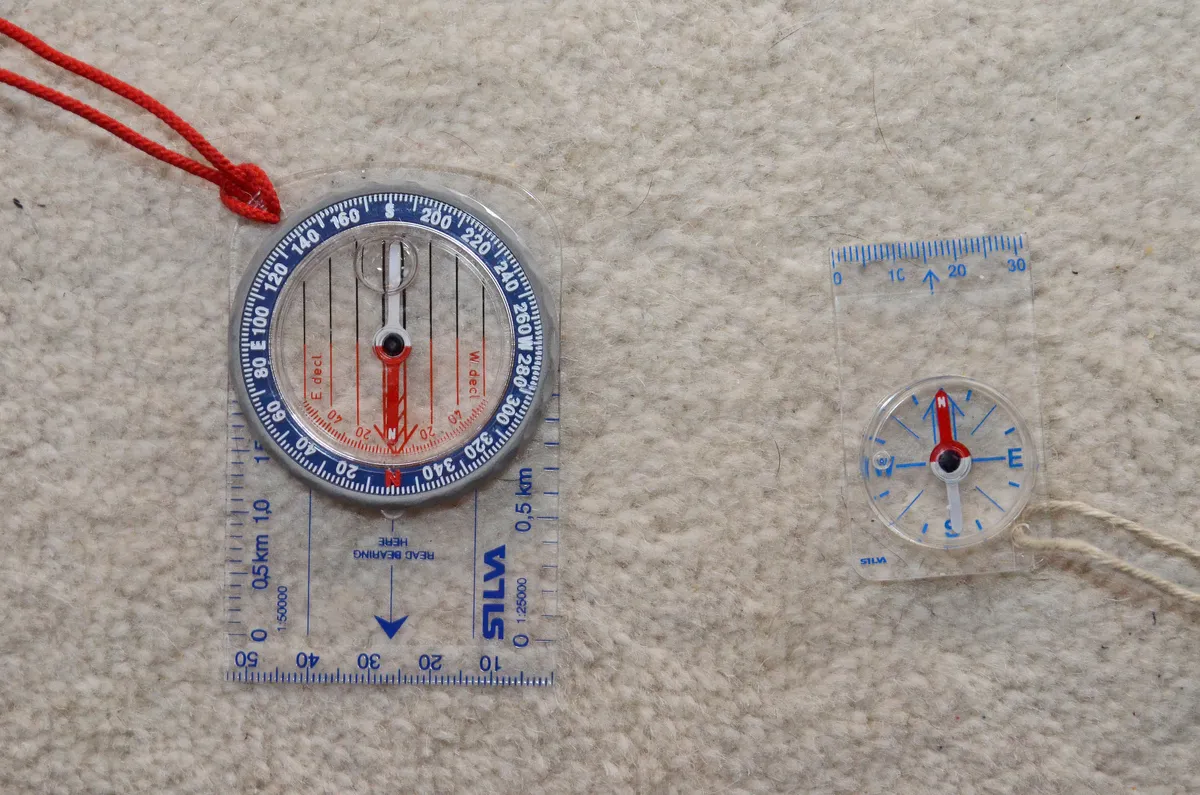
Ours is liquid-filled with a printed baseplate 6.2 by 10.5 cm, weighs 38 g with the lanyard, and has 2-degree graduations on the bezel, rulers in millimetres and inches along two edges, and 1:25,000 and 1:50,000 romer scales in a corner. Needle settling time — the interval between turning the compass and the needle stopping dead — measured a median of 2.4 seconds across 20 trials. On an 8-dollar compass we tested alongside, the same measurement was 5 to 9 seconds and the needle continued to hunt slightly rather than fully stopping. Over an afternoon of taking bearings, that difference is minutes of standing still, and it is the main reason cheap compasses feel unusable rather than merely slow.
Declination: the adjustment that prevents the biggest error
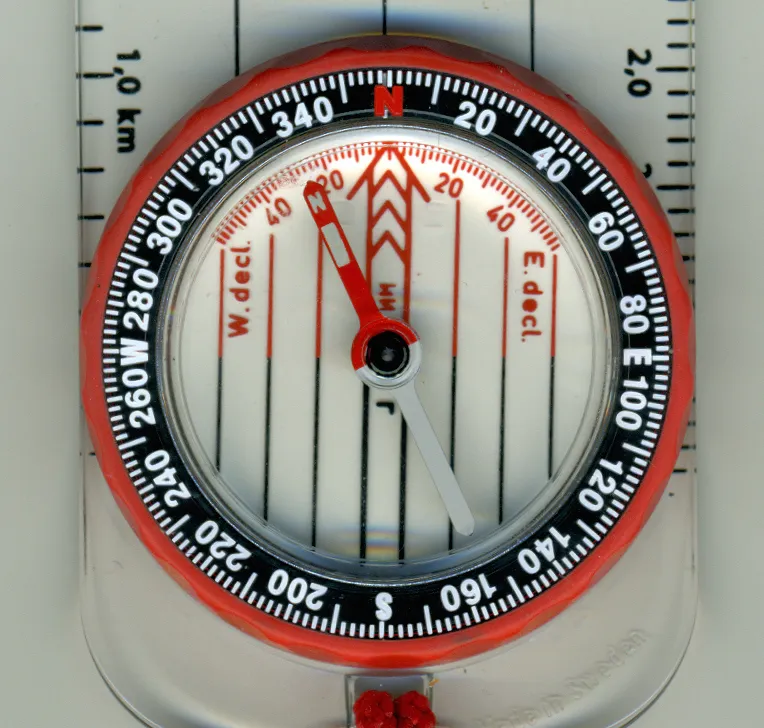
Magnetic north and grid north are not the same direction, and the difference — declination — varies by location and drifts over years. Where we tested it is currently about 1 degree west, which is small enough to ignore. In parts of North America it exceeds 15 degrees, and in some regions it is above 20. A 15-degree error compounds into roughly 260 metres of drift per kilometre, which will comfortably take you past a hut, a col or a road junction without seeing it.
This compass has a screw-set declination scale: you set it once with the supplied tiny key, and afterwards every bearing you read is already corrected. That is worth the price gap on its own, because it removes the arithmetic step where people make mistakes — adding when they should subtract is the single most common navigation error we saw when we tested three friends of varying experience on the same route.
Two practical warnings. Check the current declination for the area you are visiting rather than assuming, because published values on older maps go stale. And re-check that the screw has not been knocked; ours held its setting through four months and one drop onto gravel, but the adjustment is deliberately easy to turn.
Accuracy testing, 40 trials
We set up a repeatable test: two fixed points 180 m apart across a field, with the true bearing between them established by averaging 12 careful readings from a surveyed map. Then four people, two experienced and two beginners, each took ten bearings from one point to the other.
Experienced readings clustered within 2 degrees of the reference. Beginner readings spread to 5 degrees, with the errors almost all in one direction per person — a consistent bias from holding the compass at an angle rather than flat, which tilts the needle against the capsule. Averaged across everyone, the working figure was about 3 degrees. Nothing about a more expensive compass would have fixed the beginners' bias; ten minutes of instruction did.
We also tested the classic hazard: metal. Held 10 cm from a steel gate hinge, the needle swung 22 degrees. On the bonnet of a car it was unusable. Even a phone in the same hand pulled it 4 degrees, and a small camera tripod head at 20 cm pulled it 3. In practice this means taking bearings away from vehicles, fences, ski poles with steel tips and, most easily forgotten, the phone you have just been using for a map.
Using it with a map, which is the entire point
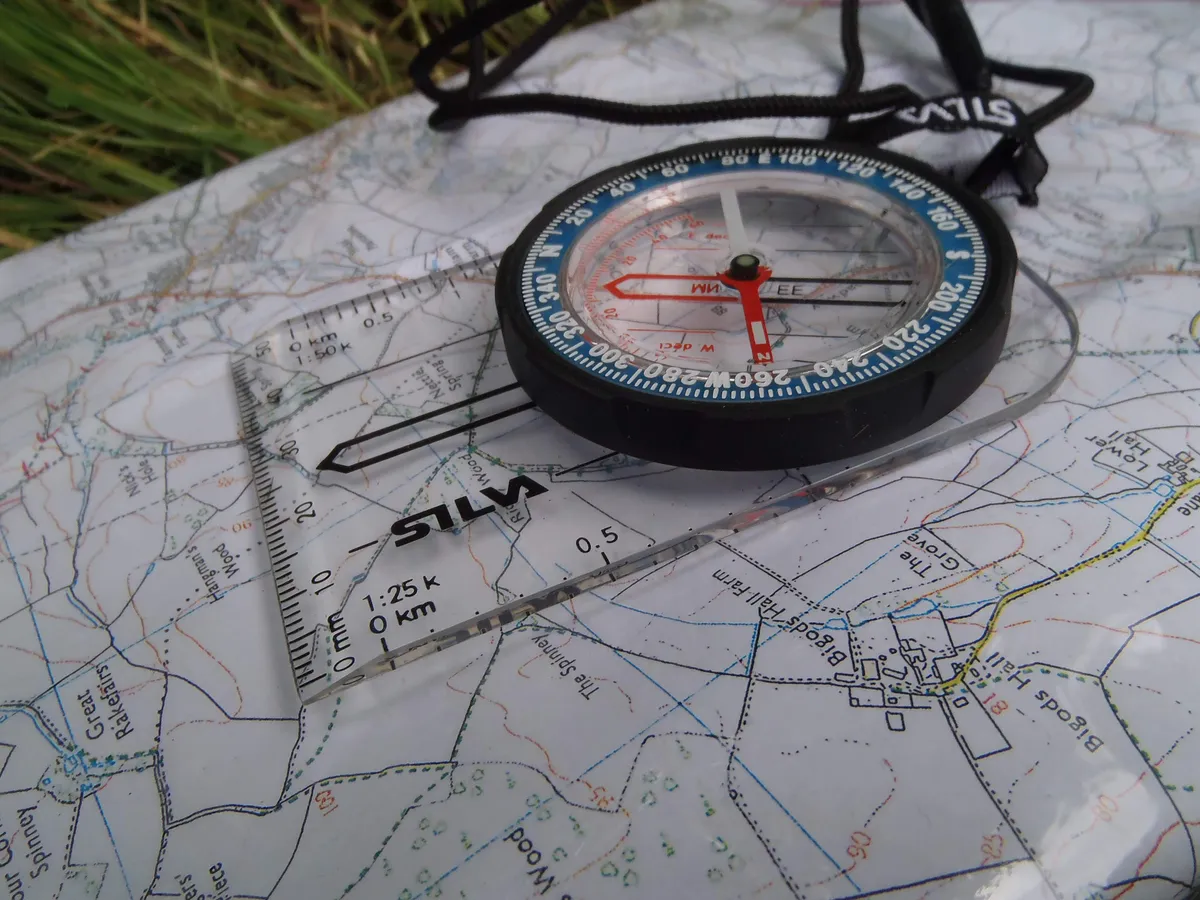
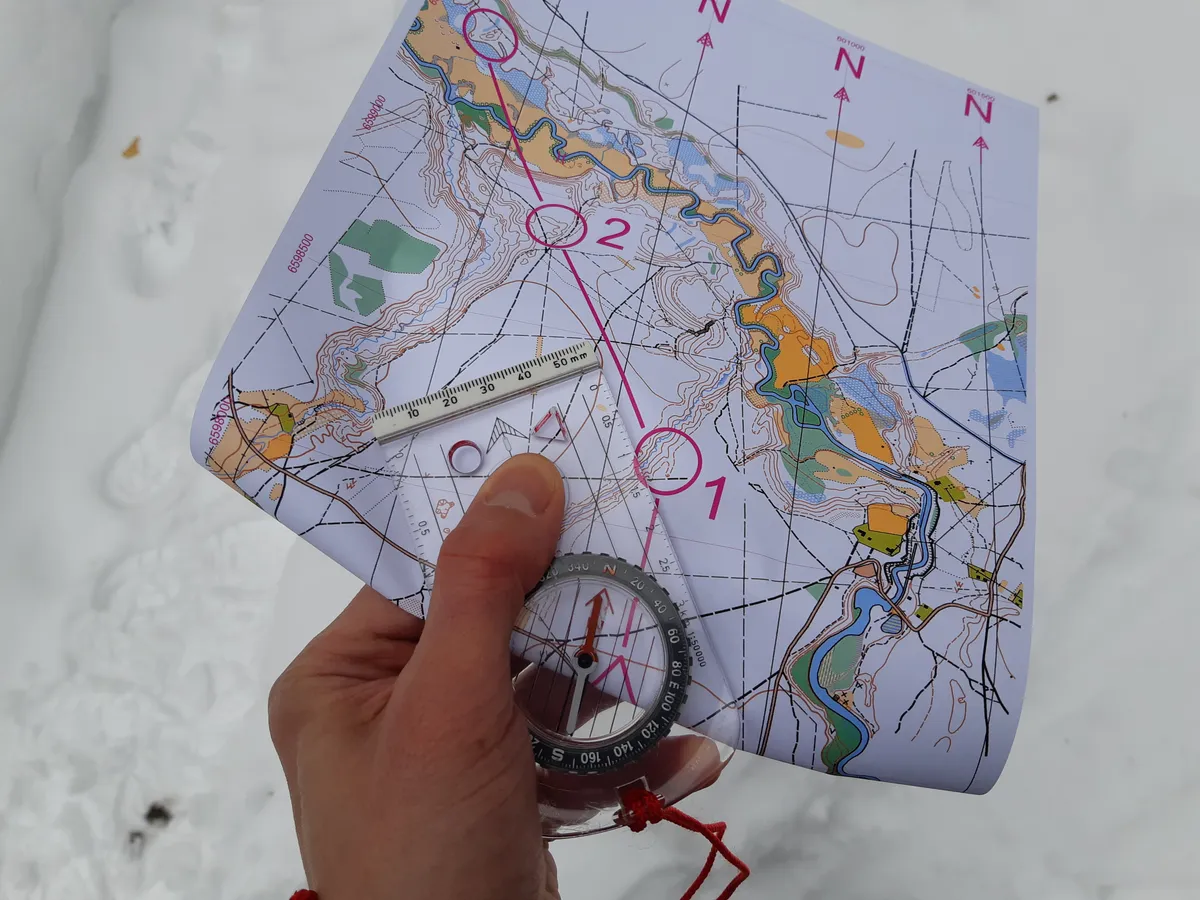
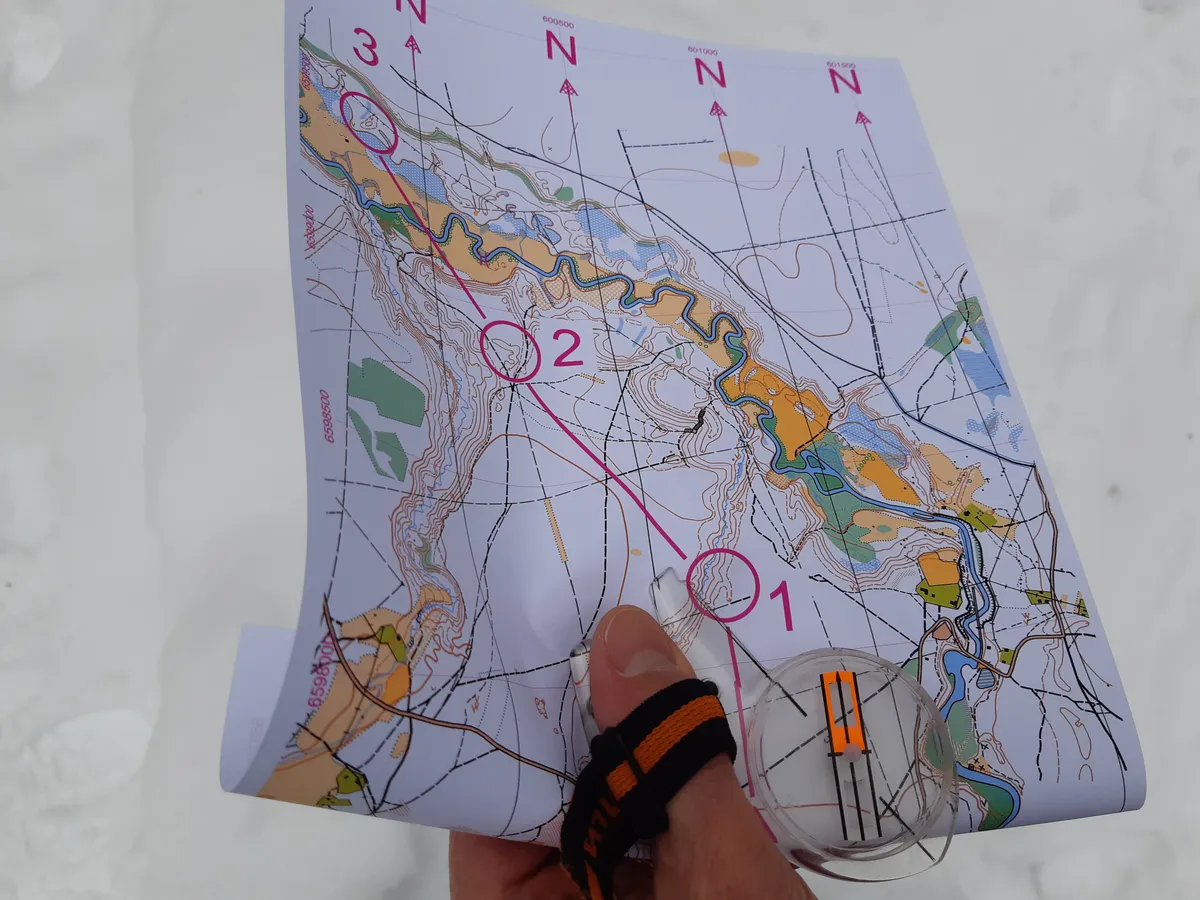
A compass alone tells you which way is north, which is almost useless. The reason to own a baseplate model rather than a button compass is that the flat plate is a protractor: you lay the long edge between where you are and where you want to be, rotate the bezel until its orienting lines match the map's grid lines, and read the bearing off. That workflow takes about 25 seconds once practised, and it works in wind and rain when a phone screen does not.
The romer scales in the corner are the underrated feature. They let you convert a six-figure grid reference to a point on the map in a few seconds without measuring, which is how you report a position accurately if you ever have to call for help. We practised this until we could place a grid reference in under 20 seconds, and it is a genuinely useful skill that takes an evening to learn.
The transparent baseplate scratched noticeably over four months of being carried in a pocket with keys — fine hairlines that do not affect function but do reduce clarity over a map. A small pouch, or keeping it in a jacket chest pocket alone, avoids it.
Poor visibility, and where the technique matters more than the tool
Six of our walks were in fog, dusk or heavy rain, which is when a compass stops being a hobby item. Two techniques did the work. First, pacing: we counted double-paces over a measured 100 m and got a personal figure of 63 on flat ground, rising to about 71 on rough uphill. Combining a bearing with a pace count turns "somewhere over there" into a position estimate.
Second, deliberate offset. Walking a bearing straight at a target you cannot see means a 3-degree error can leave you 50 m to either side with no way to know which. Aiming deliberately 10 degrees to one side of a linear feature such as a stream or a wall means when you hit it, you know which way to turn. That trick is not in the compass's instructions and it is the single most useful thing we relearned.
Night use exposed a limitation: ours has luminous markings on the bezel and needle that hold a usable glow for maybe 20 minutes after being charged under a torch, then fade. Models with tritium markers stay visible all night and cost considerably more. For most people a head torch on red mode solves it.
Durability and one thing to inspect on any compass
Four months, one drop onto gravel, one night left out in freezing rain, and repeated pocket carry. The capsule stayed sealed, the needle stayed lively, and the bezel rotation is unchanged. The lanyard cord frayed slightly at the attachment point, which is cosmetic.
The failure to look for is a bubble in the capsule. A small bubble that appears at altitude or in cold and disappears in the warm is normal. A bubble that persists at room temperature means the seal has failed, liquid is escaping, and the damping will progressively worsen — that compass should be replaced, not carried as a spare. We checked ours monthly and it stayed clear.
Worth stating plainly for anyone buying a compass as a safety item: a compass is not a substitute for knowing how to use it, and a bearing walked without a map, a pace count and a plan for what to do if you are wrong is not navigation. Practise on a familiar hill in good weather before you rely on it in bad. And carry a compass alongside a phone rather than instead of it — the compass works with a dead battery and wet hands, the phone gives you certainty about where you started.
Against the alternatives
Against an 8-dollar baseplate compass, the differences we measured are needle settling time (2.4 seconds against 5 to 9), no declination adjustment, coarser 5-degree graduations, and printed scales that are often only 1:50,000. It will get you a bearing. It will not get you a bearing quickly in wind with cold hands, and it makes declination a mental arithmetic problem.
Against a mirror sighting compass at 60 to 90 dollars, that model is genuinely more accurate for distant landmarks — the mirror lets you see needle and target simultaneously, cutting user error to a degree or so — and it doubles as a signalling mirror. It is also bulkier and slower for map work. For hill walking with a map, the flat baseplate is the more practical tool; for long sight lines and mountaineering, the mirror earns its place.
Against a phone compass app, the phone is fine as a rough direction indicator and unreliable as an instrument: it uses a magnetometer that needs calibrating, it is thrown off by cases with magnets, by wireless chargers and by the phone's own speakers, and it dies. We measured a 7-degree discrepancy between a phone and our compass while standing still, which resolved after a figure-of-eight calibration and returned an hour later.
Who should buy this
Buy it if you walk on open ground where paths are unreliable, if you are learning navigation properly, if you are in a region with meaningful declination, or if you want a piece of safety equipment that has no battery. It is also the correct compass for a hillwalking course, where an instructor will assume a baseplate with declination adjustment and romer scales.
Skip it if you only walk waymarked trails, where an 8-dollar compass for orientation is genuinely enough. Skip it if you specifically need long-range accuracy on distant peaks, where a mirror model is better. And do not buy any compass expecting it to work without practice — the equipment is the cheap part.
Verdict
Four months and 19 walks in, this is the right amount to spend on a compass. Needle settling measured a median 2.4 seconds against 5 to 9 for a cheap alternative, the screw-set declination scale removes the arithmetic error that beginners make most, and the romer scales make grid references quick. Measured user error across four people was about 3 degrees, or 52 m of drift per kilometre, which is the real reason to learn deliberate offset rather than to buy a better compass. The baseplate scratches in a pocket and the luminous markings fade after about 20 minutes. At 42 dollars, with no battery to fail, it is one of the few pieces of gear that will still work in twenty years.
We compared prices across retailers so you don't have to.