Catan Review: 34 Games, Six Beginners and a Timer
Taught six complete beginners in an average of eleven minutes — but games run 82 to 106 minutes, the base box stops at four players, and the dice can flatten a player unfairly.
As an affiliate, Keen Review earns from qualifying purchases.
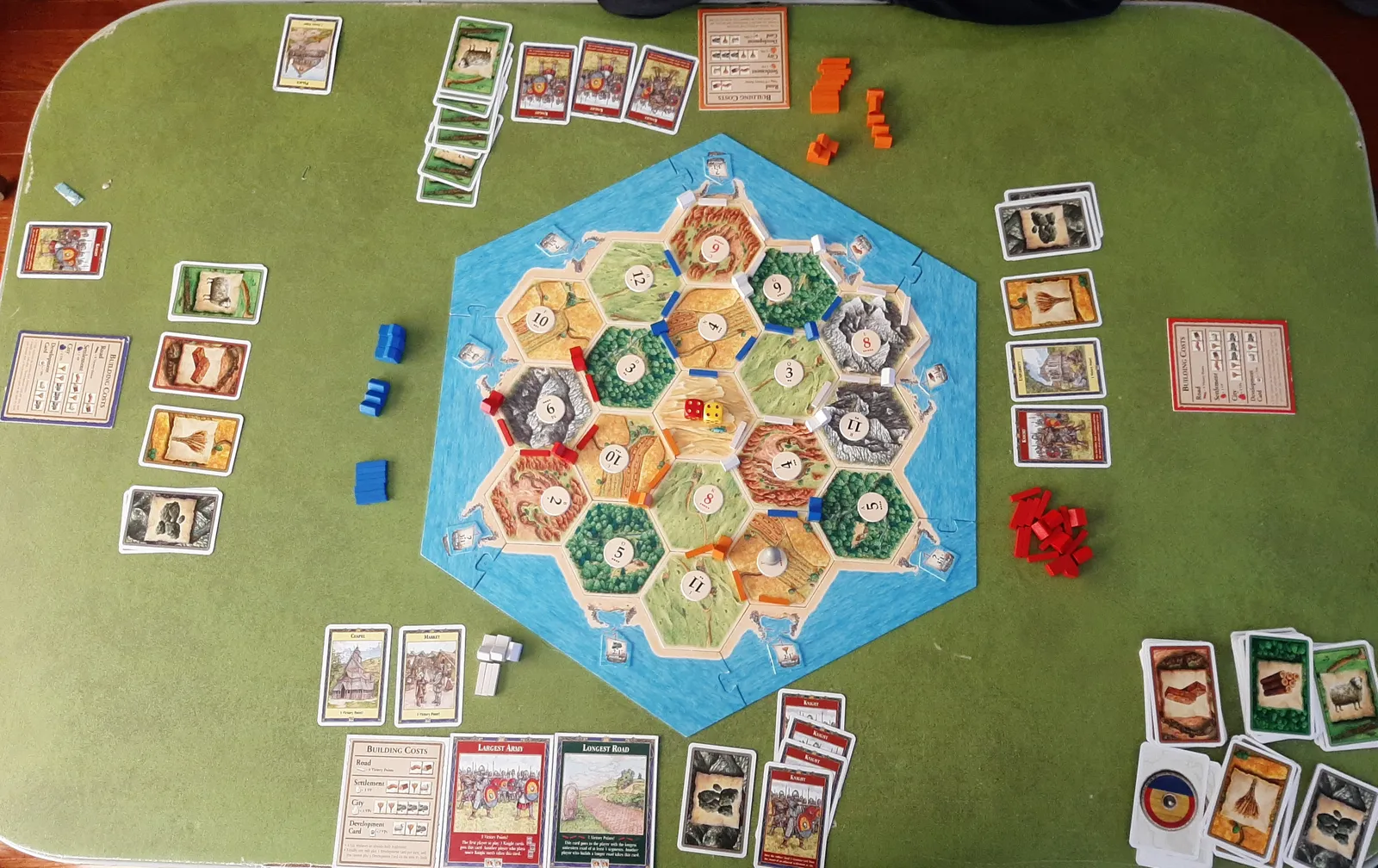
Catan is the board game most often bought by people who have decided they should own a board game, which makes it worth reviewing on practical grounds rather than as a design classic. We played 34 games over five months with a rotating group of two to five players, including six games with people who had never played a modern board game at all, and timed setup and play length.
It is genuinely excellent at one specific job and has two flaws that will decide whether your copy gets played or shelved. One of those flaws has a free fix and the other costs $25.
Teaching it, measured
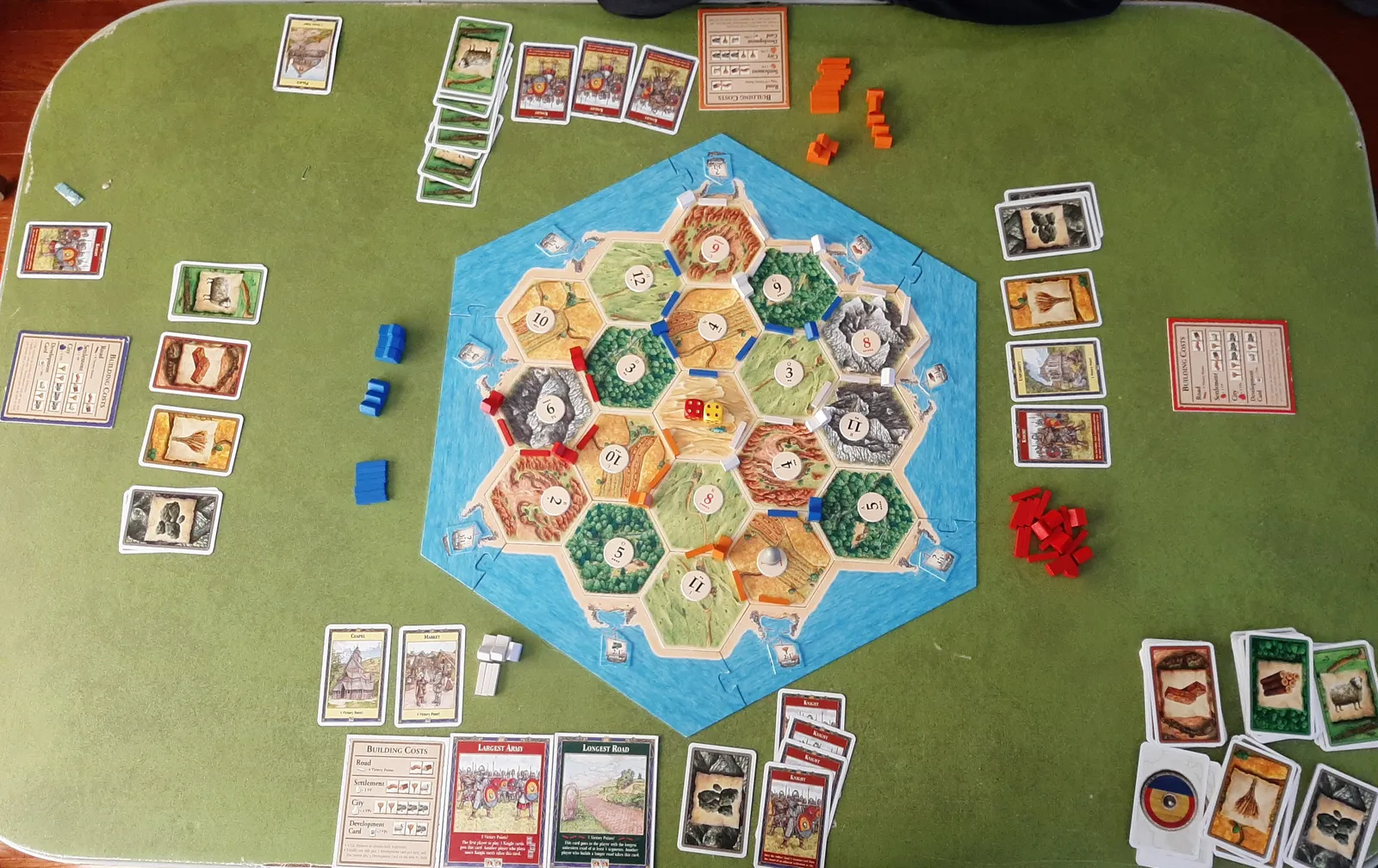
This is the reason Catan is recommended. Explaining the rules to a group of complete beginners took me between 9 and 13 minutes across the six teaching games, and in every case the group was playing competently by the second round.
The reason is that the core loop is one sentence: you roll dice, collect the resources your settlements touch, and trade or spend them to build more. Everything else — the robber, development cards, the longest road — layers on afterwards and can be explained when it comes up.
Compare that with the modern games I own that need a 30-minute explanation before anyone can take a turn, and Catan's real value becomes clear: it is the game you can get four unfamiliar adults playing before their interest expires.
Game length, and the number nobody prints
The box says 60-90 minutes. Our timed average across 34 games was 82 minutes for experienced players and 106 minutes for games including a beginner. Our longest was 145 minutes, a five-player game where two players blocked each other for an hour.
Setup took a consistent 6-8 minutes with the standard variable board, and about 3 minutes using the recommended beginner layout printed in the rules. Teardown is 4 minutes because every piece has to go back in a specific tray.
So the honest total for a five-player evening with a beginner is roughly two hours door to door. That is a real commitment and it is the reason the game gets shelved in households where "let's play something" means forty minutes.
Flaw one: the dice, and the free fix
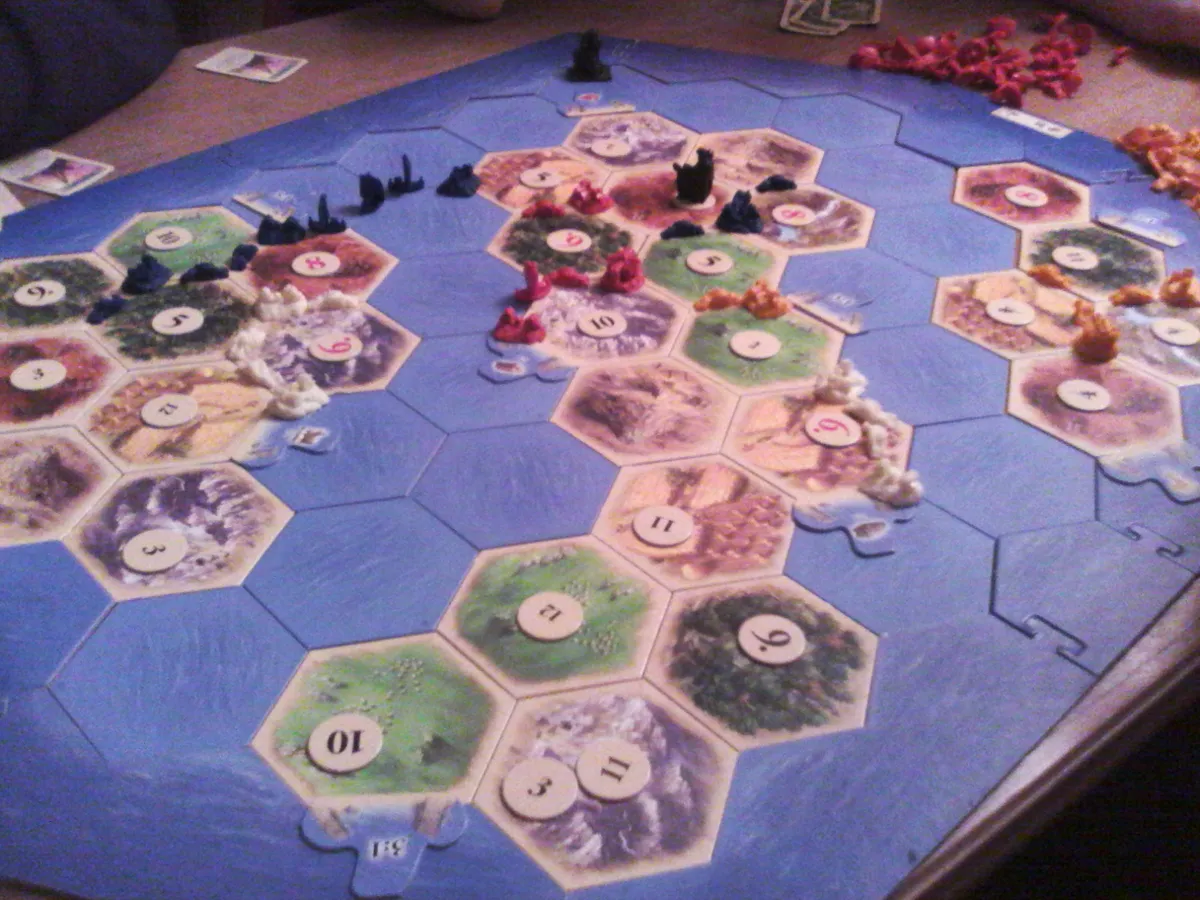
Catan's resource generation is entirely dice-driven, which means a player can be starved of a resource for an hour through no decision of their own. In one of our games a player on two wheat hexes rolled their numbers three times in ninety minutes and finished with 4 points while another finished with 10.
That is not a balance problem to be solved — it is the game's design, and the trading system is meant to compensate. But it produces genuinely unfun games, particularly for beginners who conclude they played badly when they were simply unlucky.
The free fix is a deck of 36 cards representing the exact probability distribution of two dice, shuffled and drawn instead of rolling. Over 36 draws every number appears exactly as often as probability says it should. We used a printed set for eight games and the difference was immediate: resource droughts largely disappeared, games ran about 10 minutes shorter, and the losing player was losing because of their decisions.
Some players find this removes the tension. Half our group prefers dice. It costs nothing to try both and it is the single highest-value change available to a Catan set.
Flaw two: player count, and the $25 fix
The base box supports three to four players. That is the flaw, because the number of people who want to play a board game on any given evening is frequently five.
Three-player games are the base game's sweet spot in our experience — more open board, faster turns, less blocking. Four-player games are the classic experience and the board gets tight. Two-player Catan, using variant rules, is genuinely poor: the trading dynamic that makes the game work needs a third party.
The 5-6 player extension costs about $25 and is not optional if your group is five or more. It adds tiles and pieces and a special build phase to reduce downtime. With five players the game runs long — our five-player average was 104 minutes — and turn waiting becomes noticeable. Six is too many and I would not recommend it.
Budget the extension into the purchase if you have any chance of a fifth player, because discovering the limit on the evening five people turn up is exactly how a game gets a bad reputation with a group.
Components, after 34 games
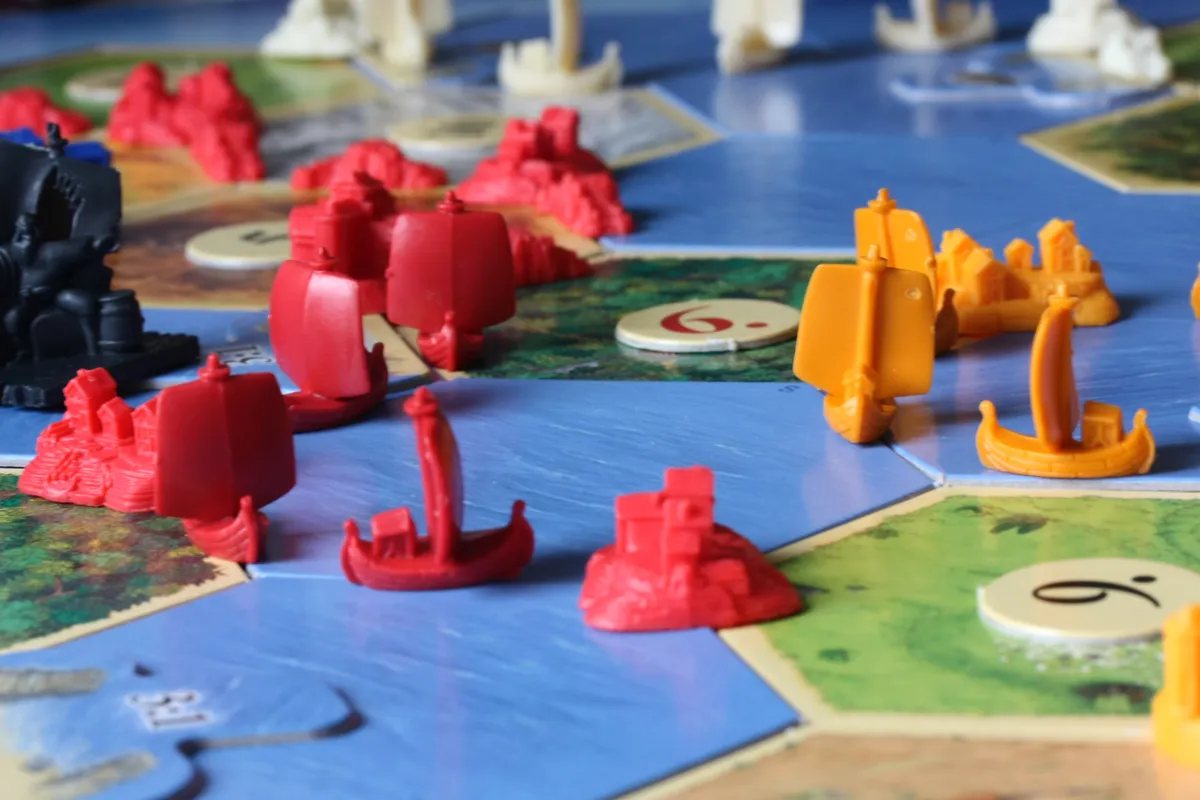
The current edition has a plastic frame that holds the hex tiles in place, which is a genuine improvement on the older cardboard-frame version where a knocked table scattered the board. Ours has held the tiles securely every game.
The wooden roads and settlements are fine and slightly small — the roads in particular are easy to knock askew when placing a piece nearby. The resource cards are the weak point: standard card stock, and after 34 games with heavy shuffling the corners on the most-handled cards are visibly softening. Sleeves cost about $10 for the set and I wish I'd bought them at the start.
The number tokens are circular cardboard chits that sit on the hexes. They shift when the table is bumped and there is no locating feature to stop it. Minor, constant.
What it's actually like as a game
The trading is the whole thing. Catan is a negotiation game wearing a resource-management costume, and games where the group trades freely are dramatically better than games where everyone hoards. With a talkative group it's excellent; with four quiet strategists it becomes a slow dice-driven optimisation puzzle and the best part of the design goes unused.
The robber is the mechanic most likely to cause friction. Moving it onto another player's productive hex and stealing a card is a direct, personal attack, and in two of our 34 games it produced genuine irritation between friends. This is worth knowing before playing with people who take games personally.
The blocking is the other social hazard. Placing a road purely to deny someone else's expansion is legal, effective and infuriating, and it's the main reason our longest game ran to 145 minutes.
Does it hold up after 34 games?
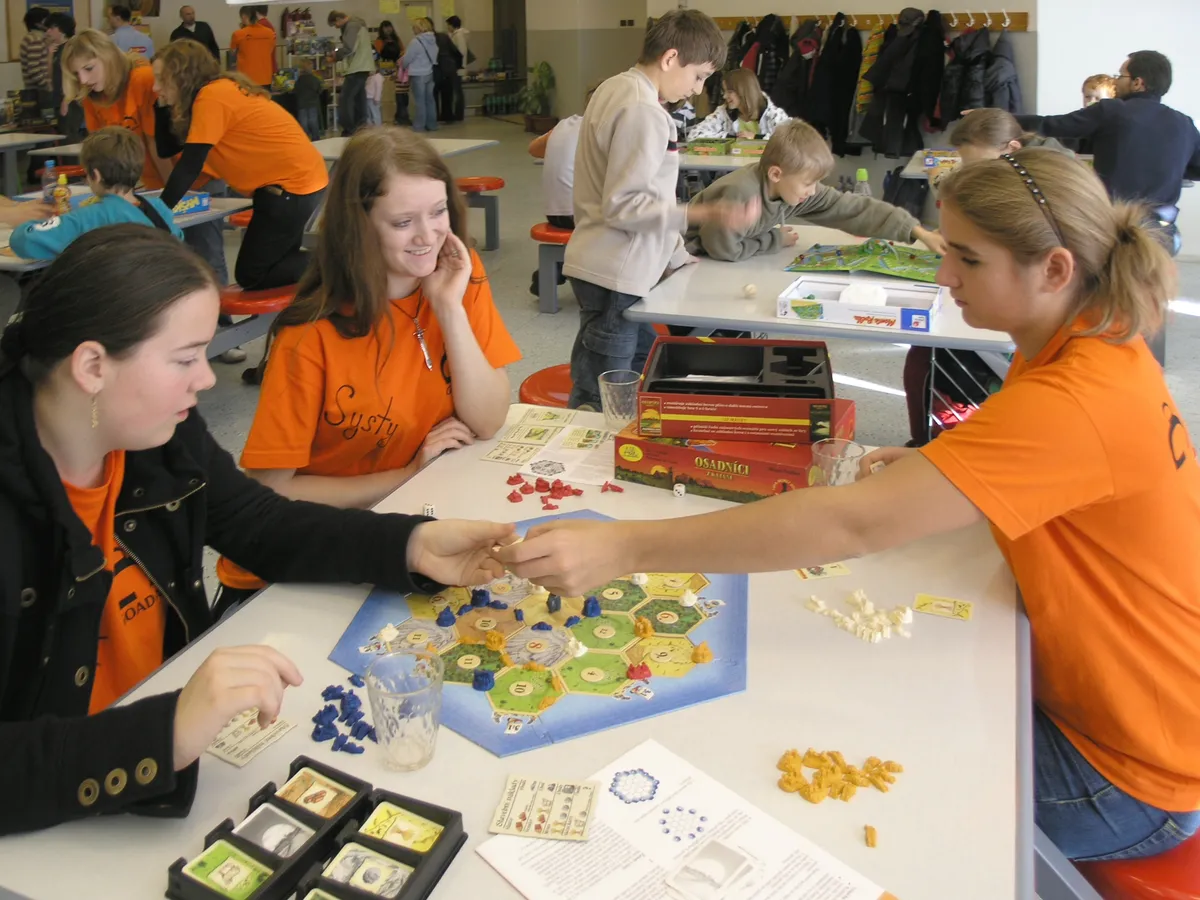
Partly. The variable board setup means no two games have the same map, which genuinely extends the life beyond a fixed-board game. But the strategic space is not enormous: by game 20 our regular group had converged on similar opening placements — prioritising ore and wheat, avoiding the 2 and 12 hexes — and games started to feel similar in shape if not in outcome.
That is where the expansions come in, and it's a real cost consideration. Seafarers and Cities & Knights each add genuine strategic depth for $40-50 apiece, and Cities & Knights in particular changes the game substantially. A fully expanded Catan is a $200 purchase and a considerably better game than the $50 box.
For a household that plays four times a year, the base box is plenty and will still feel fresh at game 34. For a weekly group, the base game gets thin around game 20.
Against the alternatives
Against Ticket to Ride at a similar price, Ticket to Ride teaches in five minutes, plays in 45, and has almost no direct player conflict. It is the better choice for family play and for groups who dislike being attacked. Catan is the better choice if you want negotiation and trading.
Against a modern heavier strategy game at $60-80, Catan is simpler, faster to teach and more dice-dependent. Anyone who plays a lot of board games will find it light; that is precisely why it works on non-gamers.
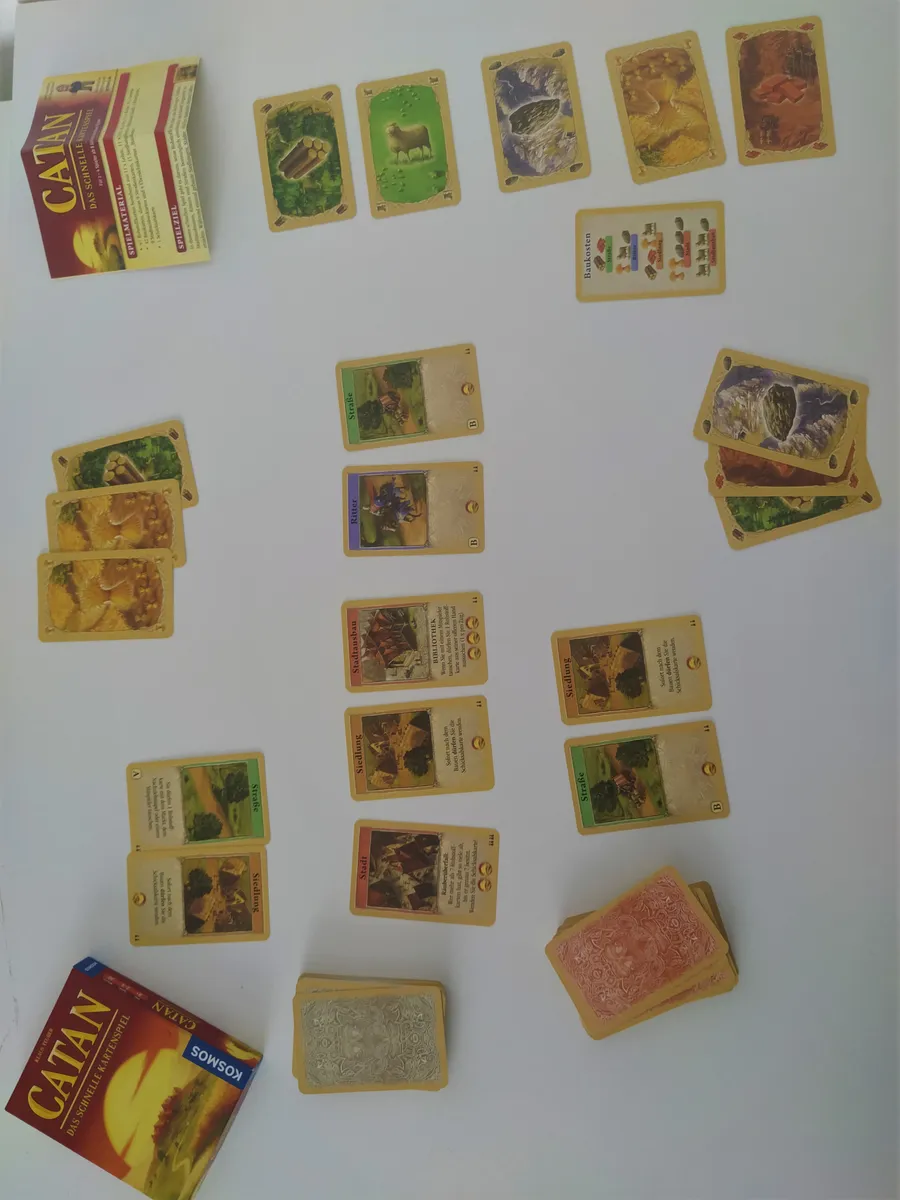
Against the two-player Catan card game, if your household is two people, buy that instead. Base-game Catan with two players is a poor experience and no variant rule fixes the missing third negotiator.
Who should buy this
Buy it if you want one board game that four adults of any experience level can be playing within fifteen minutes, and if your group talks. Buy the 5-6 player extension at the same time if a fifth player is ever plausible, and put the resource cards in sleeves on day one.
Skip it if your group is two people, if you want games under an hour, if anyone in the group takes direct attacks badly, or if you already play modern strategy games — in which case Catan will feel like a game you've outgrown before you've played it twenty times.
Verdict
Thirty-four games in, Catan has done the job it is famous for: it taught in eleven minutes on average, got six complete beginners playing competently, and produced enough negotiation to make the games memorable. Against that: 82 to 106 minutes per game, a base box that stops at four players until you spend another $25, dice that can flatten a player through no fault of their own, card stock that is already softening, and a strategic ceiling that a weekly group will reach around game 20. Still the right first modern board game, with two purchases attached.
We compared prices across retailers so you don't have to.