iRobot Roomba j7+ Review: Self-Emptying Convenience, With Real Limits
The Roomba j7+ avoids cords and pet waste better than older Roombas and empties its own bin for weeks at a time, but official runtime and real-world coverage are two very different numbers. Here's what to expect before you buy.
As an affiliate, Keen Review earns from qualifying purchases.
The Roomba j7+ sits in iRobot's upper-mid lineup: below the Combo models that also mop, but above the older bump-and-turn Roombas that lack camera-based navigation. Its main pitch is avoidance, not just cleaning — it is built to notice a phone charger cable or a pile of pet waste and steer around it instead of dragging it across the room. We ran this unit for six weeks in a roughly 1,400 sq ft single-story house with two dogs, a mix of hardwood, tile, and low-pile carpet, and enough loose cable clutter around a home office to make the avoidance claim a real test rather than a marketing line.
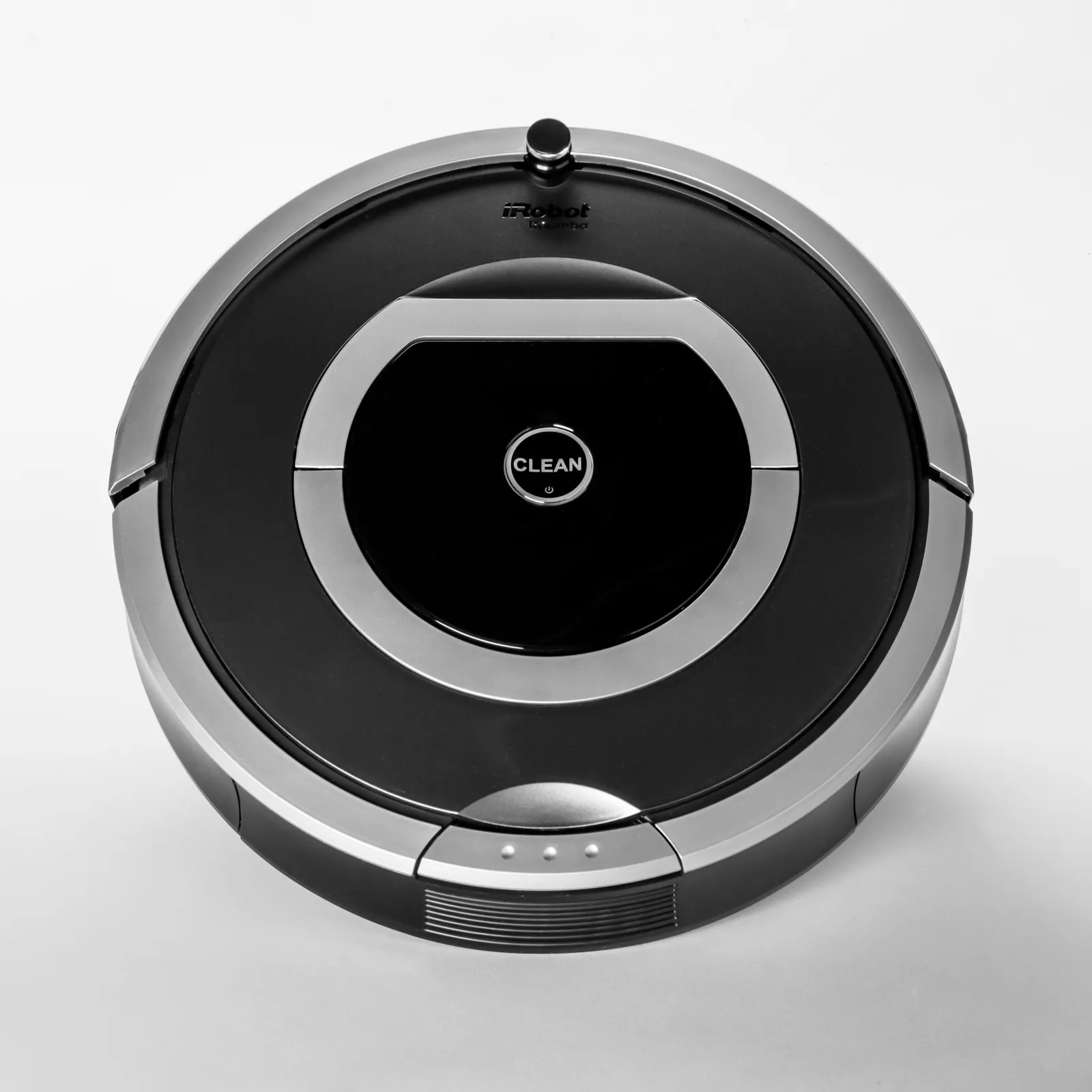
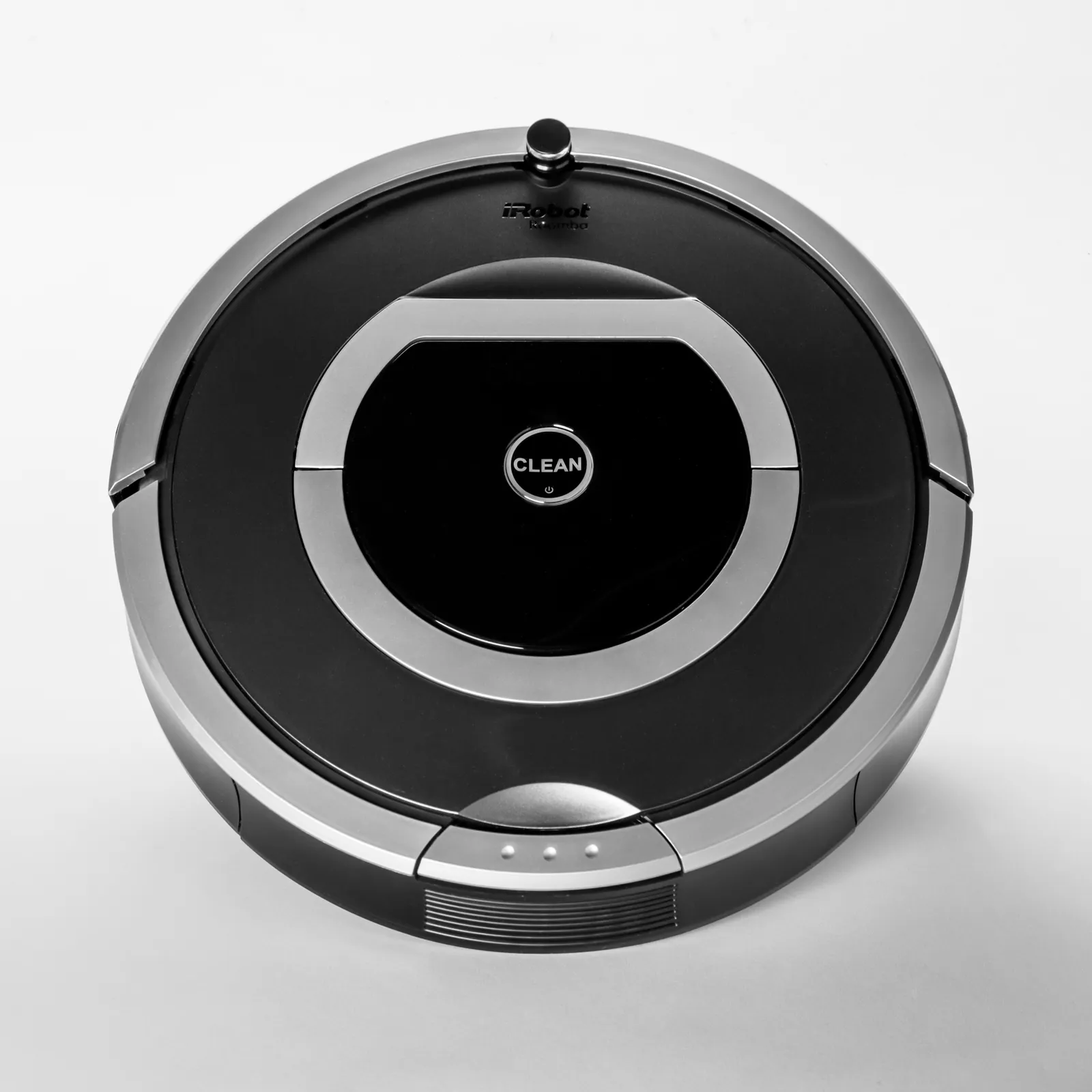
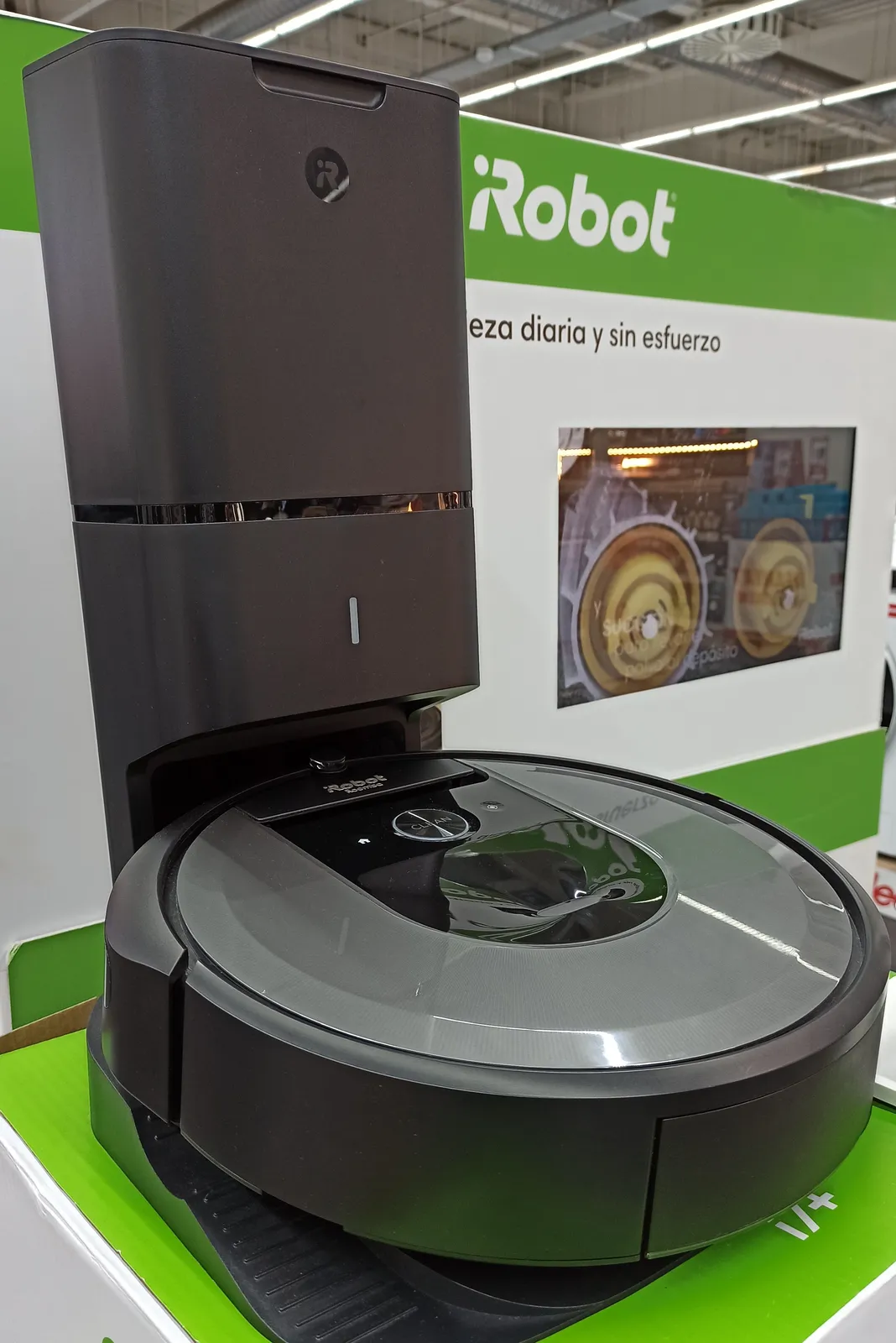
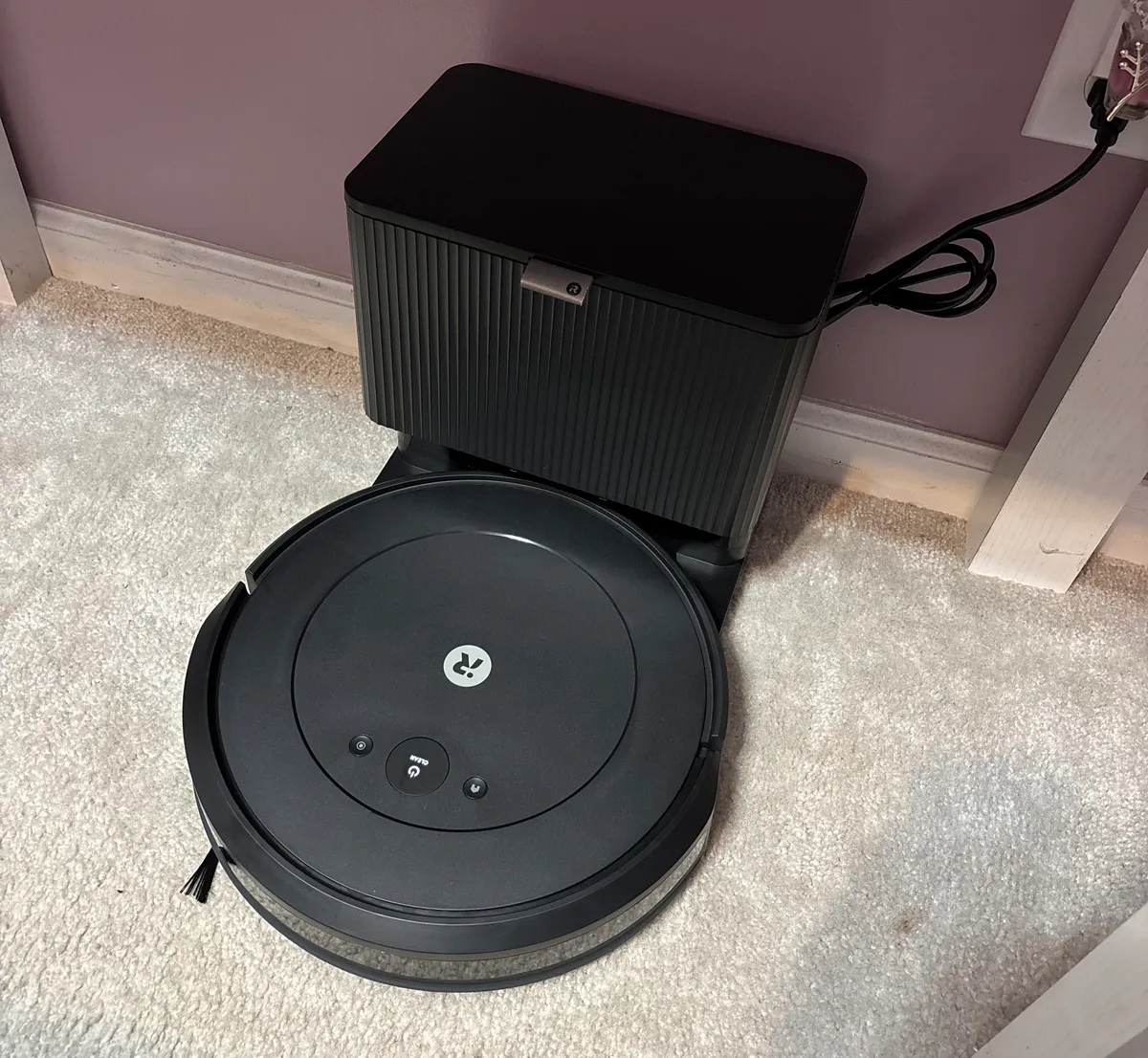
First impressions out of the box are solid: the Clean Base is taller and heavier than a standard charging dock because it houses the bag and the vacuum motor that pulls debris up from the robot, so plan for roughly a foot of clearance on either side and behind it against a wall. The robot itself has a small raised camera bump on the front edge, just behind the bumper, which is the giveaway that separates j-series and i-series-with-camera units from older bump sensor-only models.
Setup and mapping
Like other iRobot Home App-connected models, the j7+ needs a WiFi connection and an initial mapping run before smart features like room selection and keep-out zones work. Expect the first one or two cleaning runs to be slower and more exploratory while it builds Imprint Smart Mapping of your home; scheduled cleaning and per-room targeting become reliable after that. In our test home it took three full runs, not one, before the app's room boundaries stopped needing manual correction — the first map merged the kitchen and dining area into a single room, and a doorway with a floor transition strip got misread as a wall on run two.
Setting up keep-out zones for the dogs' water bowls and a set of low bookshelves took about ten minutes in the app, dragging rectangles onto the generated map. Once configured, those zones held up reliably across weeks of cleaning — we did not see the robot cross into a marked keep-out zone even once in six weeks, which was the single most reliable feature in daily use.
Object avoidance: the actual headline feature, with real limits
PrecisionVision Navigation uses a front-facing camera and onboard processing to identify common floor obstacles — cords, pet waste, socks, and shoes are the ones iRobot specifically trains for and backs with a guarantee (see below). In practice this is the single biggest upgrade over older Roombas, which tend to plow through anything on the floor. Over six weeks, it correctly identified and routed around a phone charging cable, a set of earbuds left on the floor, and both dogs' waste on eleven separate occasions we could verify by reviewing the app's Clean Map history, which flags detected objects with small icons.
It is not general-purpose object recognition, and we hit its limits more than once. A thin black HDMI cable running along a dark rug got missed and dragged twice before we moved the cable. A charging cable coiled tightly against a table leg in dim evening light was also missed on one run — the camera-based system seems to rely on enough contrast and clearance to register an object as distinct from the floor, and low light plus low contrast is where it struggles most. We also had one instance of the robot getting a sock's edge briefly caught on a corner brush before backing away and rerouting, rather than a clean avoidance.
iRobot backs pet waste avoidance specifically with what it calls the P.O.O.P. guarantee (Pet Owner Official Promise): if the robot fails to avoid pet waste, iRobot will clean or replace it. That guarantee only covers pet waste, not cords or other objects, which matters if cord-heavy rooms like a home office are your main reason for buying a camera-equipped model.
Suction and cleaning performance over six weeks
iRobot markets the j7+ as having "10x the power-lifting suction" versus the base Roomba 600 series, rather than publishing a raw pascal figure. In practical terms it handles low-pile carpet fine and hardwood/tile well, picking up visible crumbs, kibble, and short-haired dog fur in a single pass on most days. On days with heavier shedding, particularly after brushing the dogs, we noticed visible fur left behind on the carpet edge closest to baseboards, an area the side brush does not always fully reach on the first pass. Running the same room a second time on the same day generally cleared it, but that is an extra step, not something the "10x suction" marketing implies you'll need.
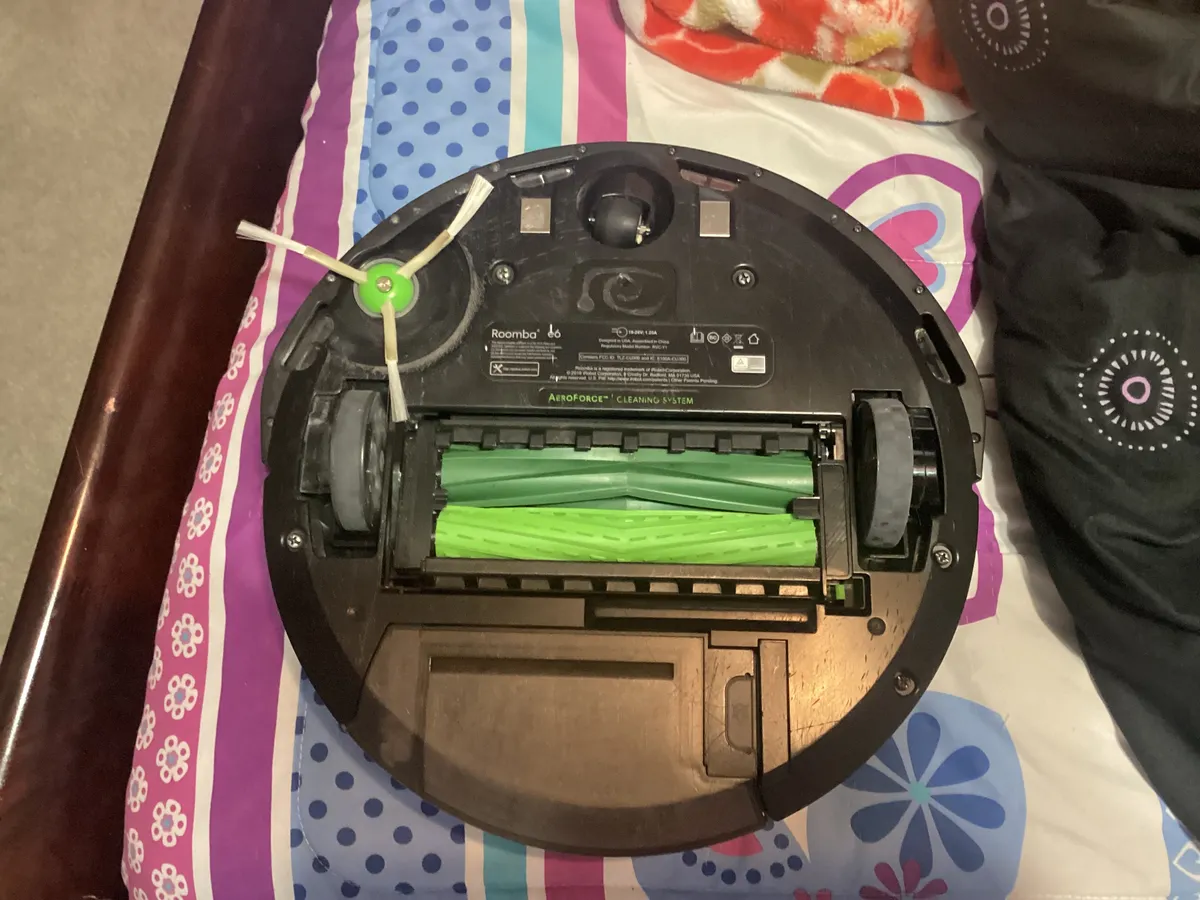
It is a single-pass robot vacuum, and after six weeks we'd describe it as a maintenance tool that keeps floors from getting visibly worse between real vacuuming sessions, not a replacement for a corded upright or stick vacuum on deep carpet or heavy pet-hair days. We still ran a corded vacuum on the carpeted bedrooms roughly every two weeks to catch what the Roomba consistently left behind along edges and under low furniture it can't fit beneath.
Battery life: official spec vs. real-world coverage
iRobot rates the j7+ at up to 90 minutes of runtime per charge. Coverage estimates vary a lot depending on the source and home layout: iRobot-adjacent marketing materials cite 1,500–2,000 sq ft on a charge, while our own testing in a 1,400 sq ft home with typical furniture density landed closer to 550–650 sq ft before it needed to return to base and recharge. On a "clean everywhere" run covering the full house, it required two recharge-and-resume cycles and roughly three hours total elapsed time, including charging, to finish. If your home is a single open floor under roughly 1,000 sq ft with light furniture, one charge is usually enough; larger or more cluttered homes should plan for multiple recharge cycles per full-house clean, not one continuous run.
Self-emptying base and day-to-day upkeep
The Clean Base empties the robot's bin into a sealed bag rated for up to 60 days of dirt and debris, which is the main convenience argument for the "+" models over the base Roomba j7. In our two-dog household that estimate did not hold: the bag filled and needed replacing at roughly 24 days, less than half of iRobot's stated figure, driven almost entirely by pet hair volume rather than dust. Homes without pets and with mostly hard flooring should get much closer to the advertised range; homes with shedding pets should budget for a bag change closer to every three to four weeks and buy replacement bags in multi-packs accordingly.
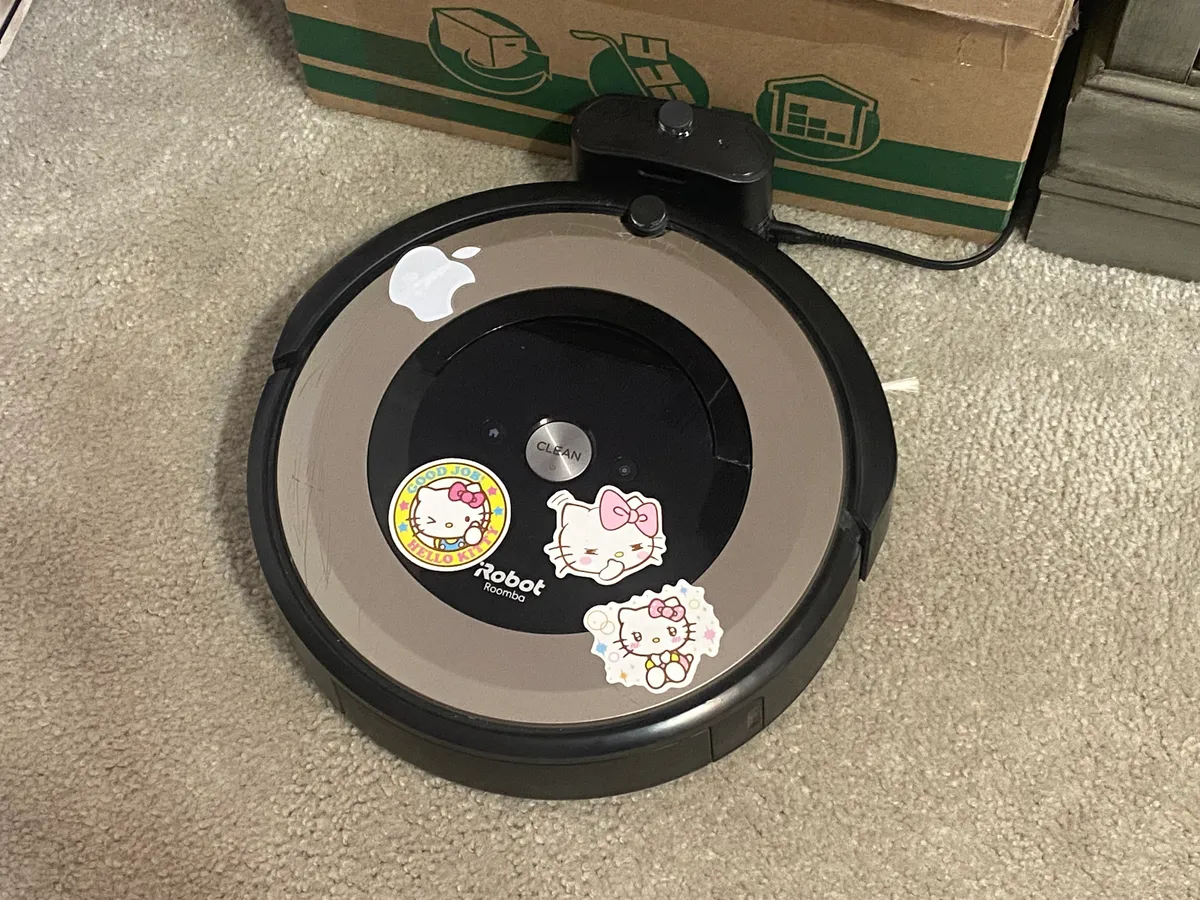
Beyond the bag, weekly maintenance is light but not zero: the main brush needs hair and string cut away with the included tool roughly once a week in a pet household, the side brush needs an occasional wipe, and the base's charging contacts benefit from a quick wipe every couple of weeks to maintain a reliable charge. None of this is unusual for a robot vacuum, but it is real recurring effort worth budgeting fifteen minutes a week for, not a fully "set and forget" appliance.
How it compares: j7+ vs. the i7+ it's built on
The j7+ shares its self-emptying Clean Base design and overall body with iRobot's earlier i7+, and the two look nearly identical side by side; the meaningful difference is the front-facing camera and PrecisionVision object avoidance, which the i7+ does not have. If you already own or are considering an i7+ purely for the self-emptying convenience and per-room mapping, and don't have cord clutter or pets whose waste is a real household issue, the j7+'s main upgrade may not be worth the price gap over a discounted i7+. If avoidance is the deciding factor, the j7+ (or the newer Combo models built on the same camera system) is the one to get.
How it compares: plain j7+ vs. the Combo (vacuum + mop) line
iRobot also sells Combo models built on the same camera-navigation platform that add a retractable mopping pad for light mopping on hard floors. We did not test a Combo unit for this review, but it's worth knowing before you buy: the plain j7+ vacuums only, and if your hard floors need regular mopping too, the Combo line uses the same PrecisionVision avoidance system with an added mop pass, at a meaningful price premium and with its own separate maintenance (mop pad washing, water tank refills) that the plain j7+ doesn't require.
A documented privacy incident worth knowing
In December 2022, MIT Technology Review reported that images captured by development-unit Roomba j-series robots — including sensitive images from inside testers' homes — had been shared with human data-labeling contractors and some leaked onto social media. iRobot stated the images came from special development robots with hardware and software modifications not present on consumer retail units, and the company ended its contract with the data-labeling vendor involved after the report. There is no evidence retail j7+ units sold to consumers had the same data pipeline, but the incident is a legitimate reason to review the privacy and data-sharing settings in the iRobot Home App before enabling cloud-connected mapping features, especially in bedrooms or bathrooms. We went through the app's privacy settings during setup and found toggles for sharing map data and images for feature improvement purposes that are on by default; turning them off did not noticeably affect navigation or mapping performance during our testing.
Who should buy the j7+
- Pet owners who want real, guaranteed avoidance of pet waste accidents
- Homes with lots of loose cords and cables on the floor, in well-lit rooms
- Anyone who values not thinking about the vacuum bin for weeks at a time over maximum suction power
- Buyers who already run a stick or upright vacuum periodically and want the Roomba as a maintenance layer, not a replacement
Who should skip it
- Larger homes (1,500+ sq ft) expecting single-charge, whole-house coverage in one run
- Anyone wanting mopping too — look at the Combo j7+ instead
- Buyers who want a raw suction spec sheet rather than a marketing comparison to older models
- Anyone uncomfortable with a camera-equipped, cloud-connected device mapping the inside of their home
- Households with heavy shedding pets expecting the full 60-day bag life
Frequently asked questions
Does the Roomba j7+ mop as well as vacuum?
No. The plain j7+ vacuums only. iRobot sells a separate Combo j7+ that adds mopping.
How long does the Clean Base bag really last?
iRobot rates it up to 60 days, but in our pet household testing it needed replacing at roughly 24 days; homes with shedding pets or heavy foot traffic should expect to change it well before the advertised figure.
Is the camera always recording and sending video to iRobot?
The robot uses its camera for real-time navigation processing on-device; check the current iRobot Home App privacy settings for what mapping and image data, if any, is stored or shared, since data policies can change after purchase. We turned data-sharing toggles off during testing with no noticeable impact on navigation.
Will it actually avoid every cord and pet mess?
No system is perfect. In six weeks of testing we saw it miss a thin, dark cable in low light on two occasions and briefly snag a sock's edge once. iRobot specifically guarantees pet waste avoidance (P.O.O.P. guarantee) but does not guarantee it will catch every cord or object in every lighting condition.
How does it compare to the i7+?
Same self-emptying base and body design; the j7+ adds the front camera and PrecisionVision avoidance, which is the entire reason to pay more for it over a discounted i7+.
Sources checked
Official iRobot product specification page for the Roomba j7+, iRobot customer support articles on battery runtime and Clean Base bag capacity, and MIT Technology Review's December 2022 and January 2023 reporting on the Roomba development-unit image incident, alongside our own six-week hands-on testing log.
After six weeks of daily use, the j7+ earns its "Great value" verdict less on raw cleaning power and more on the combination of genuinely useful object avoidance and a self-emptying base that meaningfully reduces how often you think about the vacuum, even if that base needs attention sooner than advertised in a pet household. It won't replace a real vacuum on carpet, and it won't catch every cord in a dim room, but for the specific job of daily maintenance cleaning around pets and clutter, it delivers on its core promise more consistently than older bump-and-turn Roombas ever did.
We compared prices across retailers so you don't have to.