Student Compound Microscope Review: A Great 400x, Not 1000x
Ten weeks with a 129-dollar student compound microscope: it resolves about 2 µm at 400x and delivers real biology, but the headline 1000x setting is empty magnification.
As an affiliate, Keen Review earns from qualifying purchases.
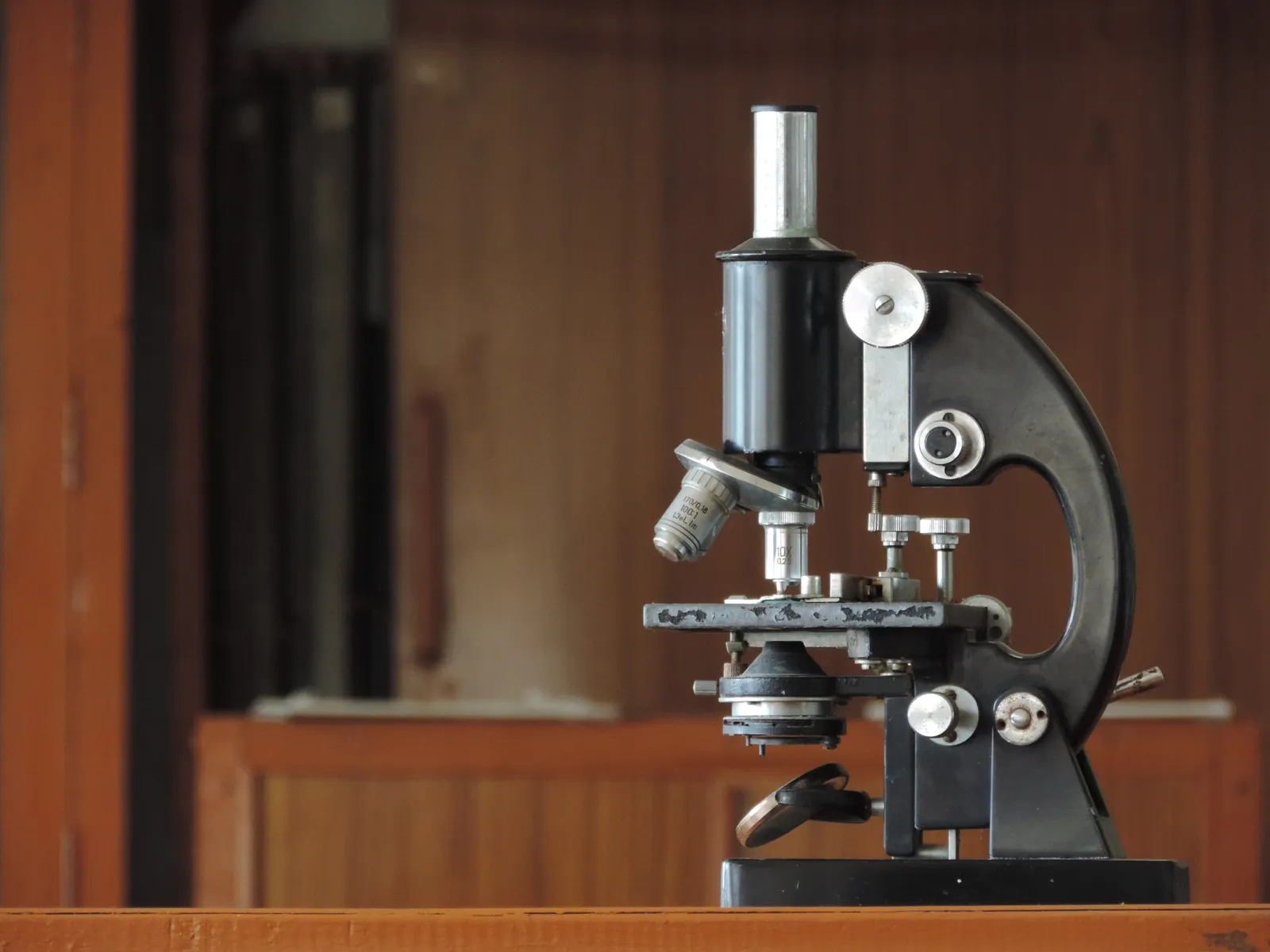
Every student microscope in this price bracket is sold on one number, and that number is a lie. The box says 40x to 1000x, or sometimes 2000x, and the listing puts it in bold. We bought a 129-dollar monocular compound microscope with a 4x / 10x / 40x / 100x objective turret and spent ten weeks using it the way a curious teenager or a home-schooling parent actually would: pond water, onion skin, cheek cells, a pinch of diatomaceous earth from the garden shed, and a box of prepared slides.
The short version is that this is a genuinely good 400x microscope wearing a 1000x sticker. Understanding why is the difference between being delighted with it and returning it in week two, so most of this review is about the optics rather than the plastic.
What arrives, and the first fifteen minutes
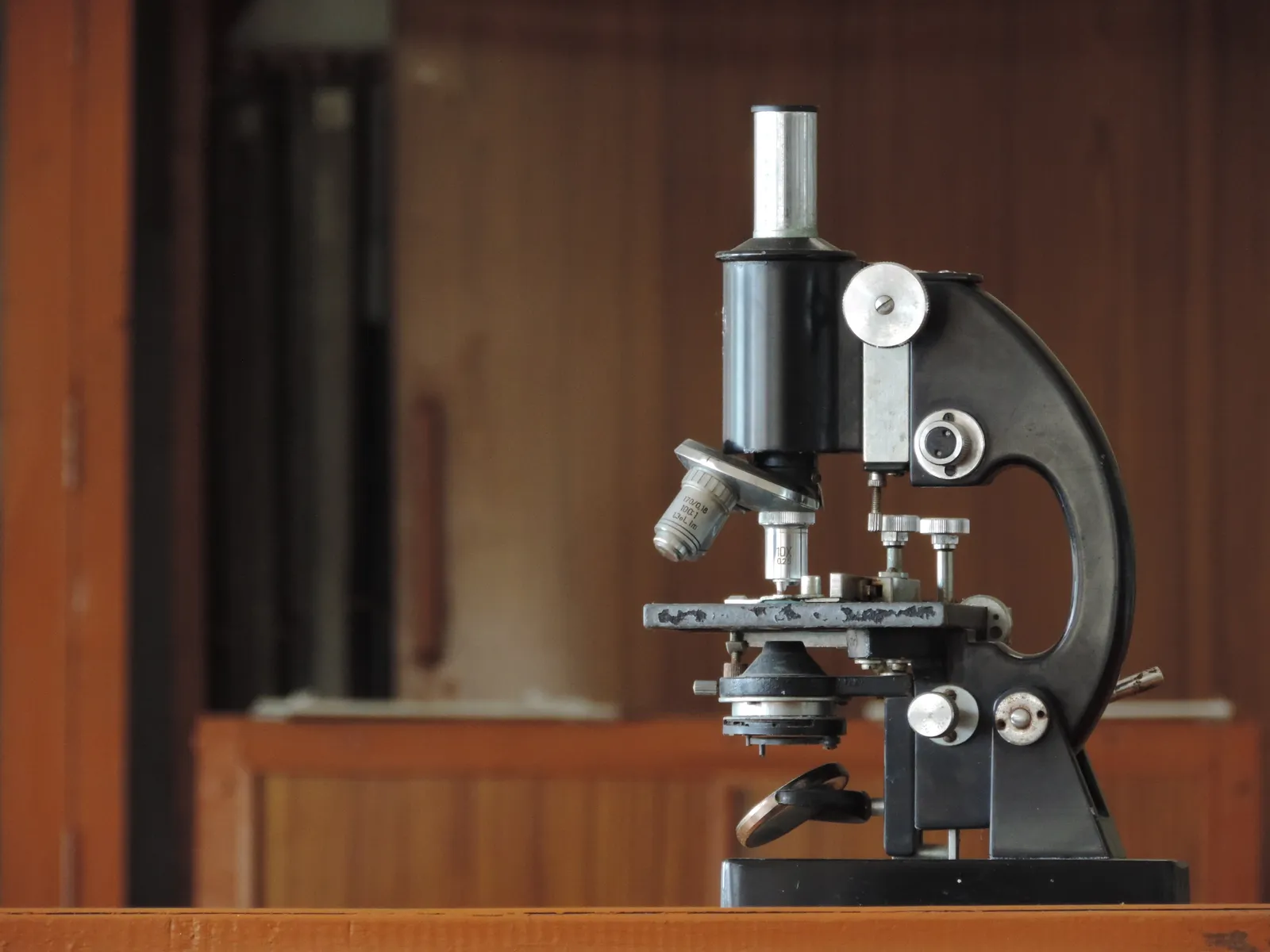
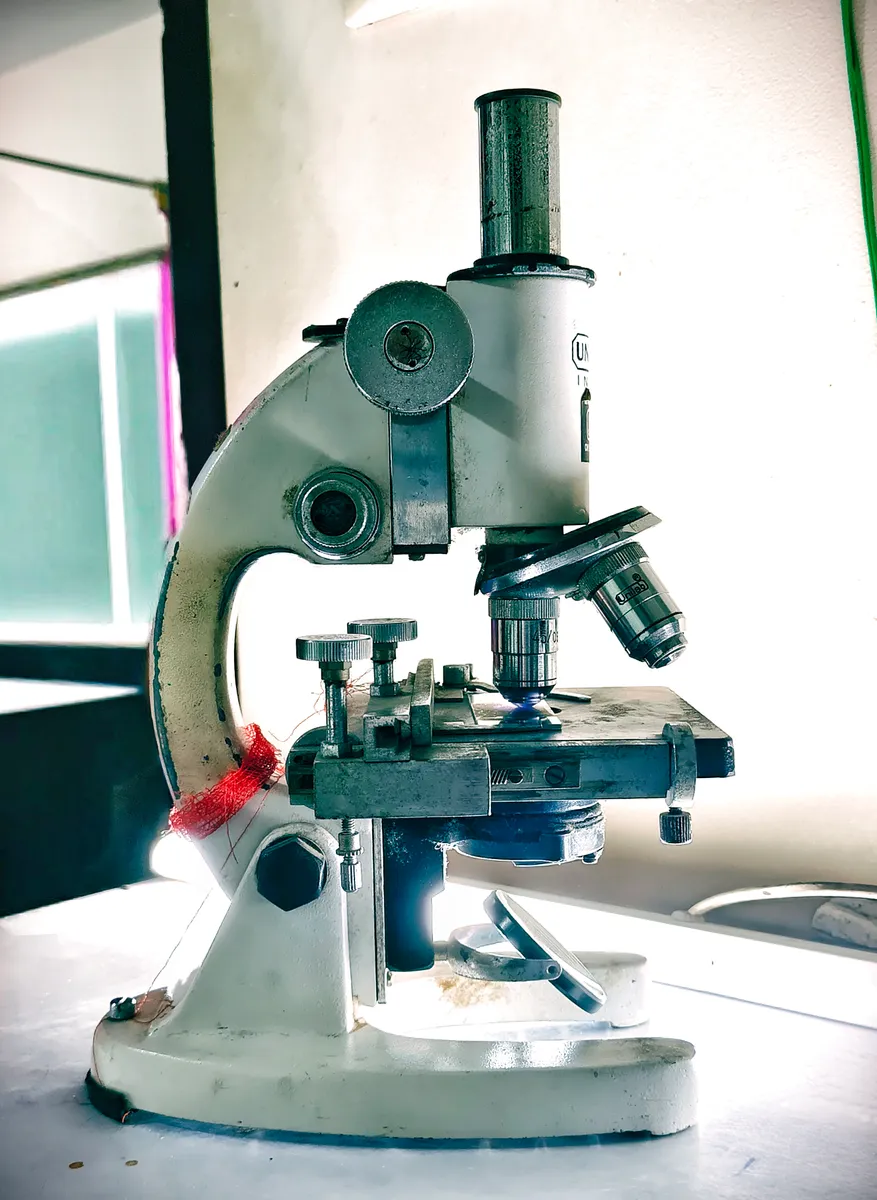
Ours came in moulded foam: the microscope assembled, a dust cover, five blank slides with coverslips, five prepared slides, a small bottle of immersion oil, a plastic phone-camera eyepiece clamp, and a mains adapter with a USB alternative. Setting up meant plugging it in, switching on the LED, and rotating the 4x objective into place. Total weight was about 1.9 kg, most of it in the cast metal base and arm, which matters — a light microscope walks across the table when you turn the focus knob.
First slide was the prepared onion root tip that came in the box, and at 40x total magnification it took under a minute to find and focus. That is the honest highlight of a scope like this: the entry experience is easy and immediately rewarding. Everything difficult starts one turn of the turret later.
The magnification number, and why 1000x is empty
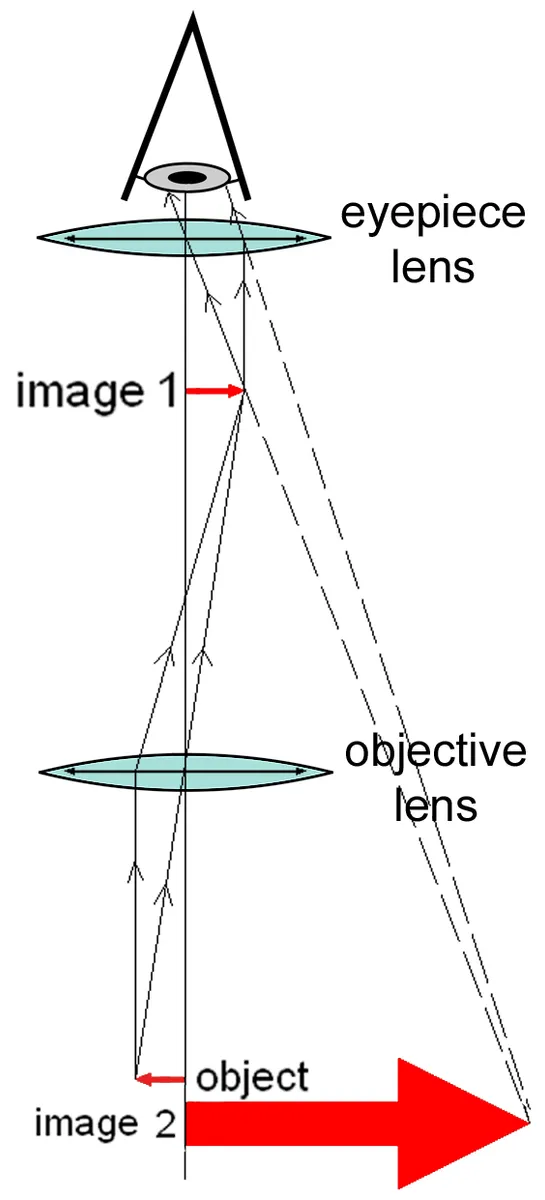
Magnification and resolution are different things. Resolution — the smallest gap between two points where you still see two points rather than one blur — is set by the numerical aperture of the objective, not by how much the image is enlarged afterwards. For light microscopy the physical floor is around 200 nanometres, and reaching anywhere near it needs a high-NA oil-immersion objective and a matched condenser.
We measured what ours actually resolves using a stage micrometer with 10 µm divisions plus a slide of fine ruled lines. At 400x (the 40x objective with the 10x eyepiece), we could cleanly separate features around 2 µm apart, which is enough to see the nucleus in a cheek cell, chloroplasts in a moss leaf, and individual bacteria as dots without internal detail. Switching to the 100x objective for a claimed 1000x produced a bigger image with no additional detail whatsoever — the same 2 µm blur, enlarged. That is textbook empty magnification.
Worse, the 100x objective in this kit is a dry achromat. A 100x objective is designed to work with immersion oil bridging the coverslip and the lens; used dry, its effective aperture collapses and the image is dim, low-contrast and hard to focus. The kit even supplies oil, which is a decent gesture, but the objective itself is not marked for oil use and the supplied condenser has no adjustable aperture diaphragm to match it. In ten weeks we used the 100x position perhaps four times and got nothing from it we could not see better at 400x.
What 400x actually shows you
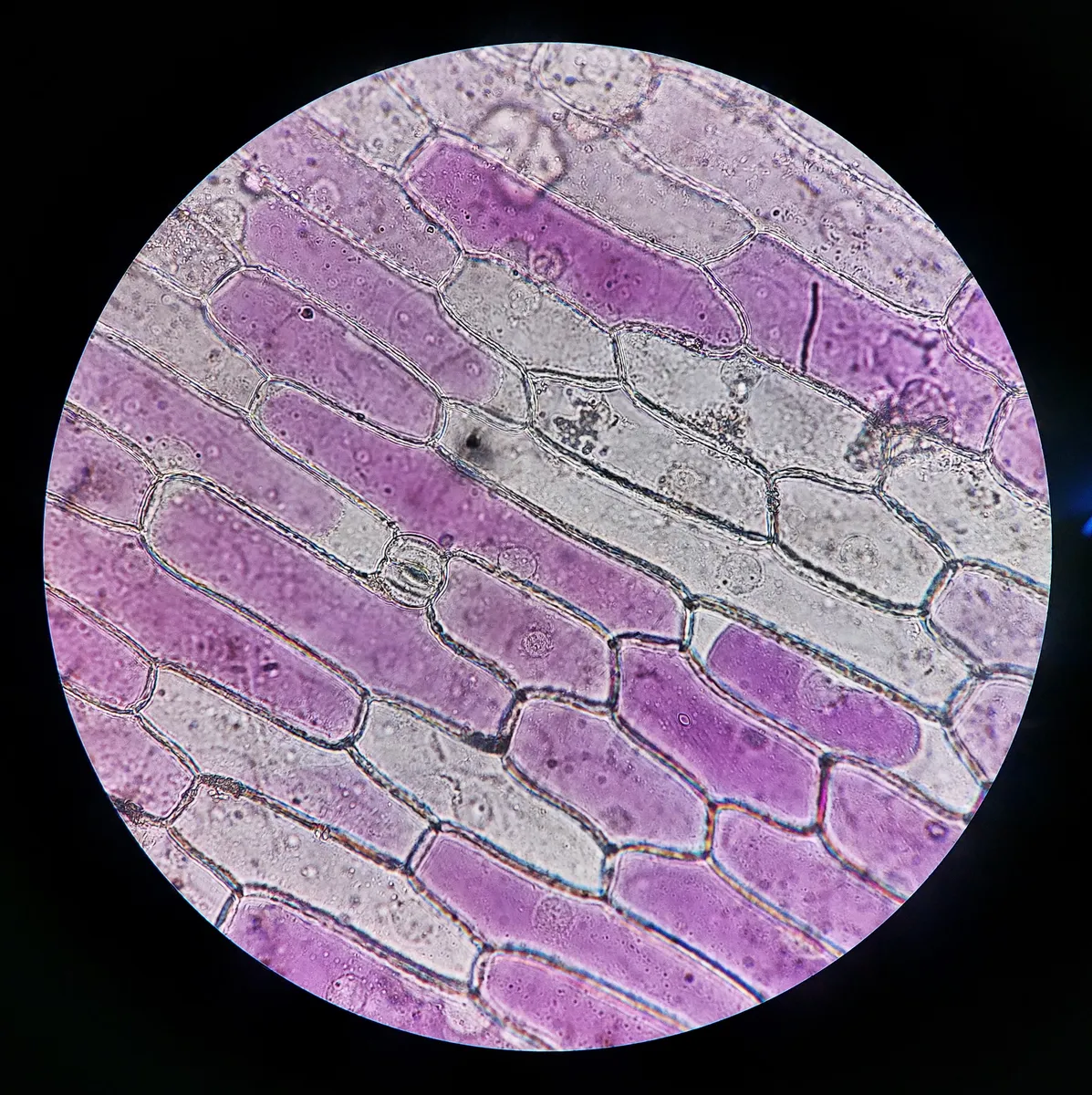
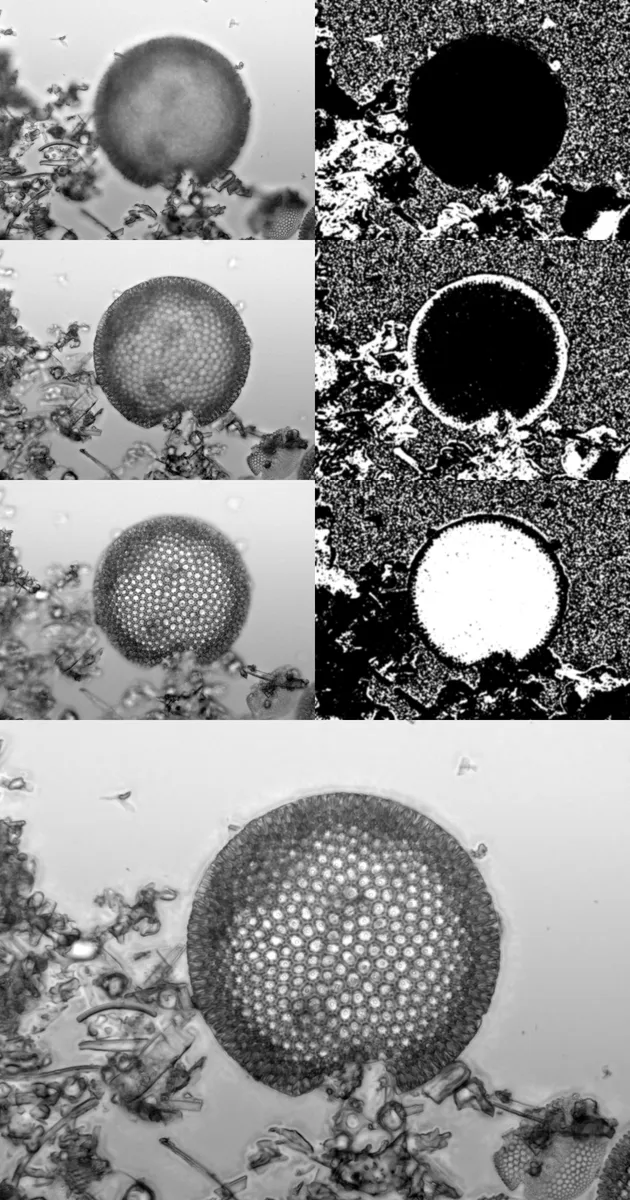
This is where the scope earns its money, and the list of things we successfully saw is long. Red onion epidermis under salt solution plasmolysing in real time, with the membrane pulling away from the cell wall over about eight minutes. Cheek cells with clearly defined nuclei after a drop of methylene blue. Pond water from a garden barrel producing paramecia, rotifers and at least three things we could not identify, all moving fast enough to be a genuine tracking challenge. Diatomaceous earth revealing intact diatom frustules with visible surface patterning. A cross-section prepared slide of a plant stem where the vascular bundles were unambiguous.
The plasmolysis experiment is the one we would recommend to anyone buying this for a child, because it happens on a watchable timescale and it is a real result rather than a static picture. Total cost: an onion, salt, and about ten minutes.
The mechanical stage is the upgrade that matters
Ours has a plain stage with two spring clips, no geared X-Y movement. At 40x that is fine. At 400x the field of view we measured was about 0.45 mm across, and finding a specific cell means sliding the whole slide by hand in increments smaller than you can reliably control with fingers. We timed it: locating and centring a specific structure that we had already found at 100x took a median of about 70 seconds at 400x, and on several attempts we lost it entirely and had to zoom back out and start again.
A geared mechanical stage with fine knobs turns that 70 seconds into about 10. If you are choosing between two models at this price, spend the difference on the mechanical stage rather than on a higher headline magnification. It is the single change that most affects whether the microscope gets used after the first month.
Focus, illumination and the small annoyances
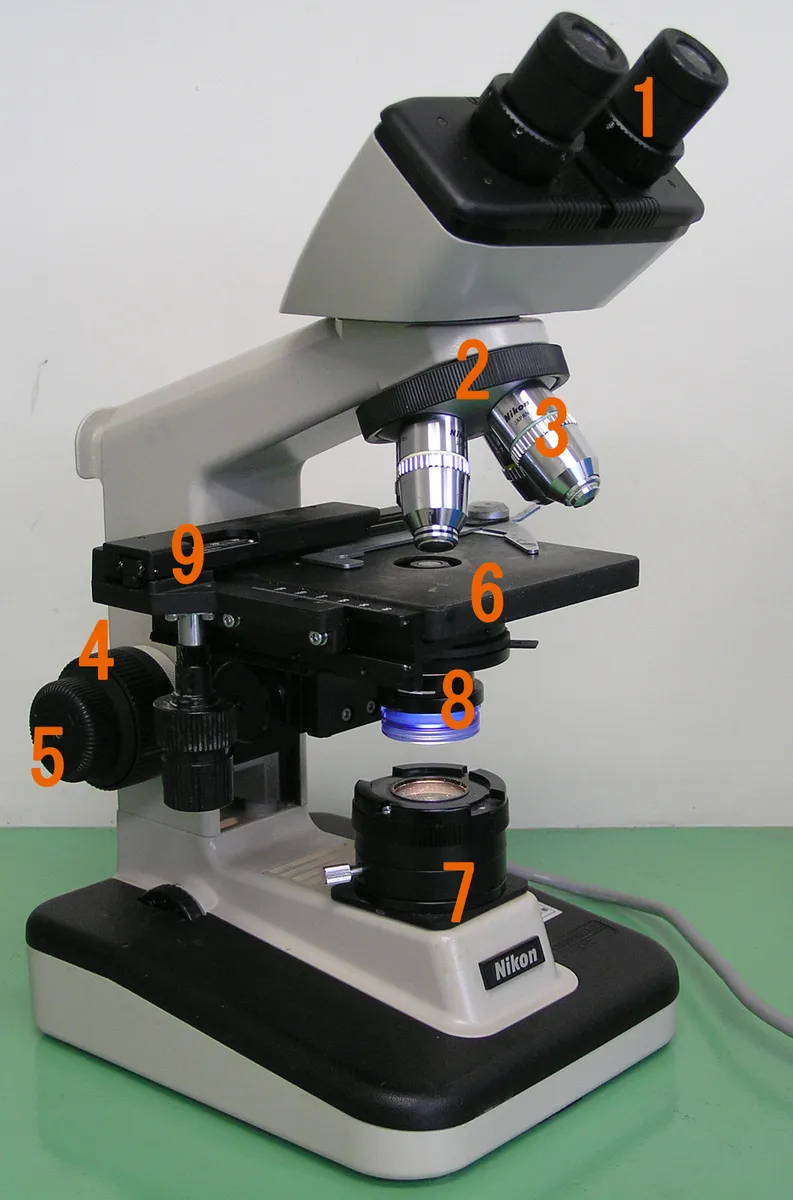
Coarse and fine focus are on separate concentric knobs, which is correct at this price. The fine focus on our unit had noticeable backlash: reversing direction produced about a quarter turn of nothing before the stage moved again. Once you know it is there you compensate automatically, but it makes the first few sessions frustrating, and it makes phone photography harder because you cannot make tiny corrections while watching a screen.
The LED illuminator is bright, cool-running and dimmable, which is a real improvement over the tungsten and mirror arrangements older scopes used. What it lacks is a proper adjustable condenser diaphragm — ours has a rotating wheel of fixed apertures instead. That costs you contrast control, and on unstained samples like live pond water it is the difference between transparent ghosts and visible structure. Closing the wheel to a smaller aperture helped, but a real iris would help more.
The objectives are achromats, so expect a faint purple and green fringe on high-contrast edges toward the field edge, and expect the centre to be visibly sharper than the periphery. That is normal and not a defect at this price. What did surprise us was parfocality: switching from 10x to 40x needed only a small fine-focus correction, which is better than we expected and makes the turret genuinely usable.
Phone photography through the eyepiece
The supplied clamp holds a phone over the eyepiece, and it half works. At 40x and 100x we got usable, shareable images in about a minute of fiddling. At 400x the exit pupil is small, alignment becomes critical, and the phone's own autofocus fights you — roughly one usable frame in ten, and every one needed the phone locked to manual exposure to stop it hunting. Video of moving pond organisms was better than stills because you can discard frames.
If capturing images is a main goal rather than a bonus, a dedicated eyepiece camera is the honest answer, and it costs about as much again as the microscope. The clamp is fine for a school report and disappointing for anything beyond that.
Slide preparation, and two things to be careful with
Most of the skill in home microscopy is in the slide, not the scope. Sections need to be thin enough for light to pass through, which for plant material means a single leaf layer or a razor shaving rather than a slice. Water-mounted samples need the coverslip lowered at an angle to avoid trapped bubbles — we wasted most of a first afternoon looking at beautiful, perfectly focused air.
Two safety notes worth stating plainly. First, coverslips are extremely thin glass and they snap into slivers that are hard to see and easy to press into a fingertip; keep a dedicated small bin for glass waste and do not brush fragments off a bench with your hand. Second, if you use stains and mounting fluids, read their labels — methylene blue stains skin and clothing persistently and should be kept away from eyes, and immersion oil is not something to leave within reach of a small child. None of this is dangerous with basic care, but a microscope bought for a nine-year-old is a supervised activity, not an unsupervised one.
Against the alternatives
Below this price, at 40 to 70 dollars, you get plastic-bodied scopes with plastic objectives and often plastic lenses in the eyepiece. We have looked through several and the difference is not subtle: glass achromats at 400x versus plastic at any magnification is not a close contest. Do not buy on magnification claims in that bracket.
Above it, at 250 to 400 dollars, you get a geared mechanical stage, an Abbe condenser with a real iris diaphragm, a binocular or trinocular head, and often a genuine oil-immersion 100x objective. If a child has already shown sustained interest, or if an adult wants this for a hobby like pond ecology or amateur histology, that is where the money is well spent and the 1000x claim finally means something.
A digital USB microscope at 60 dollars is a different tool, not a cheaper one. Those are typically low-magnification inspection cameras — excellent for looking at circuit boards, insects and fabric, useless for cells. Deciding which of those two things you want is the most important decision in this category and almost nobody makes it deliberately.
Who should buy this
Buy it for a curious 10-to-16-year-old, for a home-school biology unit, or for an adult who wants to find out whether microscopy is going to stick before spending real money. At 400x with a bit of technique it delivers actual science: cell walls, nuclei, chloroplasts, living protozoa, diatom structure. Ten weeks in, ours has been used far more than we expected, mostly on things scooped out of the garden.
Skip it if you are buying because of the 1000x figure, if you specifically want good photographs, or if the intended user is under about eight and will be unsupervised. And skip it if you already know you want to look at bacteria in any detail, because that needs oil immersion done properly and this is not that instrument.
Verdict
A good 400x microscope with an honest set of limits and a dishonest sticker. The 4x, 10x and 40x objectives are glass achromats that resolve around 2 µm, parfocality is better than expected, the LED is a real improvement over old mirror illumination, and it is heavy enough to stay put. The 100x position is empty magnification, the fine focus has backlash, the fixed-aperture condenser costs you contrast on live samples, and the plain stage makes 400x work harder than it needs to. Buy it for what it does at 400x, ignore the number on the box, and if you can stretch the budget, buy the version with a geared stage instead.
We compared prices across retailers so you don't have to.