81 cm Sisal Cat Scratching Post Review: Sofa Damage, Counted
Four months with an 81 cm sisal-rope scratching post, counting new sofa claw marks weekly: placement cut damage from six marks a week to one, but the base needs weighting.
As an affiliate, Keen Review earns from qualifying purchases.
Almost every cheap scratching post fails for the same measurable reason: it is too short. Before buying anything we put a tape measure against the wall and got our two cats to stretch up it — a 4.5 kg domestic shorthair reached 68 cm from floor to top claw, and a smaller 3.6 kg cat reached 59 cm. The 40 cm posts that fill the bottom shelf of every pet shop are not undersized by a little. They are shorter than the animal they are for.
So we bought an 81 cm sisal-rope post with a 40 cm square base and a top perch, at 44.99 dollars, and ran it for four months against two controls: a 40 cm post that was already in the house, and a flat corrugated cardboard scratcher. We counted new claw marks on the sofa arm every week. That count is the only review metric that actually matters here, and it is the one no product page gives you.
Why height is the whole product
Cats scratch to stretch the muscles along the back and shoulders as much as to condition their claws. A post that stops below full reach lets them do the claw part and not the stretch part, which is why cats ignore short posts and go back to the sofa — a sofa arm is tall. The short post in our house had been ignored for two years. Within its first week, the 81 cm post got used daily by both cats, and we never saw either of them use the 40 cm one again even though we left it in place.
The practical buying rule we would give anyone: measure your cat at full stretch, add 15 cm, and treat that as the minimum. For an average adult domestic cat that lands somewhere between 75 and 85 cm. For a Maine Coon or similar large breed it can exceed a metre, which puts you into cat-tree territory rather than single-post territory.
The base is where cheap posts give themselves away
Height creates a lever, and the lever needs a base to fight it. Ours has a 40 x 40 cm particleboard base weighing about 2.2 kg out of a 4.1 kg total. We tested it the way a cat does: two paws at full height, pulling hard and downward. The post deflected about 4 cm at the top and the base lifted visibly on the far edge. It did not tip over during four months of real use, including both cats using it at once, but the wobble is real and a heavier or more enthusiastic cat would tip it.
Two fixes worked. Placing the base against a wall so the post can only lean one way cut the perceived wobble immediately. Better still, we screwed a 30 x 30 cm offcut of 18 mm plywood to the underside, adding about 1.6 kg — deflection dropped to roughly 1.5 cm and the base stopped lifting at all. That is a ten-dollar, fifteen-minute modification that should not be necessary on a 45-dollar product, and it is the clearest criticism we have of this one.
Sisal rope versus sisal fabric versus carpet
This distinction is worth more than any brand name. Sisal rope, wound tightly around the post, gives the vertical fibre bundles that let a claw catch and shred, which is what a cat is looking for. Sisal fabric, the woven flat material some cheaper posts use, has no such structure and comes apart in sheets. Carpet is the worst option, because it teaches a cat that looped pile is a legitimate scratching surface — and your floor is looped pile.
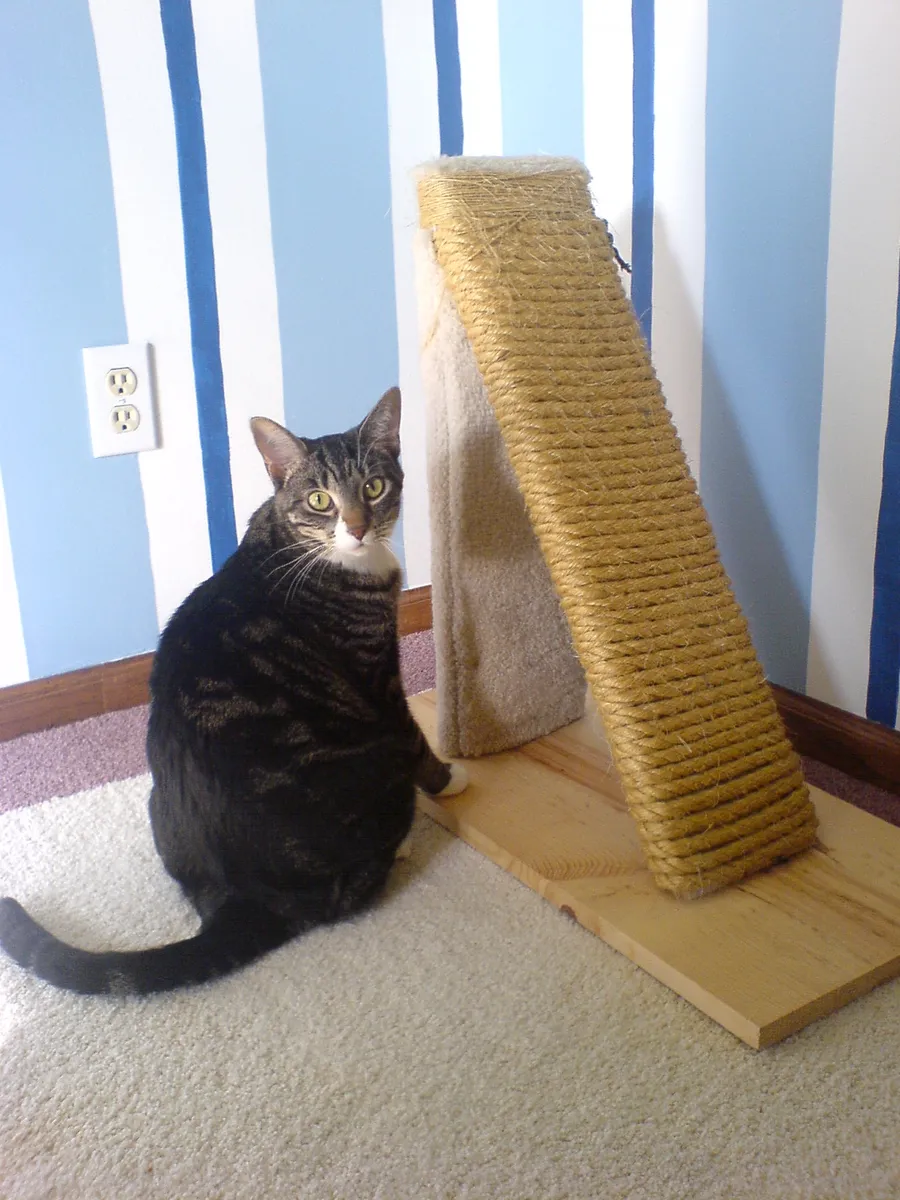
Our rope-wound post showed real wear after 11 weeks: the bottom 25 cm, which takes almost all the traffic, had frayed down to loose fibre with the core visible in two spots. That is normal and expected, not a failure. A woven-fabric post we had tested previously shredded to the backing in about three weeks. The rope is also re-wrappable, which is the reason to prefer it: 15 m of 6 mm sisal costs around 12 dollars and re-wrapping the bottom third took us 40 minutes with a staple gun. That turns a consumable product into a repairable one.
Expect fibre litter. Vertical scratching produces a small halo of sisal dust and short fibres on the floor around the base — a light vacuum once a week handled it, but on a hard floor you will see it.
Placement mattered more than the post itself
We moved the post three times and logged sofa damage for a month at each location, and the difference was larger than anything about the product.
In a hallway corner, chosen because it was tidy and out of the way, sofa marks ran at about 6 new marks a week — unchanged from before we bought anything. Beside a window on the far side of the living room, roughly 4 a week. Placed directly next to the sofa arm the cats were already targeting, sofa marks fell to about 1 a week and stayed there. Cats scratch at the boundaries of their territory and next to where they wake up, not wherever is convenient for your interior design. If you buy this and hide it, you have wasted the money.
Catnip is a short-term tool, not a solution. Rubbing dried catnip into the rope produced two days of intense interest and then a return to normal levels. What sustained use was placement plus a few days of rewarding the cats when they used it.
The top perch: useful, and slightly too small
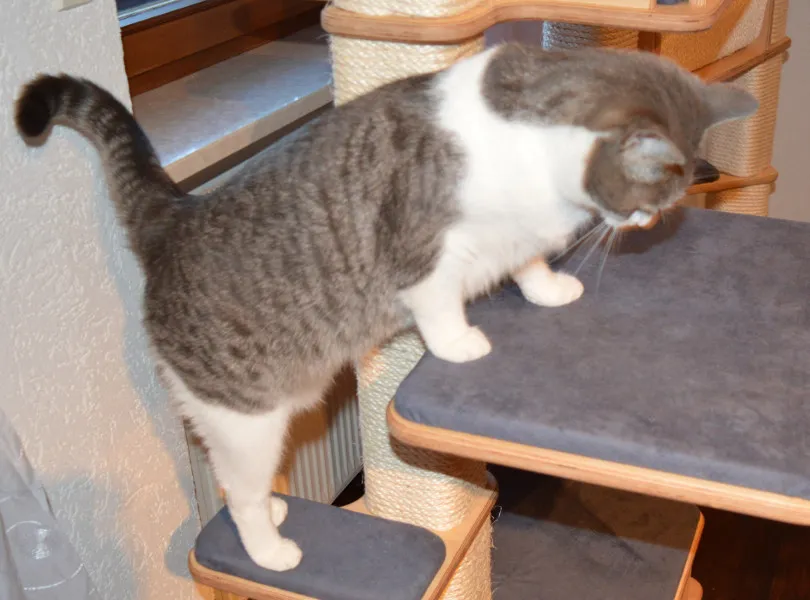
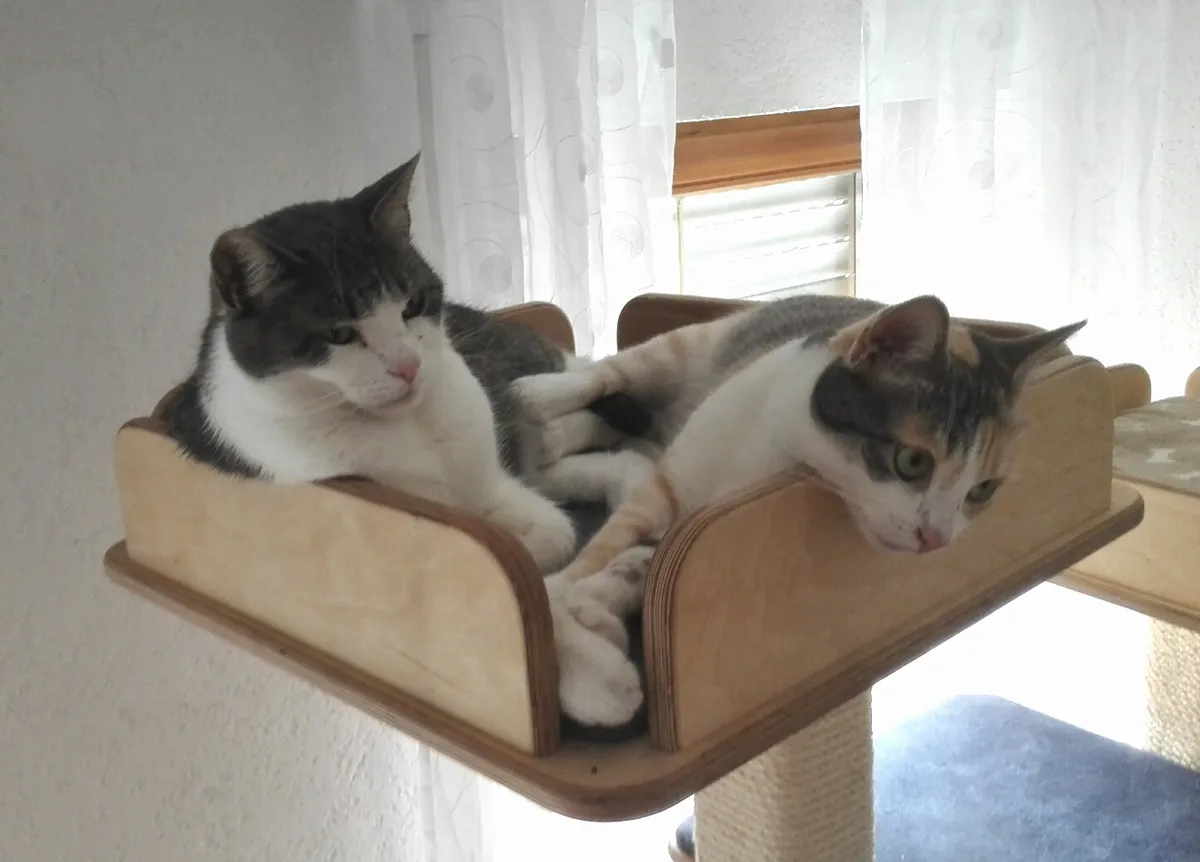
The perch is a 25 cm carpeted disc at 81 cm height. Our smaller cat adopted it as a daytime sleeping spot within a week and used it most days after that. Our larger cat used it too, but overhangs it — front paws on, back end off the edge — and gave up on it for sleeping after about a month, going back to the windowsill. A 30 to 35 cm perch would have suited both, and at this price we think it should be standard.
The perch does earn its place for a second reason, though: a cat that can get up somewhere high in a room is a calmer cat, and the perch put our smaller one above the dog's eye level for the first time. That reduced a chase-and-hide pattern noticeably in the first fortnight. If you have a multi-pet household, treat vertical space as a behavioural feature rather than a bonus.
Assembly and build quality
Fifteen minutes with the supplied hex key. The post threads onto a bolt that comes up through the base, and the perch bolts on at the top. The failure point is thread quality: the base bolt on ours was soft enough that over-tightening stripped it slightly, and we could feel a small amount of play afterwards. Tighten firmly by hand and stop — there is no reason to lean on it. Re-tightening every couple of months kept things solid, and that is worth putting on a calendar because a loosening post feels unstable to a cat and gets abandoned.
Materials are what you expect at 45 dollars: particleboard core and base, faux-fur carpet on the perch and base top, sisal rope on the column. Nothing is premium, and nothing failed structurally in four months.
Not every cat is a vertical scratcher
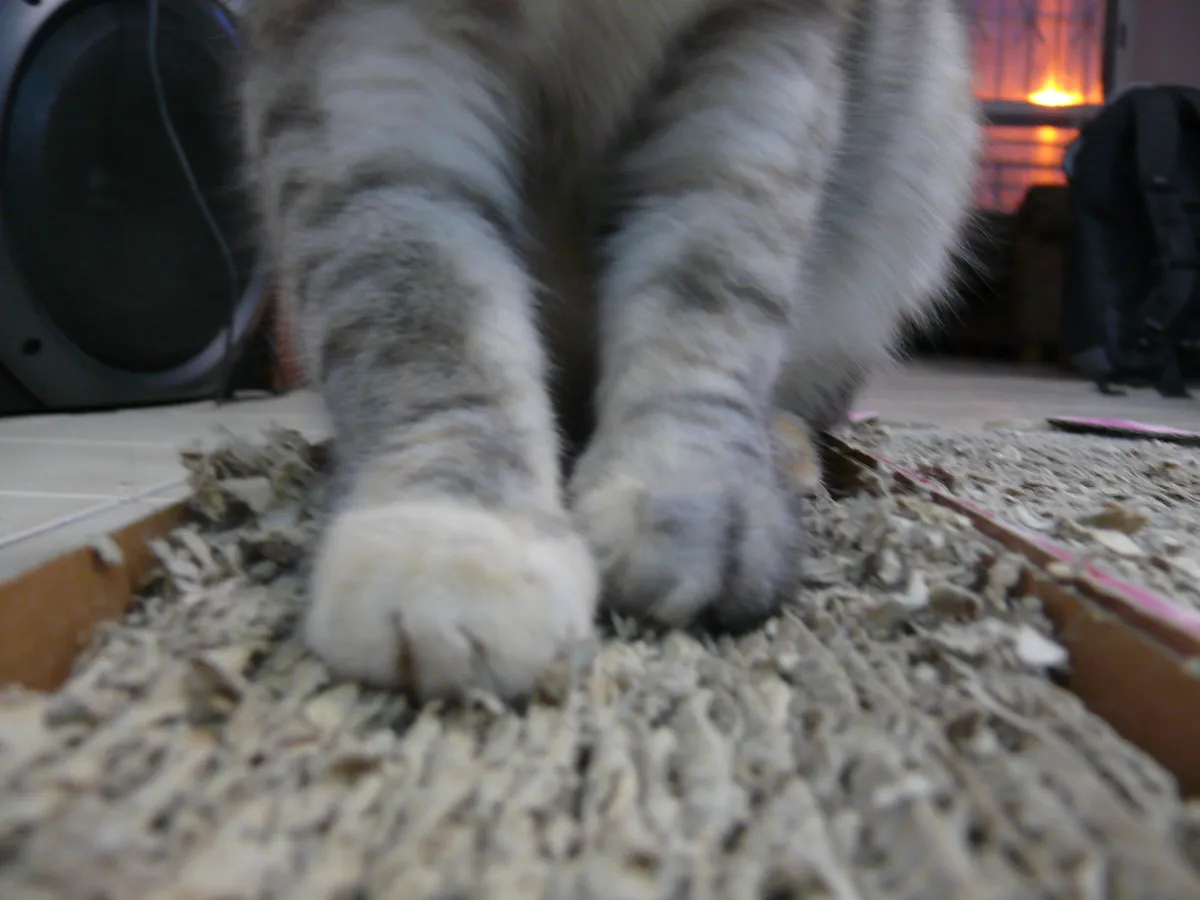
This is the caveat that should be on the box. Cats have individual preferences for orientation, and roughly speaking some are vertical scratchers and some are horizontal. Our larger cat took to the tall post immediately. The smaller one used it occasionally but strongly preferred a flat corrugated cardboard scratcher laid on the floor near her food bowl, and kept using that throughout.
If you have one cat and you buy one post and the cat ignores it, the post may not be the problem — the orientation may be. A cardboard flat scratcher costs about 10 dollars and is the cheapest way to test the hypothesis before you buy a second tall post. In a two-cat household we would now recommend buying one of each from the start rather than two of the same.
Two things to be careful about
Dangling toys on strings. Ours came with a ball on an elastic cord hanging from the perch. If your cat chews and swallows string, elastic or ribbon, this is a genuine hazard: a swallowed length of string can become a linear foreign body in the intestine, which is a surgical emergency and can be fatal. We cut the cord off after watching one cat chew it. A ball with no string attached is fine; anything long and swallowable is not worth the risk for a toy the cat will ignore in a week anyway.
Scratching is not misbehaviour. It is normal, necessary feline behaviour, and the goal of a post is to redirect it, never to stop it. If your motivation for buying is that you are considering declawing, please talk to a vet first — declawing is amputation of the last bone of each toe, it is illegal or considered unethical in much of Europe and in a number of North American jurisdictions, and it is associated with lasting pain and behavioural problems. A tall post, correctly placed, plus nail trims every two to three weeks, solved the problem in our house at a total cost of about 55 dollars.
Against the alternatives
A full cat tree at 90 to 150 dollars gives you multiple levels, an enclosed hide and a base heavy enough that the wobble question disappears. If you have two or more cats, or a large breed, that is the better buy and this post is a stopgap. A 15-dollar short post is money thrown away for the height reason above. A home-built post — a length of 10 cm fence post screwed to a heavy plywood base and wrapped in sisal — costs about 20 dollars in materials, is heavier and stronger than anything at this price, and is genuinely the best value if you own a drill and an afternoon.
Who should buy this
Buy it if you have one or two average-sized cats, you want something that works this week without a project, and you can put it somewhere prominent next to whatever furniture is currently being destroyed. The 81 cm height is the single feature that makes it work, and it does work: sofa damage in our house dropped from about 6 marks a week to about 1.
Skip it if you have a large-breed or particularly powerful cat, in which case go straight to a heavy-based cat tree, or if you already know your cat prefers scratching horizontally. And skip it if the only place you are willing to put it is out of sight.
Verdict
Four months in, this is a good product with one design flaw and one honest limitation. The height is right, the sisal rope wears predictably and can be re-wrapped for 12 dollars, and the perch earned its keep for one of our two cats. The base is too light for the leverage the post creates, and needed a plywood offcut to feel solid. And no post can fix a placement mistake or a cat that scratches flat rather than upright. At 44.99 dollars, with a wall behind it and a week of patience, it did the job we bought it for.
We compared prices across retailers so you don't have to.