16 kg Cast Iron Kettlebell Review: Five Months on One Weight
A $65 bell carried a complete beginner programme for four months and then ran out of headroom for swings — the powder coat, though, wore in rather than out.
As an affiliate, Keen Review earns from qualifying purchases.
A 16 kg cast iron kettlebell costs about $65, takes up a square foot of floor, and is the single piece of home gym equipment I have used most in five months. I bought one deliberately as a test of whether one weight can carry a whole training habit, trained with it three to four times a week, and kept a log.
The short answer is yes for a beginner and no beyond about four months, and the interesting part is why — which comes down to the fact that a kettlebell is not adjustable and your body is.
Why 16 kg, and how to choose your own number
16 kg (35 lb) is the traditional starting weight for a reasonably strong adult man and a challenging-to-advanced weight for a woman. The reason the number matters is the two-handed swing, which is the movement that justifies owning a kettlebell at all: swings need enough weight that your hips have something to work against. Too light and the swing becomes an arm exercise, which is both useless and how people hurt their shoulders.
Rough guidance from my own testing and standard coaching advice: for swings, most untrained men start at 16 kg and most untrained women at 8-12 kg. For overhead presses, the same person will need roughly half that. That gap is the core problem with a single bell and I'll come back to it.
I could swing 16 kg comfortably from day one and could not press it overhead for a single clean rep until week three. Same weight, same person, wildly different difficulty.
Cast iron versus competition style
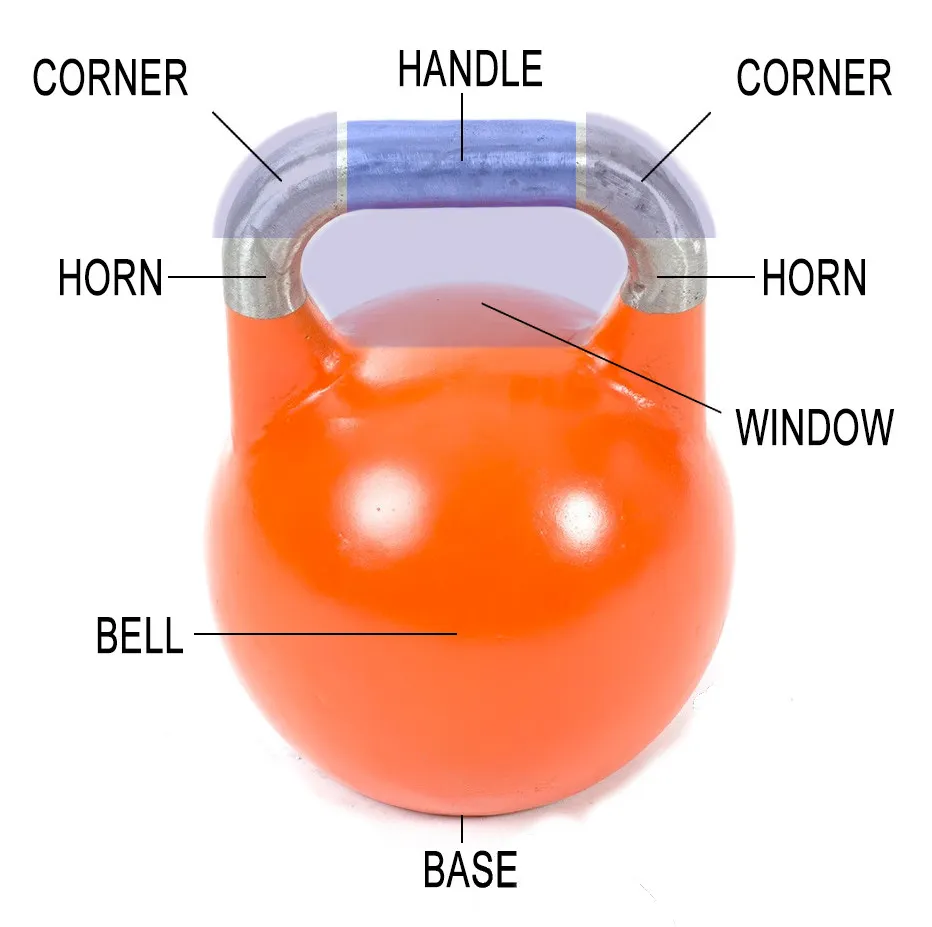
Two designs exist. Cast iron bells grow physically larger as the weight increases and have a thicker handle. Competition bells are steel, identical in size at every weight, with a thinner 33 mm handle and a hollow body.
I bought cast iron and would again for a single-bell setup. The wider handle takes two hands comfortably for swings, which a competition handle does not do as well. The trade is that the bell body is bulkier against the forearm in the rack position, and on cleans I got two forearm bruises in the first fortnight learning to receive it softly rather than let it swing onto the arm.
Competition bells make sense if you're buying several weights and want consistent technique across them. For one bell, cast iron is the practical choice and about $20 cheaper.
The coating is the thing to inspect
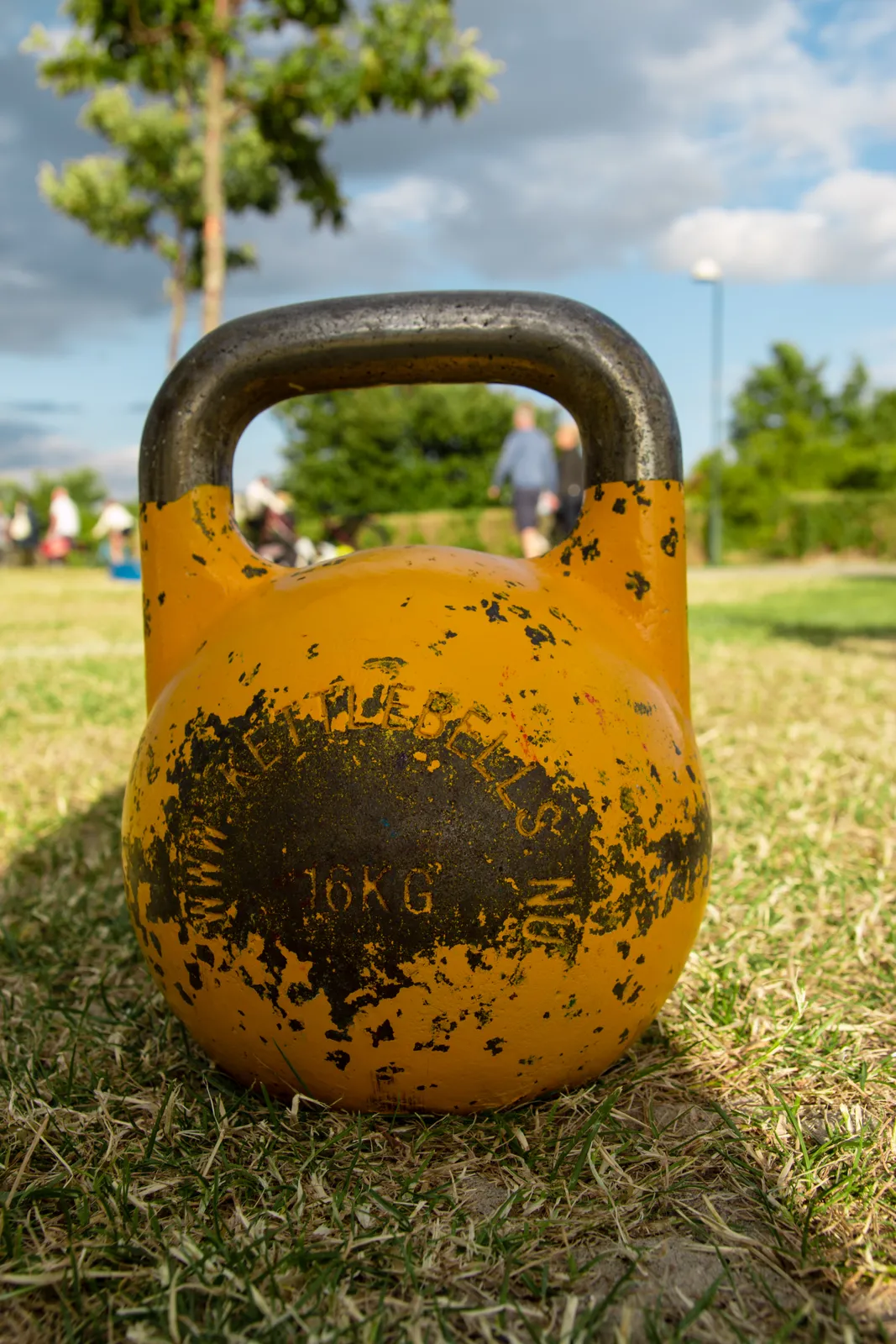
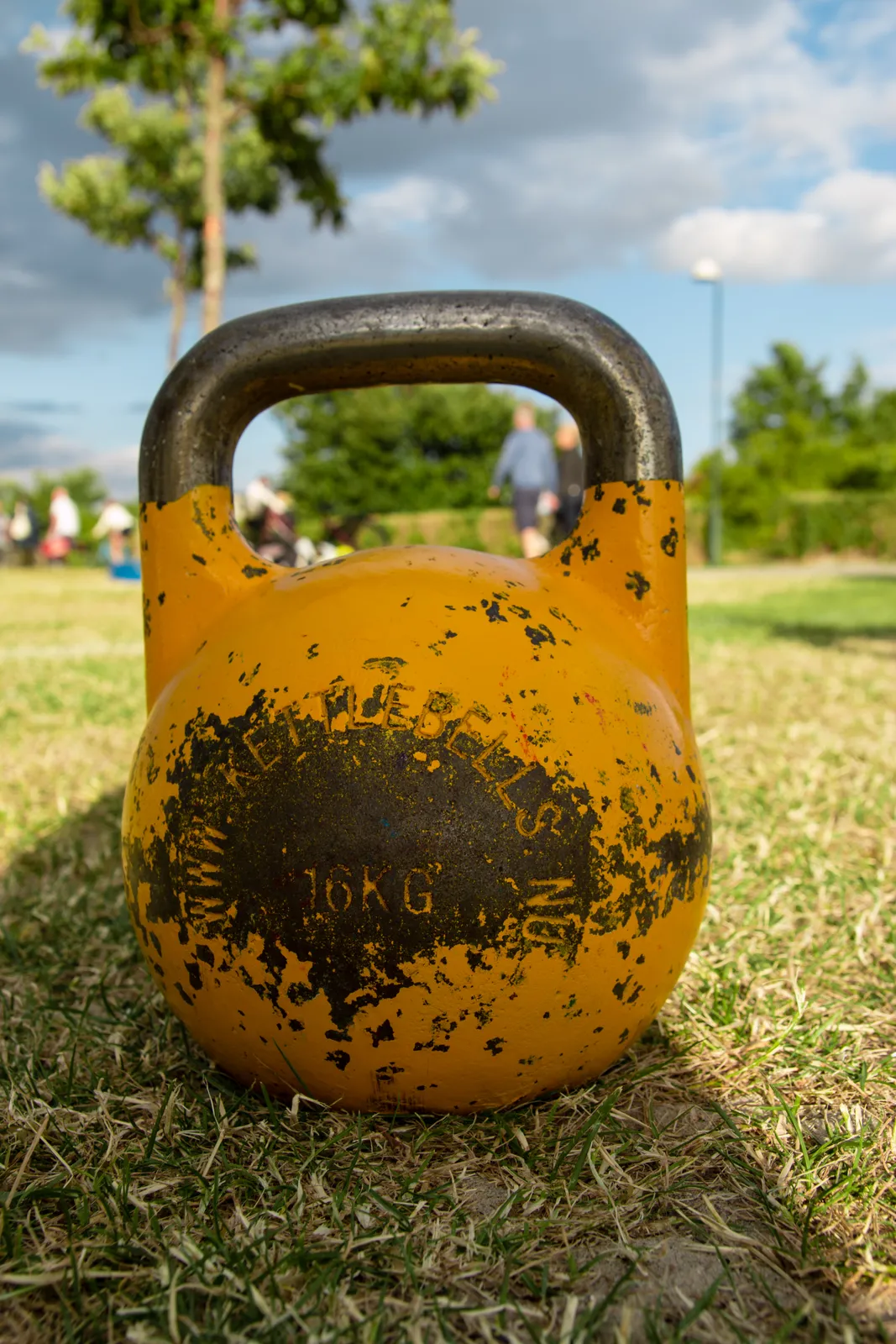
Mine has a powder-coated finish, which is the current standard and is genuinely better than the old enamel or vinyl coatings. Powder coat gives just enough texture for chalk-free grip in a dry room and does not chip in sheets the way enamel does.
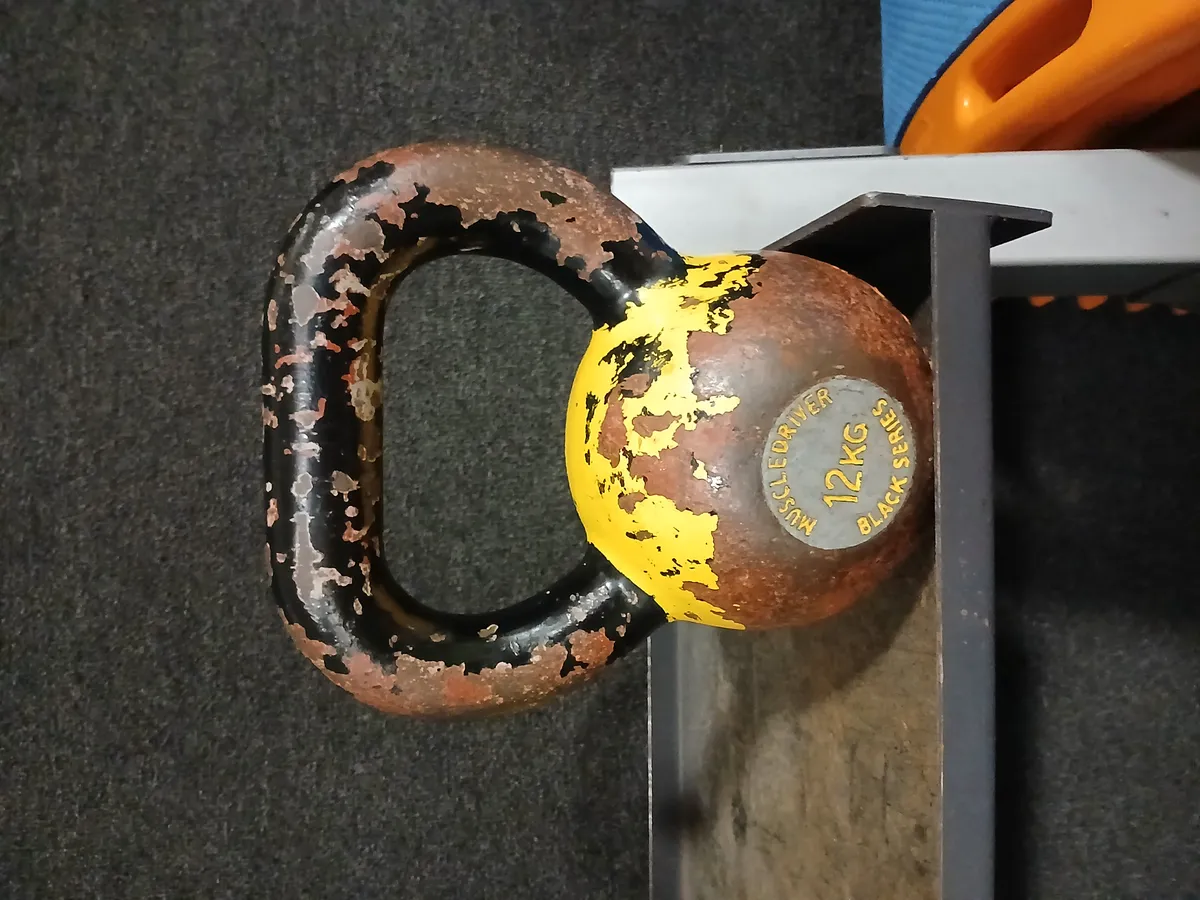
Five months in, the coating shows wear in exactly two places: a shiny patch on the underside of the handle where my hand sits, and scuffing on the base from being set down on concrete. Neither is a problem. The handle wear is arguably an improvement — the factory texture was slightly grippy enough to abrade skin during high-rep swings, and it has polished into something better.
What to check on delivery: run a hand around the entire handle, including the inside curve, feeling for casting seams or rough spots. A seam on the handle will tear your palms during a 50-rep swing set, and it is the single most common defect on budget cast iron bells. Mine had a very slight ridge on one side that I smoothed with fine sandpaper in ten minutes.
What five months of training actually looked like
Three sessions a week, 25-35 minutes each, built around swings, goblet squats, cleans, presses, and Turkish get-ups. I logged everything.
Week 1: 10 x 10 two-handed swings with long rests. Could not press the bell overhead. Get-ups with the bell felt genuinely unsafe so I practised them empty-handed.
Week 8: 10 x 15 swings on a 60-second clock, 5 x 5 presses per side, get-ups with the bell for 3 per side.
Week 20: 10 x 20 swings, 5 x 8 presses, get-ups comfortable. Resting heart rate down about 6 bpm from the start, and a genuine change in how carrying shopping and lifting a toddler feels. Grip strength improved noticeably — I can now hold a dead hang about twice as long as in week one.
The single-bell ceiling
This is the honest limitation. By around month four the 16 kg had become too light for swings — I was doing 20-rep sets without much difficulty, at which point the exercise stops building strength and becomes conditioning. Meanwhile it remained appropriately heavy for presses.
The standard progressions from there are more reps, slower tempo, or single-arm variations, and all three work up to a point. But a swing is a power movement and you cannot progress power indefinitely by adding reps. To keep going I need a 24 kg bell, which is another $85.
So the honest framing: a 16 kg bell is a complete beginner programme for about four months and half a programme thereafter. That is genuinely good value for $65, but anyone who tells you one kettlebell is all you'll ever need is describing a maintenance habit rather than progressive training.
Safety, stated plainly
Two things I would tell anyone before their first session.
The swing is a hip hinge, not a squat and not a lift with the arms. Done wrong — squatting and yanking with the shoulders — it puts a 16 kg load on a rounded lower back at speed, and that is a genuine way to injure yourself badly. Spend the first two sessions learning the hinge with no weight, filmed from the side if possible, and get a coach or a reputable video course rather than improvising. This is the one piece of equipment where technique failure has real consequences.
Clear the space. A dropped or mis-swung 16 kg bell will go through a floorboard, break a toe, or hit a wall. I train with a metre clear in every direction, on a rubber mat, never on tile. Overhead work needs ceiling clearance you should check before starting, not during.
Floors, noise and living with it
The bell lives in a corner and I train on a $30 rubber mat. Without the mat, setting a 16 kg bell down repeatedly on a wooden floor leaves dents — I tested it once on a spare board and it marks immediately.
Noise is a real consideration in a flat. Swings themselves are silent, but the bell going down at the end of a set is a thud that carries through a floor. My compromise is training before 9pm and lowering the bell deliberately rather than dropping it, which is also better technique.
Storage is the easy part: one bell in a corner takes less room than a dumbbell rack and looks less like gym equipment than almost anything else. Five months in, it has never been in the way.

Against the alternatives
Against an adjustable dumbbell pair at $250-400, the kettlebell is a fraction of the price and does one family of movements — ballistic hip-driven work — that dumbbells do badly. Dumbbells do a much wider range of conventional strength work. If you can only own one thing and want general strength, adjustable dumbbells are the better buy; if you want conditioning and hip power in 25 minutes, the kettlebell is.
Against a gym membership at $40 a month, the bell pays for itself in under two months and gives you no squat rack, no bench, no barbell and no social pressure to turn up. It also removes the commute, which for me was the difference between training three times a week and once.
Against an adjustable kettlebell at around $150, the adjustable versions solve the ceiling problem and are bulkier, uglier, and have a reputation for handle-to-body play that I have not tested. For $65 plus $85 later you get two solid bells and no mechanism to fail.
Who should buy this
Buy one if you want a home training habit that fits in 25 minutes and a corner, if you'll spend the first two sessions learning the hip hinge properly, and if you have a rubber mat and a metre of clear space. Choose 16 kg if you're a reasonably strong adult man, 8-12 kg for most untrained women, and buy cast iron rather than competition style for a single-bell setup.
Skip it if you want general strength training across many movements — buy dumbbells. Skip it if you live above a neighbour who'll object to a thud. And skip it if you won't invest in learning the technique, because this is the one item on this site where doing it wrong can genuinely hurt you.
Verdict
Five months and roughly 65 sessions in, a single $65 kettlebell has produced more consistent training than any gym membership I've held, in less time and less space. The powder coating has worn in rather than out, the wide cast iron handle suits two-handed swings, and the whole thing is one solid object with nothing to break. Against that: it stopped being heavy enough for swings at around month four, needs a $30 mat to protect the floor, bruised my forearms while I learned cleans, and demands real technique attention before you touch it. Outstanding value with a hard ceiling.
We compared prices across retailers so you don't have to.