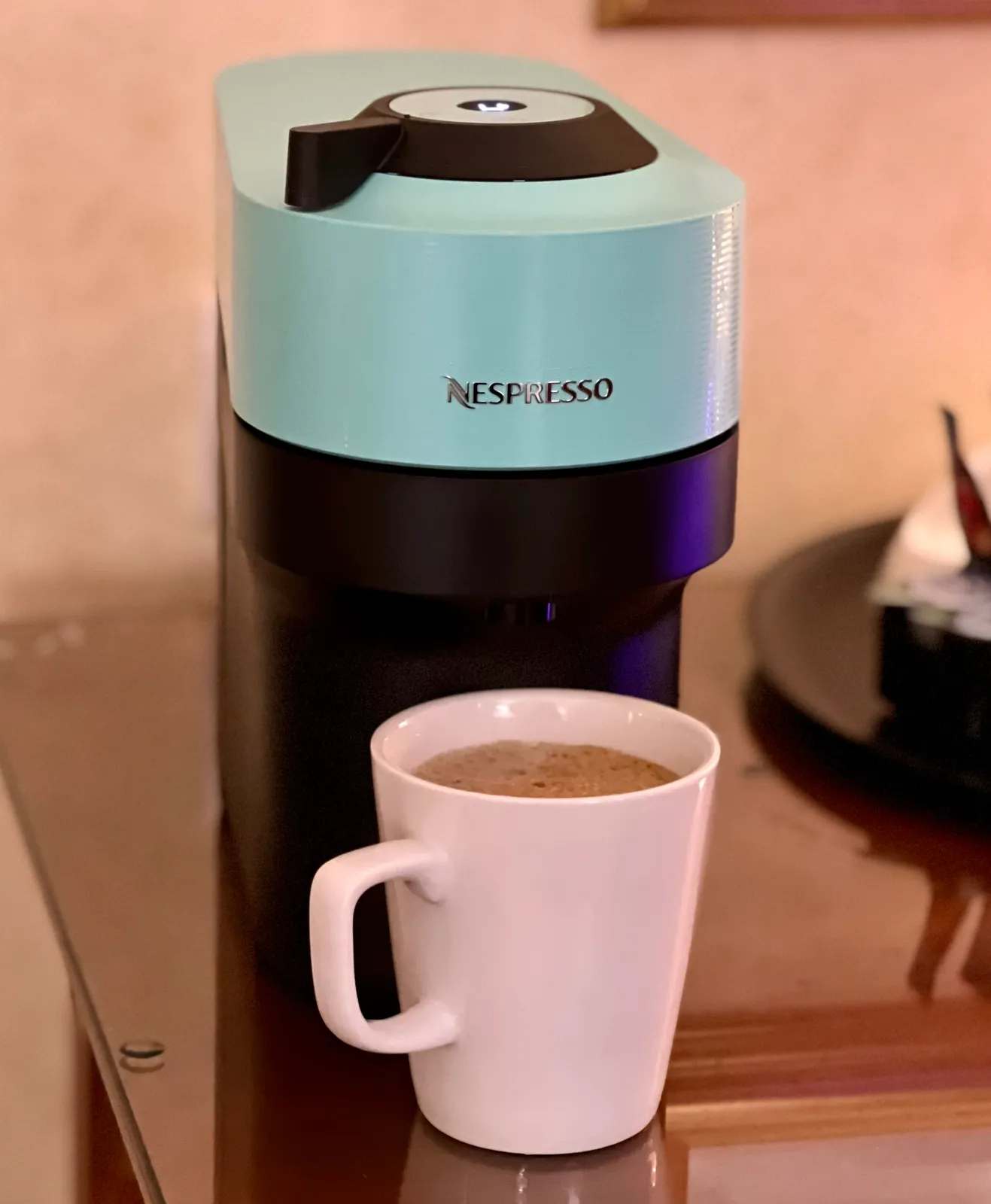
Nespresso Vertuo Pop Review: The Small, Cheap Vertuo That Still Feels Like Nespresso
The Vertuo Pop shrinks Nespresso's capsule system down to a genuinely compact, affordable machine without losing the centrifusion brewing that makes Vertuo different from Original.
As an affiliate, Keen Review earns from qualifying purchases.
Nespresso runs two separate, incompatible capsule ecosystems — Original, the smaller traditional espresso pods, and Vertuo, the larger barcode-read capsules that use centrifugal spinning instead of straight pump pressure to extract coffee. The Vertuo Pop is the newest and cheapest entry point into the Vertuo side, shrinking the machine's footprint and price without changing the brewing technology itself. We wanted to know whether "cheap and small" meant "compromised," so we used it daily for six weeks as our only coffee maker, guests included.
First, the pitch for anyone unfamiliar with Vertuo: instead of forcing hot water through a capsule at high bar pressure like Nespresso's Original line or most traditional espresso machines, Vertuo capsules spin at high speed inside the brewing chamber (Nespresso calls this "centrifusion") while water is added, creating the crema and extraction through centrifugal force rather than pressure alone. Each capsule has a barcode on its rim that the machine reads to automatically set brew time, temperature, and rotation speed for that specific coffee — you genuinely don't choose a cup size manually for most capsules, the machine reads it and brews accordingly, though you can override it with the buttons if you want a different volume than the capsule's default.
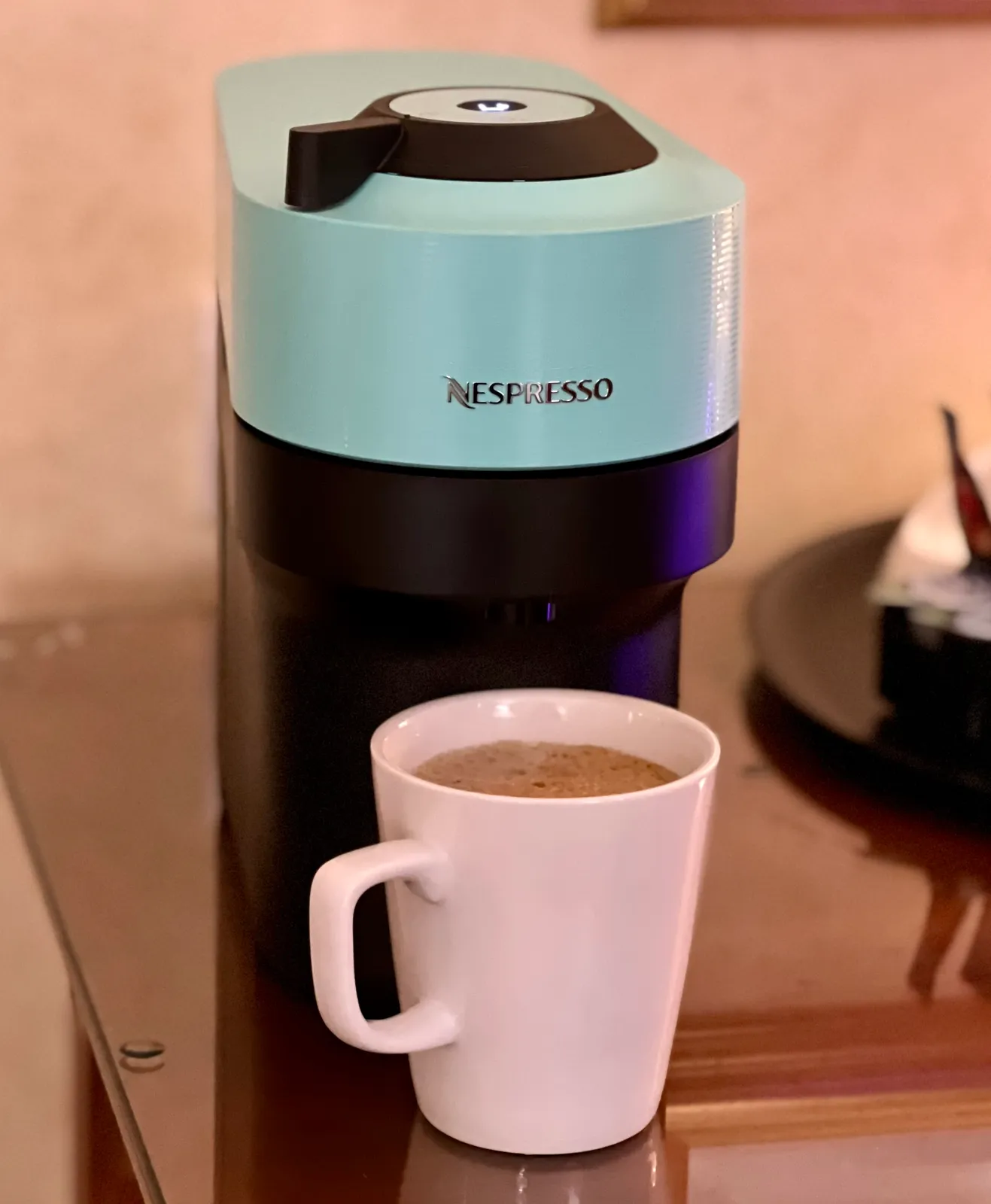
Size and setup
The whole reason the Pop exists is footprint: it's noticeably smaller than the standard Vertuo Next or Plus machines, designed explicitly for tiny kitchens, dorm rooms, or a corner of a counter that can't spare much real estate. Setup took under five minutes — fill the 0.6-liter water tank (smaller than most Vertuo machines, more on that below), run one cleaning cycle without a capsule as the manual instructs, and it's ready. The compact single-button interface (one main button, no display screen) is genuinely simple: press once to start, and the machine handles the rest based on the capsule's barcode.
Heat-up time and daily use
Nespresso claims under 30 seconds to heat, and in our timing across six weeks of daily use it consistently hit that mark, occasionally faster — genuinely fast enough that it doesn't feel like a "brew ahead" appliance the way some drip machines do; you press the button when you want coffee and it's ready almost immediately. The auto shut-off after nine minutes of inactivity is a sensible default we never felt the need to change, and the automatic capsule ejection into a small back-mounted container meant we rarely thought about capsule disposal until the container needed emptying every few days.
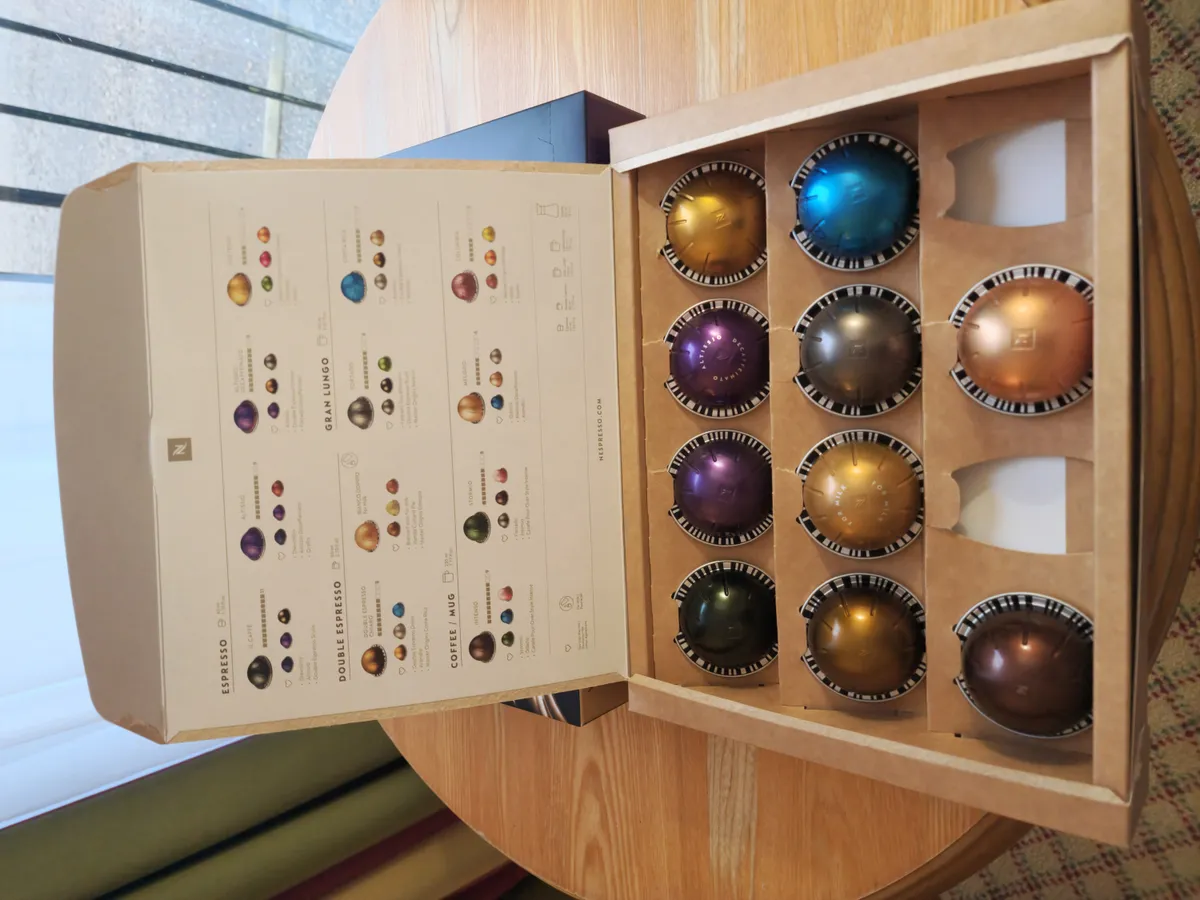
Coffee quality: does centrifusion actually taste good
Across the six weeks we cycled through Nespresso's core Vertuo line — Melozio, Altissio, a couple of the flavored limited editions, and their standard Bianco Forte for mornings needing a bigger mug — and the crema produced by the centrifusion method was consistently thick and long-lasting compared to a basic drip machine, closer in character to what you'd expect from a proper espresso machine than most pod systems manage. It's not a substitute for a manually pulled shot from a prosumer espresso machine if that's your standard, but compared to other capsule systems we've used, the consistency capsule-to-capsule was genuinely impressive; every cup of the same capsule type tasted identical regardless of which of us brewed it, which is the entire promise of an automated barcode-read system.
The water tank is the real compromise
Here's the honest tradeoff for the smaller footprint: the Pop's 0.6-liter (about 20-ounce) water tank is noticeably smaller than the tanks on Nespresso's larger Vertuo machines, and in daily use for a two-person household drinking two to three cups each, we were refilling it every day or two rather than the every-few-days cadence a bigger machine allows. It's a genuine inconvenience if you're making coffee for more than one or two people regularly, though for a single-person household or anyone who doesn't mind a quick tank refill, it's a minor chore rather than a dealbreaker.
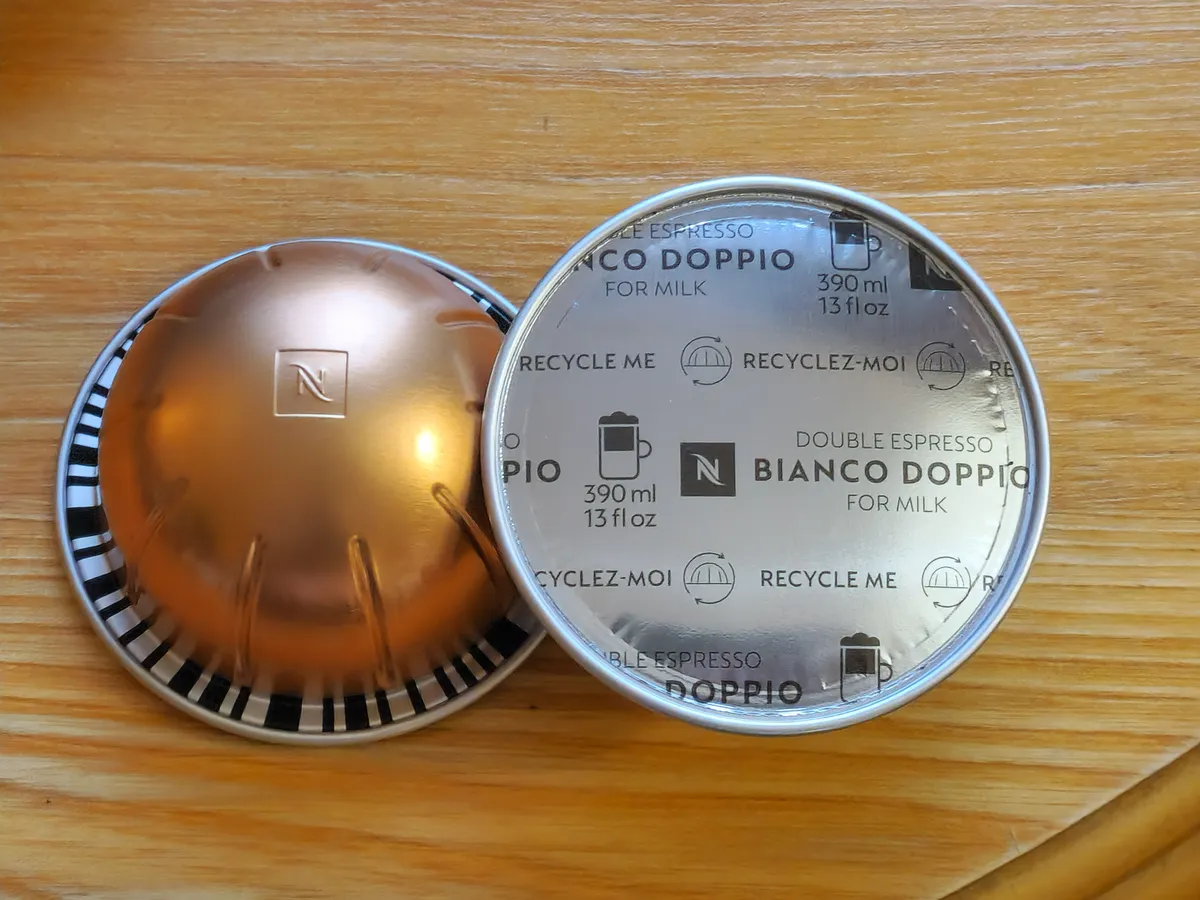
Cup size range and everyday flexibility
Because each capsule carries its own barcode-defined brew profile, cup size is really determined by which capsule you grab rather than a setting you dial in yourself, which took some mental adjustment coming from a machine where you choose volume independently of the coffee. In practice this meant keeping a small rotation of capsule types on hand for different moods: a shorter, more intense Altissio-style capsule for a quick espresso-style shot, and a Bianco Forte or similarly larger-format capsule for a full mug when we wanted something closer to drip coffee volume. Once we understood the system, restocking became a matter of buying variety rather than volume, which is a genuinely different mental model from a traditional machine but not a difficult one to adapt to after the first couple of weeks.
Capsule cost and the proprietary lock-in
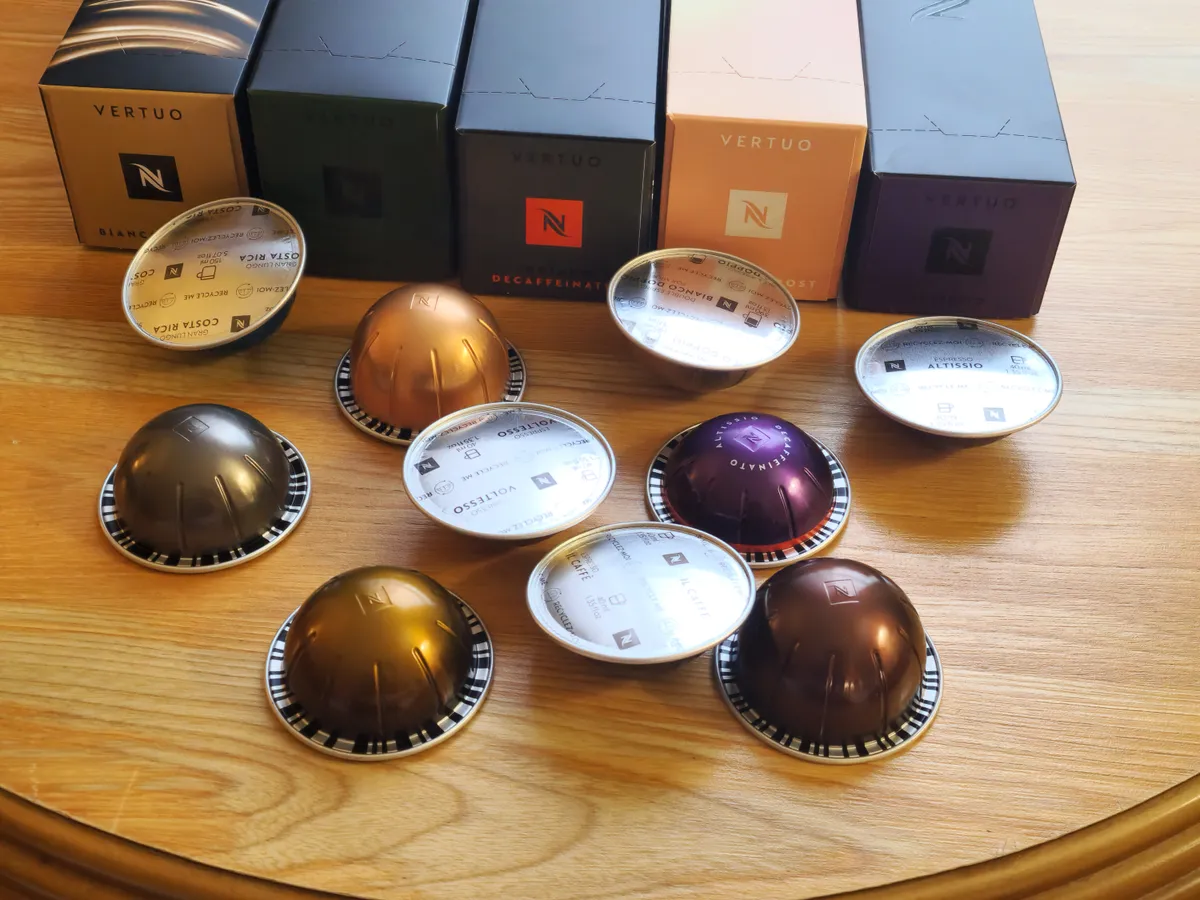
Vertuo capsules run roughly $0.80-$1.20 each depending on the blend, which puts a daily two-cup habit at somewhere between $50-70 a month — noticeably more than home-ground drip coffee, though comparable to or cheaper than a daily coffee shop habit. The bigger long-term consideration is that Vertuo capsules are proprietary and not compatible with Original-line Nespresso capsules or third-party pods the way some competing systems allow, so once you buy into Vertuo, you're committed to Nespresso's own capsule range (and its price) for as long as you own the machine, aside from a small number of third-party Vertuo-compatible capsules that have emerged but with inconsistent availability.
Noise during brewing
Because of how centrifusion works, the Pop makes an audible whirring/spinning sound during the brew cycle that's louder and more mechanical-sounding than a typical drip machine, though it only lasts the length of the brew (well under a minute for most cup sizes). It's not disruptive, but it's noticeably different from the quiet hiss of a standard capsule machine, and worth knowing if you're brewing early in a house with people still asleep nearby.
Build quality and how premium it actually feels
The Pop's body is mostly plastic with a matte finish available in several colors, and while it doesn't have the metal accents of Nespresso's pricier Vertuo machines, it never felt cheap or flimsy over six weeks of daily use — buttons have a solid, deliberate click, and the lever mechanism for inserting and ejecting capsules feels sturdy rather than loose. It's clearly built to a lower price point than the Vertuo Plus or Next, but the corners cut are mostly cosmetic (no display, fewer premium materials) rather than functional.
Comparison to larger Vertuo machines and to Original-line Nespresso
Against the larger Vertuo Next or Plus, the Pop's only real disadvantages are the smaller water tank and the absence of a couple of premium touches like a larger cup tray for taller mugs; brewing quality and capsule compatibility are otherwise identical since it's the same underlying centrifusion technology. Against Nespresso's Original line (or a traditional pump-pressure pod machine generally), Vertuo produces a noticeably thicker, longer-lasting crema and offers larger cup sizes up to a full mug, at the cost of a bulkier capsule and the same proprietary lock-in every capsule system shares.
Cleaning and long-term maintenance
Over six weeks of daily brewing, maintenance stayed simple: the drip tray and capsule container both lift out for a quick rinse, and we ran the recommended descaling cycle once partway through the test using Nespresso's own descaling solution, which took about fifteen minutes start to finish and was clearly prompted by an indicator light rather than something we had to remember on our own. We didn't experience any clogging or flow issues over the full test period, and the machine's exterior, being simple molded plastic with no crevices around buttons, wiped clean in seconds after inevitable spills and drips.
Who should actually buy this
The Vertuo Pop is the right call for anyone who wants genuinely good, consistent capsule coffee in a tight kitchen footprint or on a tighter budget than Nespresso's larger machines, especially single-person households or anyone who doesn't mind a slightly more frequent water tank refill. It's a poor fit for larger households or offices doing constant back-to-back brewing, where the small tank turns into a real annoyance rather than a minor one.
What we'd change
If Nespresso offered a Pop variant with even a slightly larger tank — say, 40 ounces instead of 20 — while keeping the same compact footprint and price, it would resolve the one real complaint we have with daily use. A display or even a simple LED indicator for approximate remaining water would also help, since right now the only way to know you're low is the machine sputtering mid-brew or lifting the tank to check by eye, neither of which is an elegant way to find out you're out of water halfway through making your first cup of the morning.
The verdict
Six weeks of daily use didn't reveal any hidden compromise in coffee quality from choosing the cheapest, smallest Vertuo machine — the crema, consistency, and flavor were every bit as good as pricier Vertuo machines we've used before, and the only real cost of the smaller footprint is a water tank you'll be filling more often than you'd like. For anyone who wants Nespresso's Vertuo system without the counter space or price tag of the bigger machines, the Pop delivers the same cup with none of the bulk.
We compared prices across retailers so you don't have to.