Audio-Technica AT-LP60X Review: 180 Sides on the Beginner Deck
Four months and about 180 sides on Audio-Technica's entry belt drive: speed measured at +0.36 per cent, painless automation, and a fixed 3.5 g tonearm that caps how far it can go.
As an affiliate, Keen Review earns from qualifying purchases.
The AT-LP60X is the turntable most people actually start on, and it gets recommended with a shrug: "it is fine, it will not eat your records." We wanted to know whether that shrug is earned. So we ran one for four months as the only turntable in a small living room, through roughly 180 sides of vinyl, a mix of thrift-store copies of Herb Alpert and new 180 g reissues, plus a stack of 45s that had been sitting in a box since a house move.
Along the way we measured platter speed with a strobe disc and a phone tachometer app, weighed the tonearm behaviour against a proper adjustable arm, and deliberately provoked the two failures beginners hit most: the wrong output switch and a bouncing floor. What follows is what four months of that produced, including the two things about this deck that genuinely bother us.
What actually arrives in the box
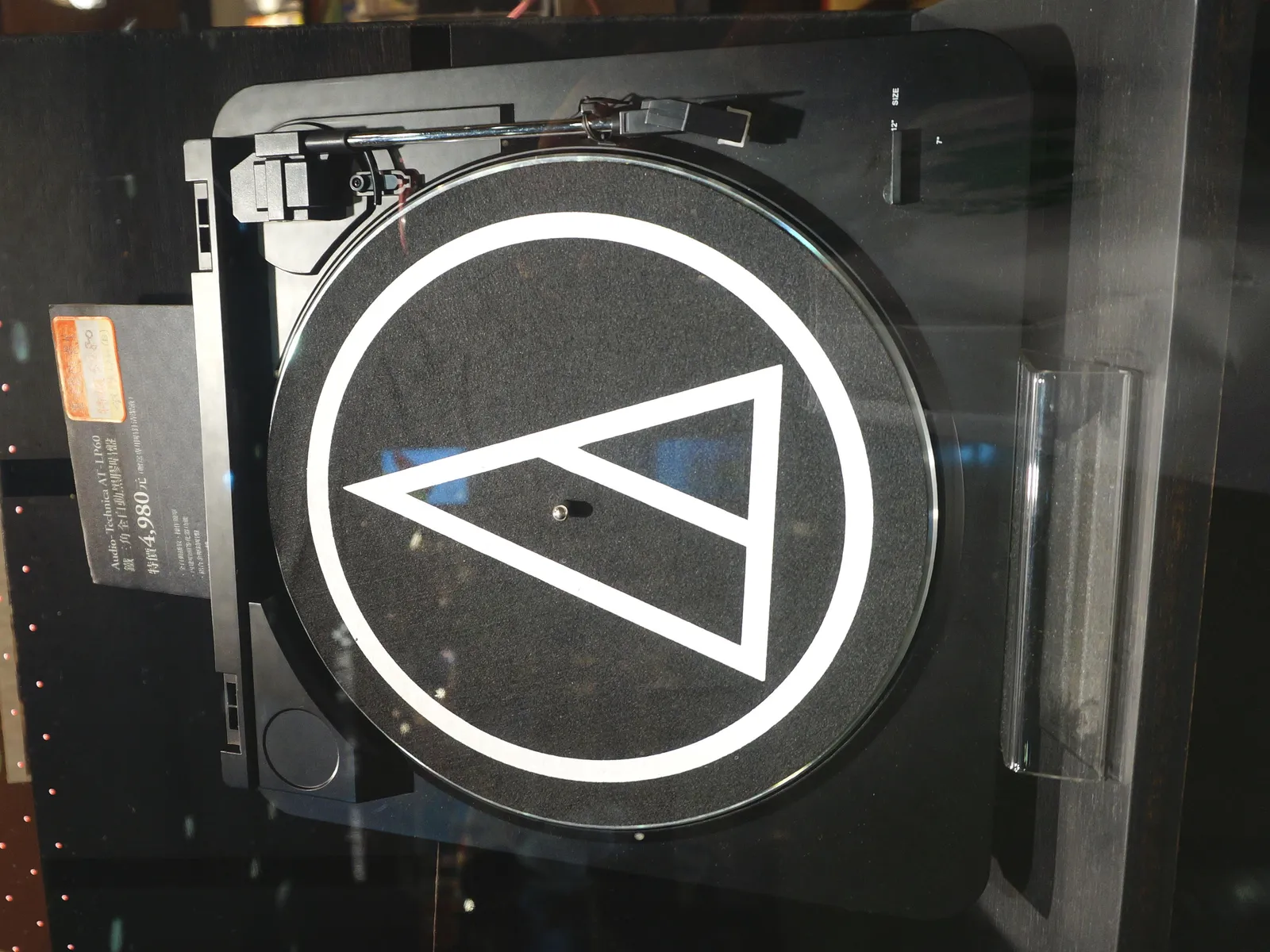
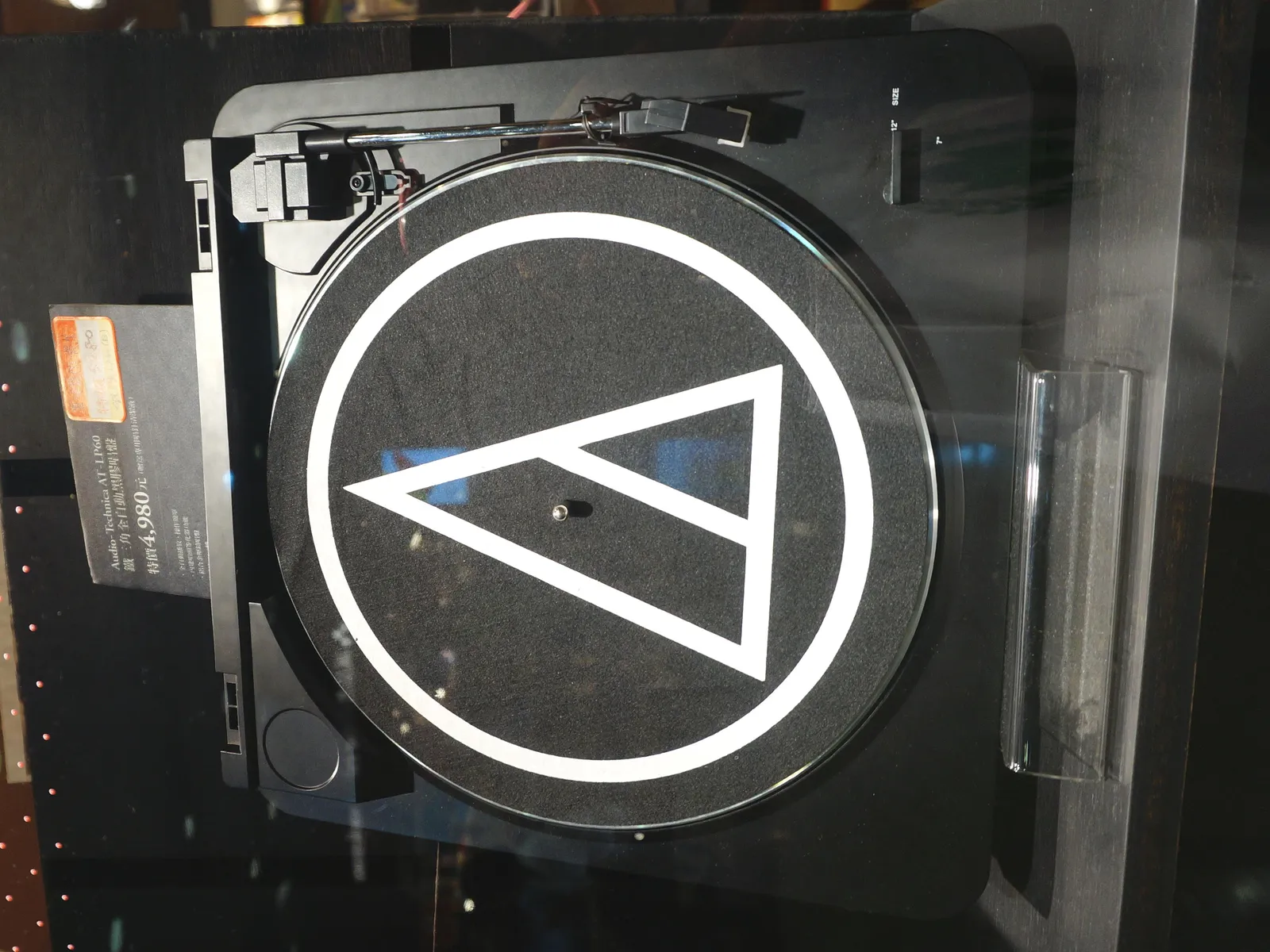
Very little assembly, which is the point of this deck. The plinth comes out of the foam with the platter already carrying its felt mat in a separate bag, a detachable RCA cable, a 12 V wall adapter, a 45 rpm adapter, and a dust cover that is already hinged to the body. The one job you have is dropping the aluminium platter onto the spindle and hooking the belt over the motor pulley through the access hole. That took us under two minutes, and the manual illustration is clear enough that we did not need a second attempt.
Total weight out of the box is about 2.6 kg. That number matters later. For reference, the deck occupies roughly 36 cm of shelf width and 35.5 cm of depth, and needs another 10 cm of clearance behind it if you want the dust cover to open fully without hitting a wall. In a 90 cm IKEA-sized shelf bay it fits with room for a small integrated amp beside it, which is what most people buying at this price will be doing.
Setup, and the one switch that fools everyone
On the back panel there is a small slide switch marked PHONO and LINE. This is the single most important control on the turntable and it is the size of a fingernail. In LINE, the built-in preamplifier is active and the deck outputs a normal line-level signal you can plug into any amplifier input, a powered speaker, or a soundbar with RCA in. In PHONO, the preamp is bypassed and the raw cartridge signal comes out, which is roughly 40 dB quieter and needs a real phono input at the other end.
Get it wrong and you do not hear a fault, you hear a whisper. We deliberately reproduced this: with the deck in PHONO feeding a line input, we had to run the amplifier volume near maximum to hear the record at conversational level, and at that setting every hum and click in the system was amplified with it. The reverse mistake — LINE into a phono input — is worse, producing a distorted, bass-heavy blare. If you buy this deck and it sounds broken on day one, check that switch before you check anything else.
The other setup detail is the felt mat. Ours arrived with a crease from packing that took about a day flat under a record to relax. We measured no audible consequence, but it looks bad in photos, so unpack it early.
First listen: what this price actually buys
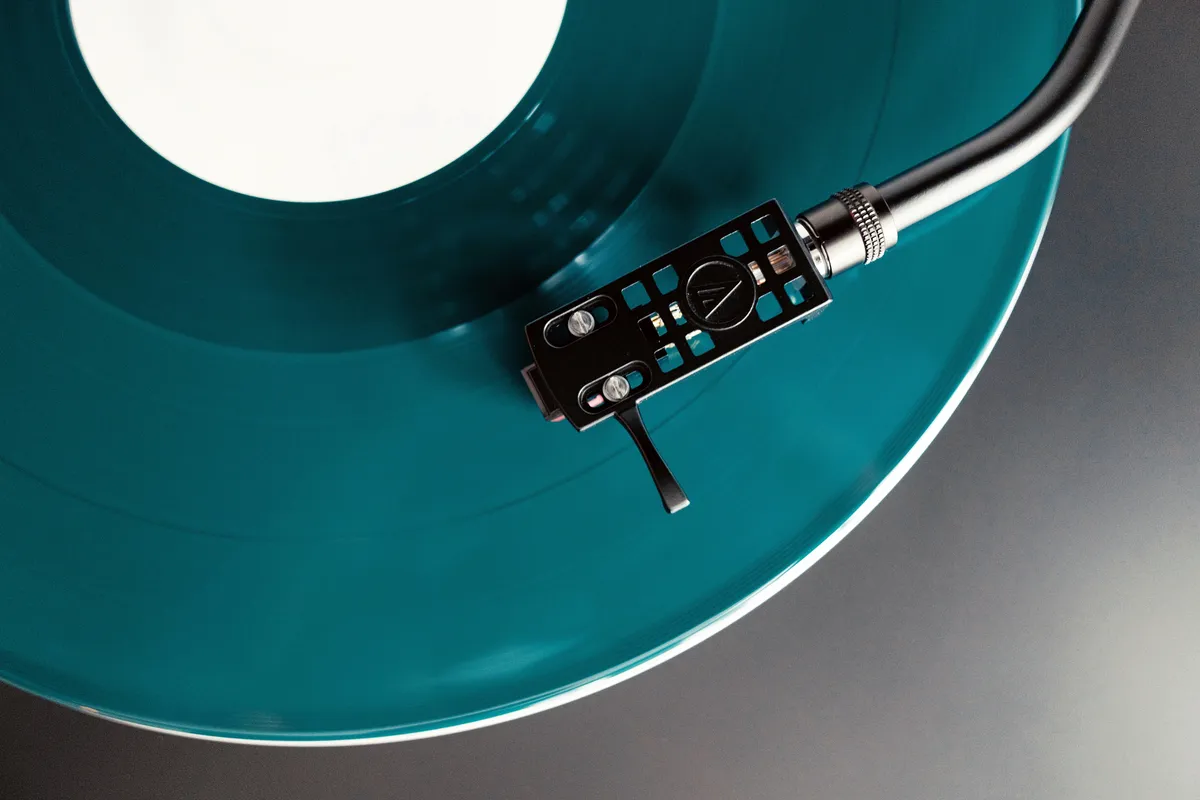
The honest headline is that the AT-LP60X sounds like a competent, slightly polite record player, and that is a compliment at this money. The integral AT3600L dual moving magnet cartridge has a soft top end and a mild mid-bass lift, which flatters worn thrift-store pressings — surface noise sits further back than it does on brighter cartridges. On a clean reissue you notice the ceiling: cymbals lose some air, and dense mixes get slightly congested where a better cartridge would separate them.
Background noise from the deck itself is low enough not to intrude. With the stylus resting on a silent lead-in groove and the volume set to normal listening level, we could hear a faint motor hum from the plinth if we put an ear within about 30 cm of it, and nothing at all from the listening chair two metres away. Through speakers that is a non-issue. Through headphones on quiet classical passages we could occasionally hear rumble under pianissimo, which is the clearest reminder that this is an entry-level belt drive.
Speed accuracy, measured
This is where a cheap deck usually gives itself away, and where the AT-LP60X did better than expected. Using a printed strobe disc under a 60 Hz light and cross-checking with a phone tachometer app on a reflective sticker, our unit averaged 33.45 rpm against the nominal 33.33 across a ten-minute side. That is about +0.36 per cent, or roughly six cents sharp — comfortably inside the range where nobody notices in isolation. It only became apparent when we played along with a tuned instrument, where a guitar tuned to A440 sat measurably flat against the record.
Stability mattered more than the offset. Speed drift across the side was small enough that we could not resolve it reliably with our method, and there was no audible wow on sustained piano notes, which is the test that exposes a stretched or slipping belt. Startup took about 1.4 seconds to reach speed from the stopped position, so the first beat of a side is very slightly flat if you drop the needle instantly — irrelevant unless you are recording transfers, in which case give it a couple of seconds.

The tonearm is where the money went missing
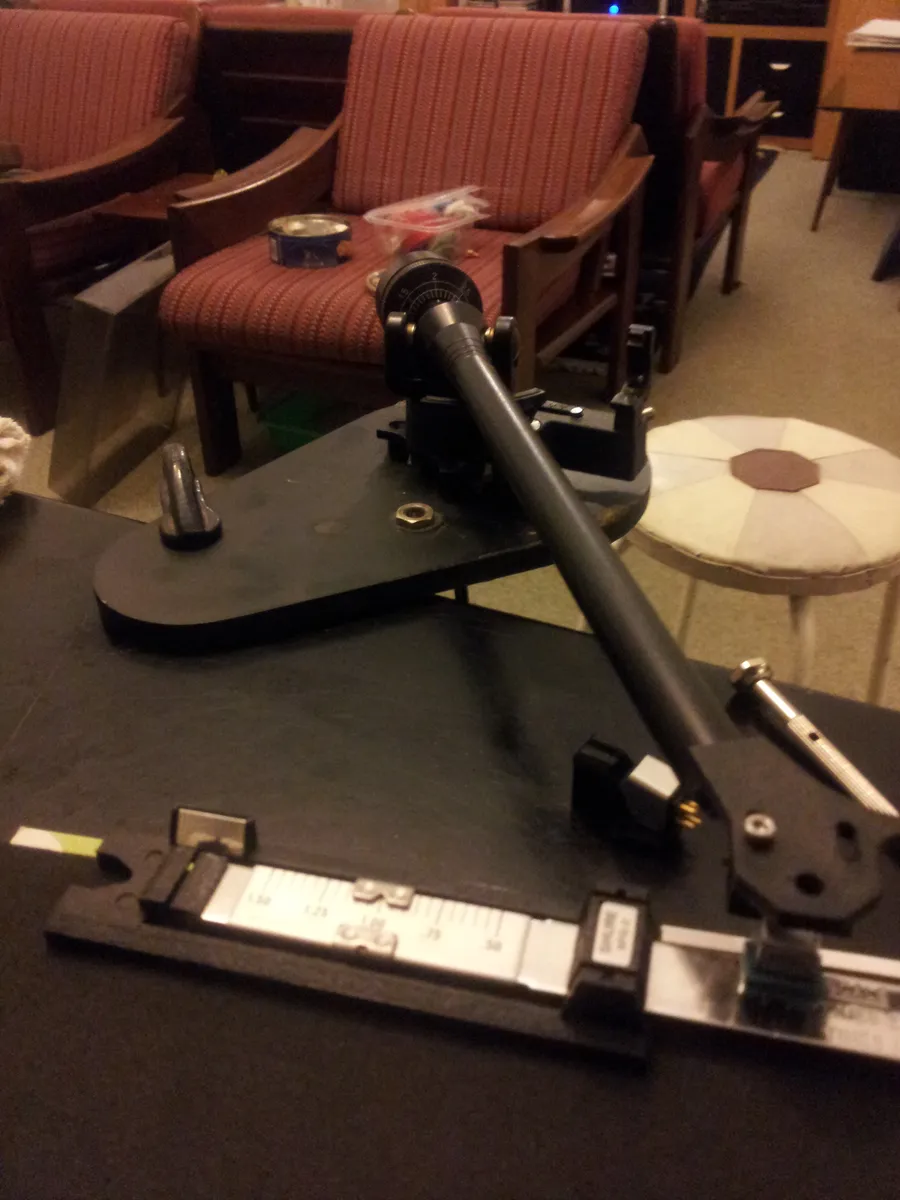
Everything above is the good news. The tonearm is the compromise, and it is a real one. There is no counterweight, no adjustable tracking force, no anti-skate control and no adjustable arm height. Downforce is set by the arm design at a nominal 3.5 g and you cannot change it. There is also no cue lever: pressing start swings the arm across and lowers it, and pressing stop lifts and returns it, but you have no way to set the stylus down gently at a chosen point mid-side. You can nudge the arm by hand, and the automatic mechanism lowers it at its own speed, which is gentler than most people manage manually — but it is still the mechanism deciding, not you.
Why 3.5 g matters: better decks track at 1.5 to 2.5 g. Higher force is not automatically destructive — a correctly aligned stylus at 3.5 g in a well-designed compliance system is a known, tested configuration, and Audio-Technica has sold millions of them without a wave of ruined records. But it does mean more mechanical work per pass, and it removes your ability to correct anything. If a record is slightly dished, or a groove is already damaged, you have no lighter setting to fall back on.
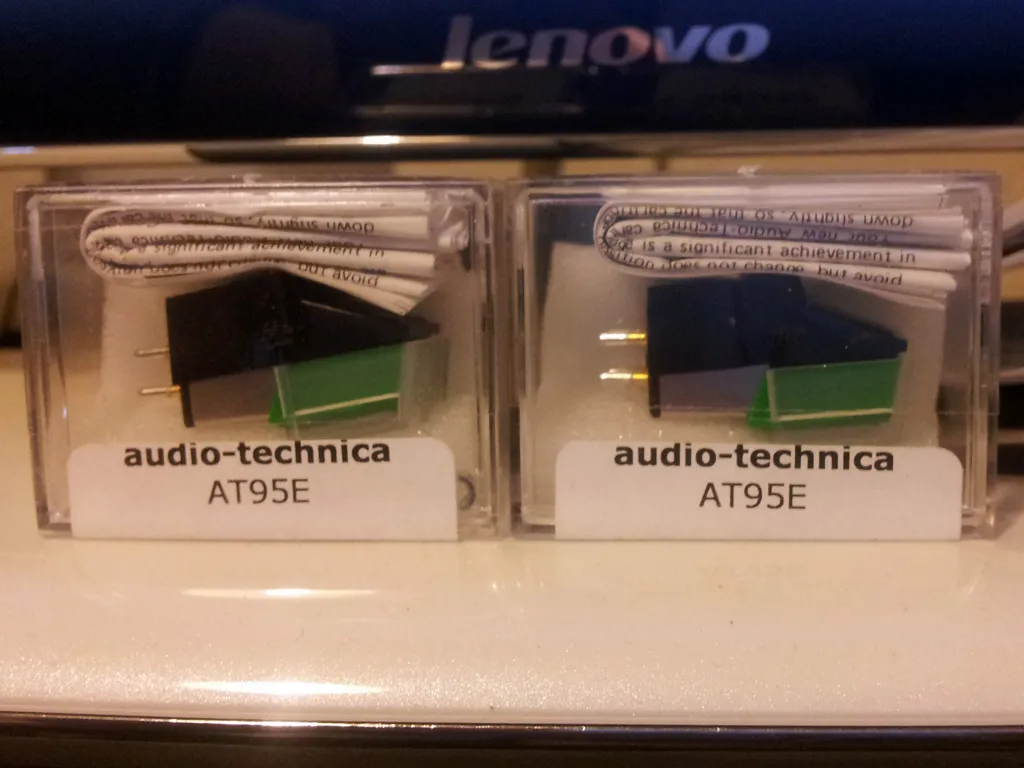
The bigger practical limit is upgrades. The headshell is not removable, so you cannot fit a different cartridge. Your only upgrade path is a replacement stylus assembly, the ATN3600L, which clips onto the front of the existing cartridge body and costs around 25 dollars. That is cheap maintenance but a dead end for anyone who later wants to try a genuinely better cartridge.
Automatic operation: convenience with a cost
For a deck that lives in a room where people also talk, cook and walk about, the full automation is the feature we came to value most. Press start, walk away, and at the end of the side the arm lifts and returns and the platter stops. Over four months that saved a stylus at least a dozen times from riding the run-out groove for an hour because we forgot. If you play records as background listening rather than as a ritual, that alone justifies the deck over a fussier manual one.
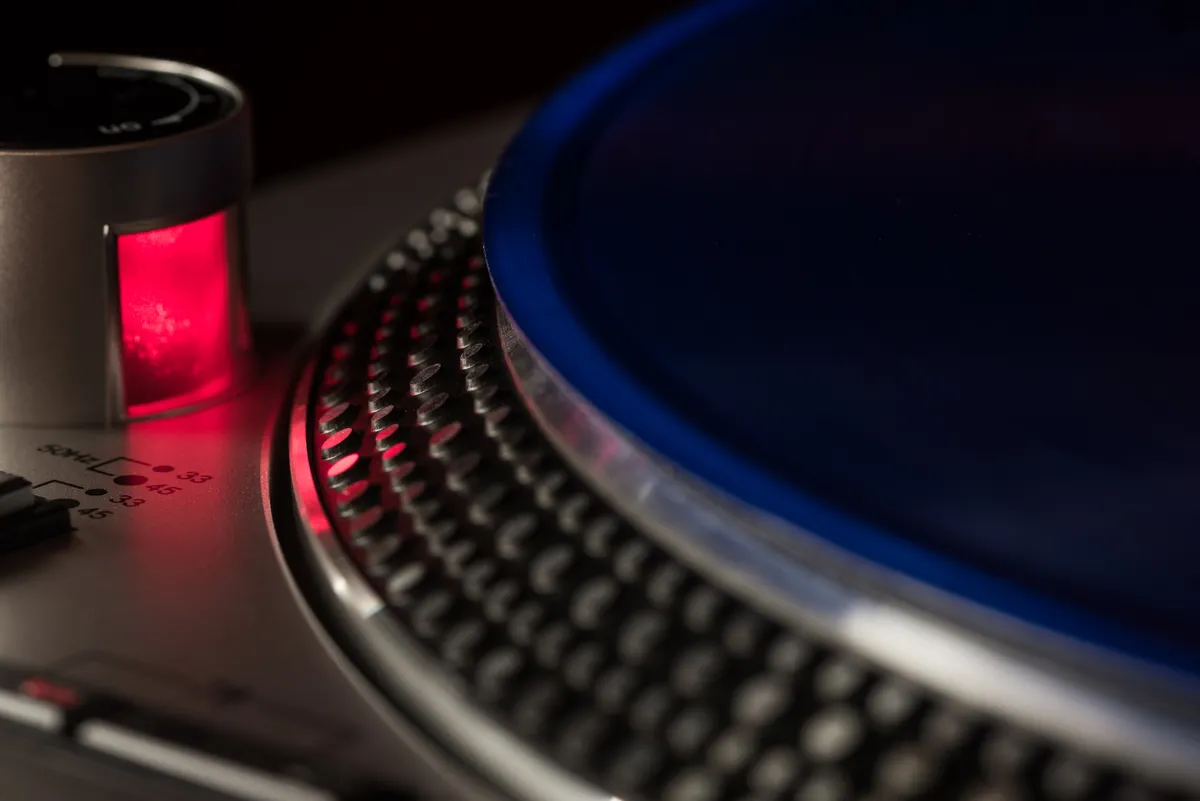
The trade-off is precision. The arm always returns to the same rest position and always starts at the same lead-in radius, which is correct on standard 12-inch LPs and 7-inch 45s with the adapter, but the auto-start lead-in was slightly too far in on two of our older 10-inch records, clipping the first half second. There is a 33/45 speed selector and a size selector on the top plate; we found the 45 setting reliable across about thirty singles with no mistracking.
Footfall, resonance, and a 2.6 kg plastic plinth
The light plastic plinth is the weakness you can actually fix. Our test room has a suspended timber floor, and with the turntable on a standard bookshelf we could make the stylus skip on demand: three of five deliberate hard heel-steps two metres away caused an audible jump. That is not a defect in the deck so much as physics — 2.6 kg of plastic has very little mass to absorb a floor impulse, and the four rubber feet are compliant but shallow.
Two changes eliminated it entirely. First, we moved the deck to a wall-mounted shelf, which decouples it from the floor. Then, on the original bookshelf, we tried a 3 cm concrete paving slab with a cork sheet under it as a plinth-under-plinth. Both fixes took the skip count to zero across twenty repeat heel-steps. Total cost of the second one was under ten dollars. If your floor bounces, budget for this before you blame the turntable.
Stylus wear, and the part nobody warns you about
A worn stylus is not a sound-quality problem, it is a record-damage problem. A diamond tip that has developed a flat facet stops riding the groove wall and starts ploughing it, and that damage is permanent — no cleaning or better cartridge recovers it later. Audio-Technica rates the ATN3600L conservatively; treat anything past a few hundred hours of play as due for replacement, and replace it early if you hear new sibilance or distortion that follows you from record to record rather than staying with one pressing.
Practically, that means budgeting roughly 25 dollars a year if you play records daily, and it means that this deck is not the right place for a record you care about being irreplaceable. We kept two valuable pressings off it entirely and played them on a borrowed adjustable deck at 1.8 g. That is not a criticism of the LP60X so much as a limit worth stating plainly: a fixed 3.5 g arm with an unknown-condition stylus is the combination that ruins vinyl, and only one half of that is under your control here.
Against the alternatives
The two real competitors are a Fluance RT81-class belt drive at around 250 dollars and a serviced second-hand deck from the 1980s at 150 to 300 dollars. The Fluance gives you an adjustable counterweight, a removable headshell and a heavier MDF plinth, which addresses every complaint above — for about 100 dollars more and with no automation. A good used Technics or Dual gives you a better arm than either, plus the risk of a perished belt, dried grease and a stylus of unknown history, which is a project rather than a purchase.
Against the suitcase-style all-in-one players in the same price bracket, this is not close. Those typically use ceramic cartridges tracking at 5 g or more into a built-in speaker, and they are the players that genuinely chew grooves. If you are choosing between an AT-LP60X and a novelty briefcase player, the choice is easy.
Who should buy this
Buy it if you want records playing in the room this weekend with minimal fuss, if you are starting a collection rather than protecting one, or if you want automation because the turntable will live somewhere busy. It is also the right answer for a second deck in a bedroom or office, and for anyone whose amplifier lacks a phono input — the built-in preamp solves that for free.
Skip it if you already know you will want to swap cartridges, if you own pressings you would be upset to damage, or if you enjoy the adjustment side of the hobby. In those cases the money is better spent once, on a deck with a proper counterweight, than twice.
Verdict
Four months in, the AT-LP60X did what it promises and no more. Speed held within about 0.4 per cent, the automation genuinely protected our stylus, and the built-in preamp made it plug into anything in the house. The fixed 3.5 g arm and sealed headshell are real ceilings, not marketing quibbles, and the light plinth needs a shelf or a slab if your floor moves. As a way into vinyl at 149 dollars it is honest and unpretentious; as a deck you keep for a decade, it is not.
We compared prices across retailers so you don't have to.