Hohner Special 20 Review: Where the 45 Dollars Actually Goes
Three months playing a Hohner Special 20 in C against a 12-dollar generic: it speaks 10 dB quieter, holds a note 21 seconds against 13, and makes controlled bends possible.
As an affiliate, Keen Review earns from qualifying purchases.
A 45-dollar harmonica and a 12-dollar harmonica look identical in a photograph. Both are ten holes, both play a diatonic major scale, both fit in a pocket. The difference is entirely in how much air leaks past the reeds and how the reed plates meet the comb, and you cannot see either. We spent three months with a Hohner Special 20 in the key of C alongside a 12-dollar generic ten-hole, playing both daily, to find out whether the price gap is craft or branding.
The test that mattered turned out to be simple: how quietly can you play a note. Air leakage sets the minimum breath pressure a reed needs to speak, and that number decides whether you can play softly, whether bends are controllable, and whether you sound out of breath after twenty minutes. Everything else people argue about follows from it.
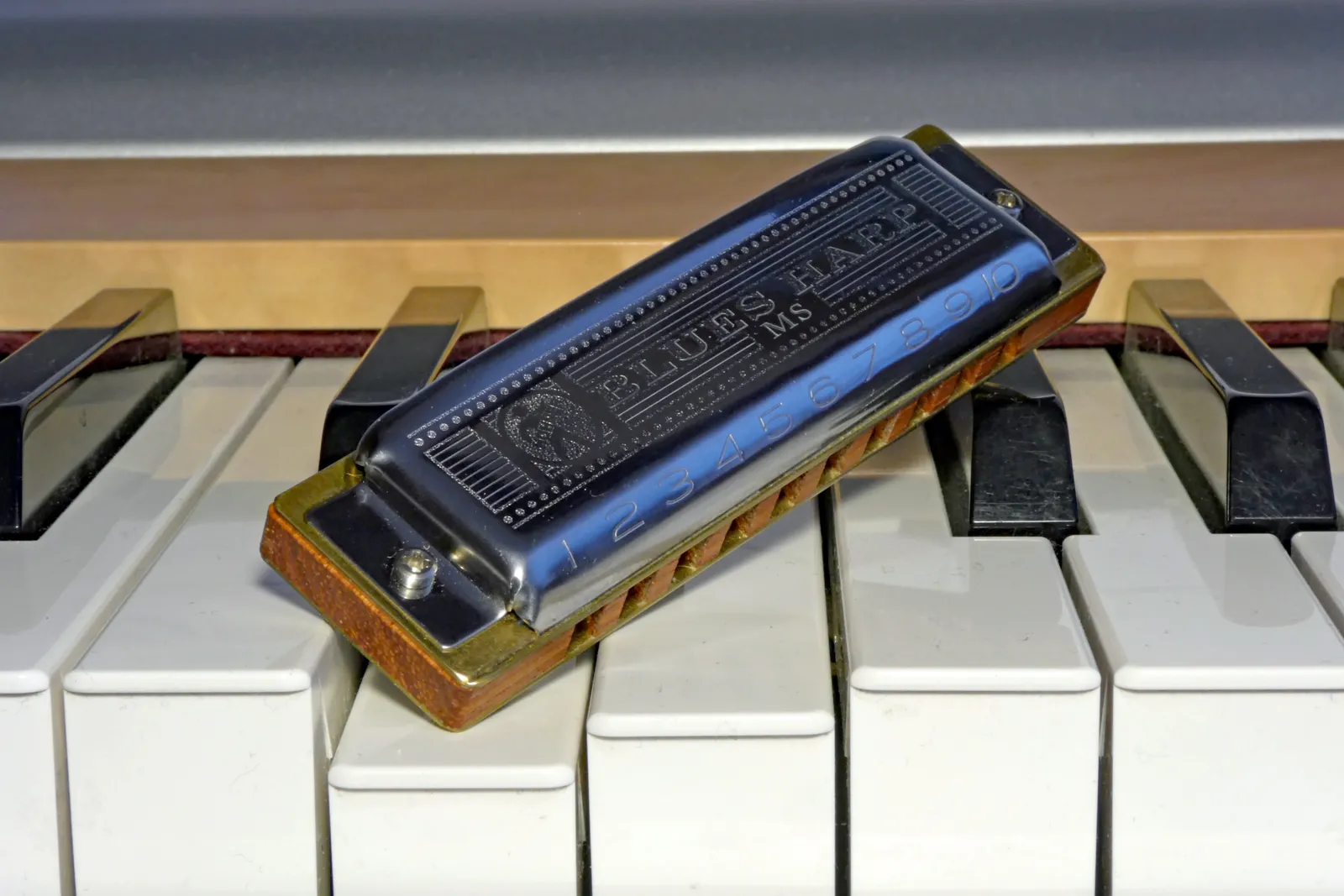
What you get, and the comb is the point
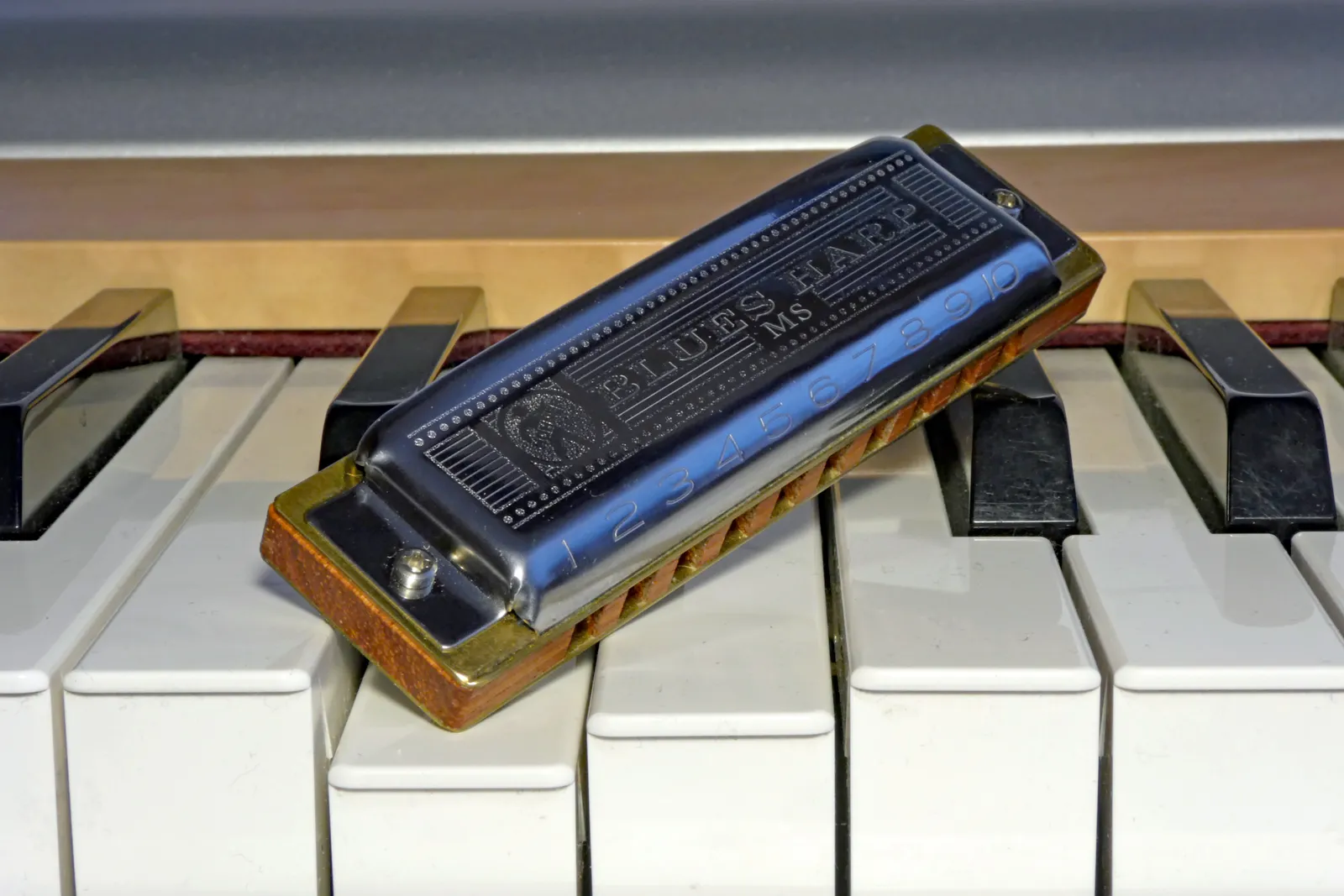
Ten holes, twenty reeds, brass reed plates screwed rather than nailed to an ABS plastic comb, in a small hinged plastic case. It weighs about 78 g. The specification that matters is that plastic comb with recessed reed plates: the plates sit inside the comb so no sharp metal edges touch your lips, and plastic does not swell.
That second point is not a small detail. Traditional wooden-comb harmonicas absorb moisture from your breath, and the wood swells and shrinks with every session. On an older wooden model we own, the comb has expanded past the plates enough to feel it, and the seal at the mounting screws has loosened over years. Three months of daily playing left the Special 20 dimensionally identical, and it can be rinsed under a tap, which a wooden comb cannot survive.
Airtightness, measured the only way an amateur can
We do not have a manometer, so we used a repeatable proxy: the quietest sustained note we could produce before the reed stopped sounding, judged by ear at a fixed distance with a phone sound-level app. The Special 20 spoke cleanly at around 52 to 55 dB. The 12-dollar harmonica needed roughly 62 to 65 dB before its reeds would start reliably, and below that it produced breath noise with no note.
That ten-decibel gap is the entire review in one number. It means the expensive harmonica can whisper and the cheap one cannot. Practically: quiet playing is where expression lives, and a leaky harmonica forces you to blow harder, which makes you sound loud and monotonous, tires you out, and — the part beginners never connect — makes bending nearly impossible, because a bend requires precise control of a small pressure change.
We also timed sustained single notes on one breath. Hole 4 blow, held as long as possible: a median of 21 seconds on the Special 20, 13 seconds on the cheap one. Same lungs, same day. Air that does not turn into sound has to go somewhere, and on the cheap instrument it went past the reeds.
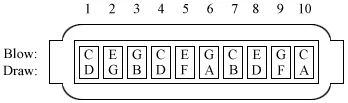
Learning to bend, which is the whole reason to buy this
A ten-hole diatonic in C plays a C major scale, but not evenly: the low holes are missing notes, which is why blues players bend. Bending means drawing the pitch down by changing the shape of your mouth and the direction of airflow, and it is the technique that separates a harmonica from a toy.
We tracked progress with a tuner app. On the Special 20, our test player got a clean, stable semitone bend on hole 4 draw within about nine days of ten-minute daily attempts, and a full tone on hole 3 draw at around week five. On the 12-dollar harmonica, the same player could produce a wobbling, uncontrolled pitch drop but never a stable bend that a tuner would hold on a target note for two seconds. We do not think that is a skill difference — we alternated instruments daily — we think the cheap reeds cannot be controlled that finely.
This is the case for spending the money, and it is narrow but real: if you want to bend, the cheap harmonica will teach you that you have no talent, which is false. If you only want to play folk melodies in the upper holes, the cheap one is genuinely adequate.
The single-note problem nobody warns beginners about
For the first week, everything you play will be a chord, because covering one hole with your mouth is harder than it sounds. There are two methods: pucker, where you narrow your lips to a small opening, and tongue-blocking, where you cover several holes and block the unwanted ones with the side of your tongue. We tried both. Pucker produced a clean single note within two days; tongue-blocking took nearly three weeks but ended up giving better tone and made octave splits possible.
The Special 20's rounded, recessed mouthpiece helps here in a way that is easy to underestimate. The cheap harmonica has exposed reed-plate edges at the mouth, and after twenty minutes of practice our lips were mildly sore from dragging across them. Comfort is not a luxury feature when the instrument is pressed against your mouth for half an hour.
Three months of durability
One reed on the cheap harmonica — hole 2 draw, the note beginners overblow constantly — went flat by roughly 20 cents by week seven and would occasionally stick. The Special 20 stayed in tune across all twenty reeds as far as our tuner could tell, with the worst reading about 5 cents off, which is inaudible in practice.
Reeds do eventually fatigue and go flat or crack, and on any harmonica the cause is usually playing too hard. Hole 2 draw is where beginners apply the most force, and it fails first. The lesson from our test is not that expensive reeds are immortal; it is that an airtight harmonica lets you play gently enough not to kill them.
Maintenance was minimal: tap it out on a palm after playing, leave it out of the case for ten minutes to dry, and rinse the plastic comb under lukewarm water occasionally. The screwed-together construction means reed plates can be removed and replaced, which is a genuine repairability advantage over nailed-together budget instruments that you throw away.
Which key, and the mistake most first buyers make
Buy C. Almost every teaching resource, tab and beginner video is written for a C diatonic, and starting in another key means transposing everything while you are also learning to make a single note. C is also mid-range enough that the low reeds are not sluggish and the high reeds are not shrill.
The confusion worth clearing up: a harmonica in C plays in the key of C when you play straight melodies (first position), and in the key of G when you play blues using draw notes and bends (second position, or cross harp). That is why blues players carrying a C harmonica talk about playing in G, and why a beginner who buys a G harmonica because their band plays in G ends up in the wrong place. One instrument, two keys, depending on technique.
Practising without annoying everyone
A harmonica is loud for its size — we measured 88 dB at one metre playing a full chord at normal strength, which is comparable to a busy road. In a flat with thin walls that is a real constraint, and there is no volume knob. We ended up practising into a cupped hand against a cushion, which drops it by about 8 dB and also dulls your ability to hear what you are doing.
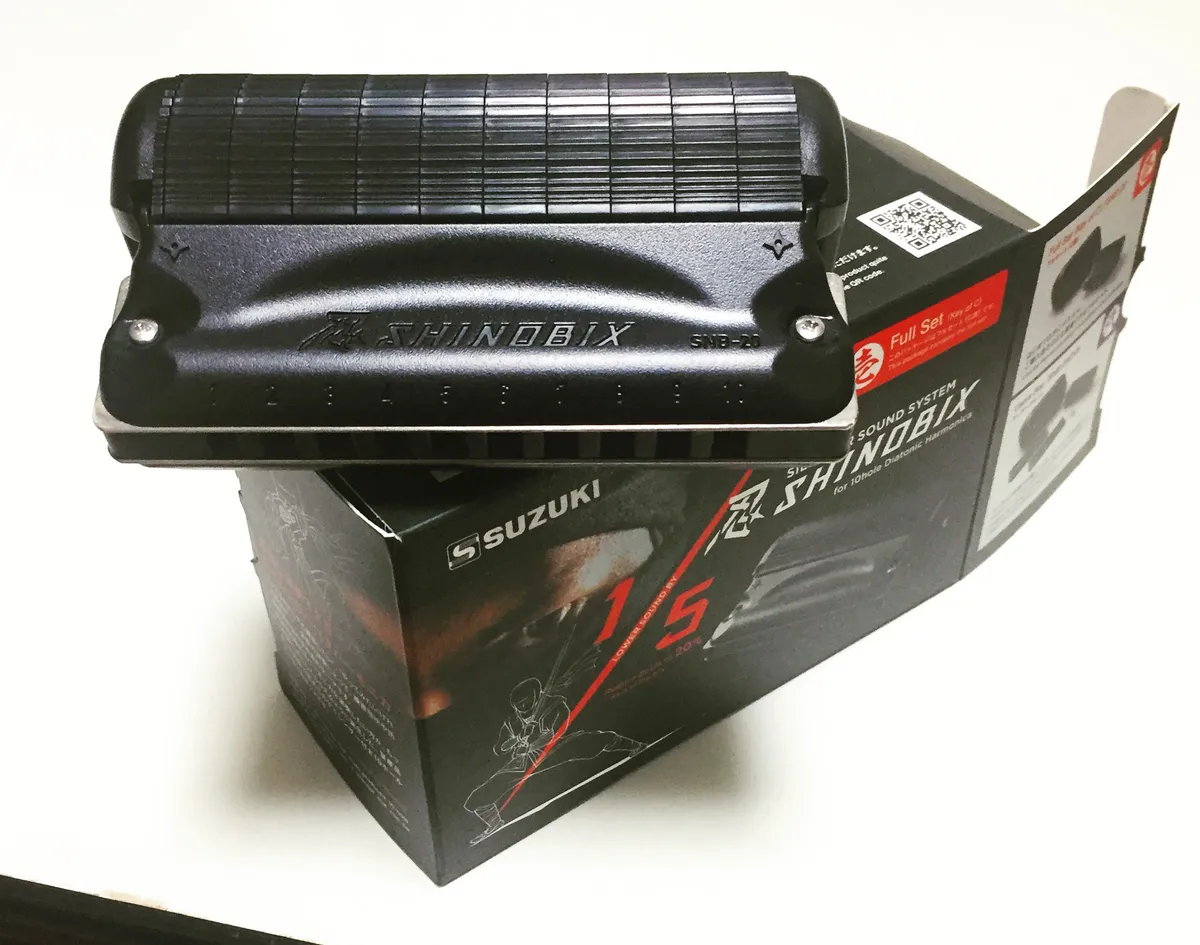
Commercial silencer accessories exist for diatonic harmonicas and cut volume substantially. We did not test one, so we cannot rate it, but if your practice window is late at night in shared housing, it is the accessory category to look at rather than assuming you will get away with it.
One hygiene point worth making plainly
A harmonica is a wind instrument with a warm, damp interior, and it does not get cleaned properly by tapping it out. Do not share one. Passing a harmonica around a group is a straightforward way to share whatever respiratory infection someone is carrying, and it is common precisely because the instrument looks like a novelty rather than a mouthpiece. If you are teaching several people, buy each of them their own — at this price that is affordable, and there is no rinsing routine that makes sharing sensible.
Against the alternatives
Against the 12-dollar generic, covered above: buy the cheap one only if you genuinely want to find out whether you will play at all and cannot risk 45 dollars, and understand that it will not bend. Against other quality diatonics in the 40-to-60-dollar range — Lee Oskar, Suzuki Manji, Hohner Rocket — differences are real but small and largely a matter of comb material, tuning temperament and cover-plate shape. Any of them is a good instrument; none of them is a meaningful upgrade over another for a beginner.
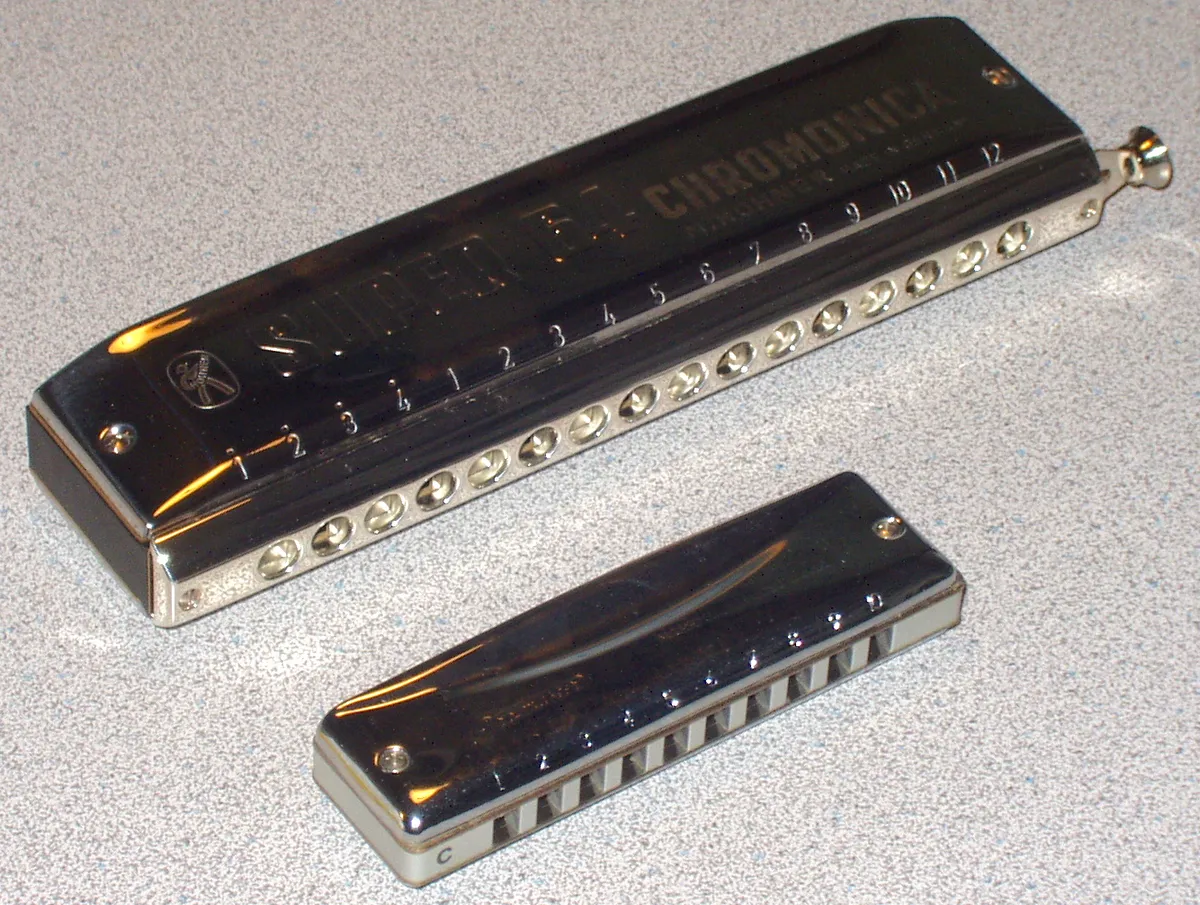
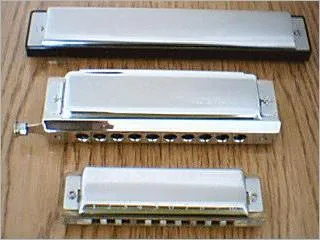
Against a chromatic harmonica at 90 dollars and up, that is a different instrument, not a better one. A chromatic gives you every semitone via a slide button and is the right tool for jazz and melody playing across keys; it is the wrong tool for learning blues, where the diatonic's missing notes are the point.
Who should buy this
Buy it if you want to learn blues or folk harmonica properly, if you have already bought a cheap harmonica and concluded you cannot bend, or if you want a genuinely portable instrument that costs less than a month of lessons. It is also the best small gift in music for an adult beginner, because the entire learning curve to a first recognisable tune is a couple of evenings.
Skip it if you only want to play simple melodies and 12 dollars is your ceiling, because for that use the cheap one is fine. Skip it if you need to play in multiple keys immediately, where a chromatic or a set of diatonics is the answer. And skip the temptation to buy a seven-key set on day one — one harmonica in C, played for three months, teaches more than seven keys gathering dust.
Verdict
Three months in, the price gap is craft, not branding, and it comes down to air. The Special 20 spoke at 52 to 55 dB against 62 to 65 for a 12-dollar harmonica, sustained a single note for 21 seconds against 13, and allowed a controlled semitone bend within nine days where the cheap instrument never allowed one at all. The plastic comb does not swell, the recessed plates do not chafe your lips, and the screwed construction means it can be repaired instead of replaced. At 45 dollars it is the cheapest instrument we have tested that is unambiguously worth more than its budget alternative.
We compared prices across retailers so you don't have to.